←
Back to Test
Hide Answer Key
Print / Save as PDF
Print / PDF
drive
quiz
.com
KY DMV PERMİT PRACTİCE TEST 2
Kentucky
Duration: 36 min
|
Questions: 40
Student Name:
Date:
Correct:
Incorrect:
Score:
1.
Two motorcyclists are allowed to:
A)
ride side-by-side in a single lane.
B)
share the lane with another vehicle.
C)
race on empty roads.
2.
If your car goes into water, you should:
A)
wait for water to rush in and let it out in small breaths through your nose.
B)
call the fire department immediately.
C)
remove yourself before it starts to sink.
3.
In a vehicle equipped with air bags a child under 12 years old should be placed:
A)
In the back seat.
B)
In either the front or back seat.
C)
In the front seat.
4.
What does BAC stand for?
A)
Blood Alcohol Commission
B)
Blood Alcohol Concentration
C)
Blood Alcohol Content
5.
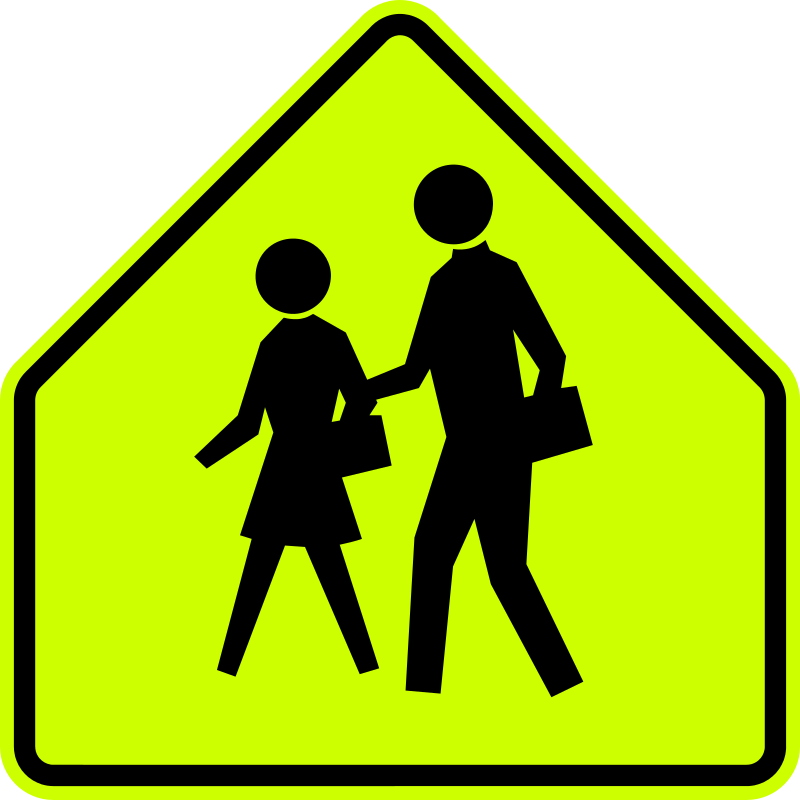
This road sign means:
A)
School crossing
B)
Playground ahead
C)
Pedestrian crossing
6.
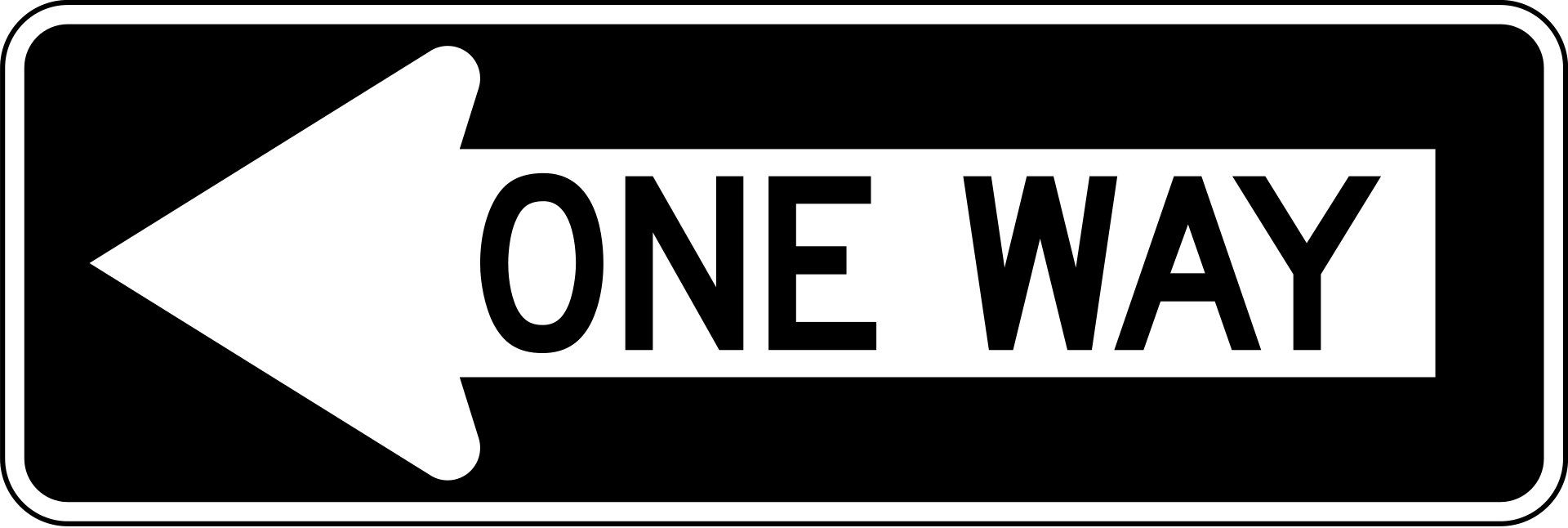
The ‘One Way’ sign means that:
A)
only vehicles turning left may travel in the direction of the arrow.
B)
there is only one road that turns left at the intersection.
C)
drivers may travel only in the direction of the arrow.
7.
Drivers may legally block an intersection:
A)
under no circumstances.
B)
only during rush hour traffic.
C)
only after entering the intersection on a green light.
8.
Warning signs normally are:
A)
rectangles.
B)
triangles.
C)
diamond-shaped.
9.
When they see a crossbuck sign, drivers:
A)
must slow down and wait for the red lights to flash.
B)
must always come to a complete stop.
C)
are legally required to yield the right of way to trains.
10.
Before crossing any railroad tracks, you must:
A)
look and listen for trains.
B)
make sure there is room for your vehicle on the other side.
C)
All of the above.
11.
To prevent a fatigue-related crash while driving:
A)
find a safe parking area to take a 15 to 20 minute nap.
B)
drive at night when there are not as many vehicles on the roadway.
C)
continue driving so you will reach your destination sooner.
12.
The octagonal shape is used:
A)
for stop signs and railroad advance warning signs.
B)
exclusively for stop signs.
C)
to warn drivers of existing or possible hazards on roadways.
13.
This is the shape and color of a ________ sign.
A)
yield
B)
stop
C)
do not enter
14.
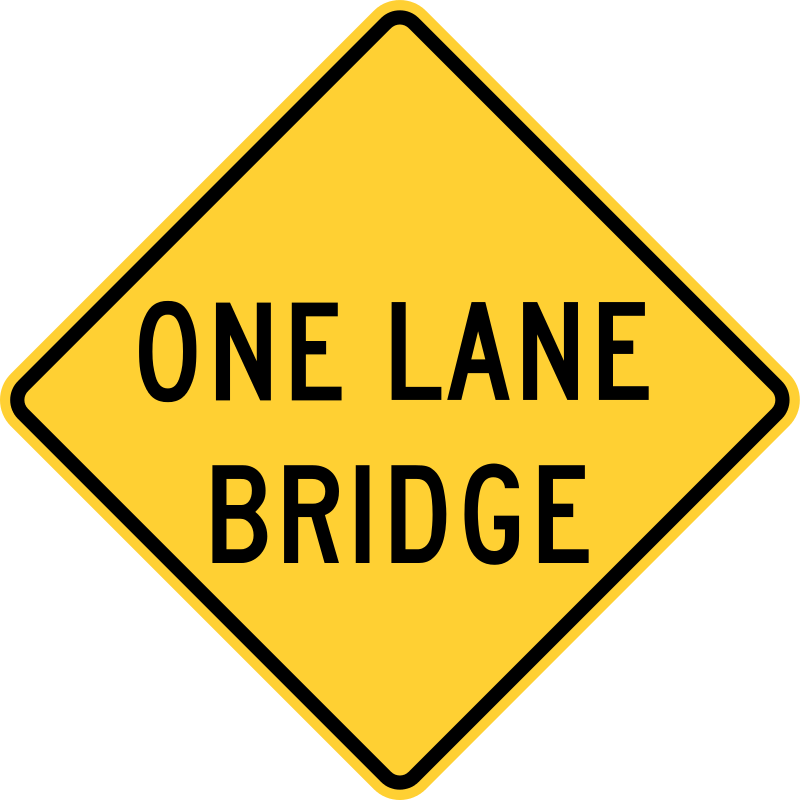
What should drivers do when they see this sign?
A)
Make sure the bridge is clear of oncoming traffic before they cross.
B)
Look to the left and right for other traffic.
C)
Allow others to merge smoothly.
15.
A flashing yellow light means:
A)
The light will soon change from green to red.
B)
Drive with caution.
C)
Yield the right-of-way to other traffic at the intersection.
16.
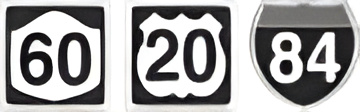
These are:
A)
route signs.
B)
miles-left signs.
C)
speed limit signs.
17.
This sign indicates:
A)
A slow-moving vehicle
B)
A no-passing zone
C)
Yield
18.
You ________ traffic headed toward you when you turn left.
A)
must not yield to
B)
must interrupt
C)
must yield to
19.
Drivers should check their rearview mirrors:
A)
often to see how traffic is moving behind them.
B)
only when slowing down.
C)
to see if a truck is in their blind spot.
20.
What should drivers do in case of a brake failure?
A)
Shift to a lower gear.
B)
Tie a white cloth on the left door handle.
C)
Brake lightly.
21.
Parking is not allowed:
A)
on the road side of a parked vehicle.
B)
in a tunnel.
C)
All of the above.
22.
A driver who's being passed on the right and the left by many vehicles while driving in the center lane of an highway should:
A)
take the next exit.
B)
move to the lane on their right.
C)
move to the lane on their left.
23.
_________________ your mirrors when you prepare to change lanes.
A)
Never depend on
B)
Never use
C)
Always rely on
24.
A flashing red light means:
A)
The same as a STOP sign.
B)
The light will soon change to steady red.
C)
Drive with caution.
25.
To maintain an adequate 'space cushion' to the front, drivers need to:
A)
keep a safe distance between their car and the vehicle in front.
B)
The other answers are both correct.
C)
control their speed to suit the road and traffic conditions.
26.
Which shape is a speed limit sign?
A)
Round
B)
Pentagon
C)
Vertical rectangle
27.
ABS is the acronym for:
A)
Anti-Braking System
B)
Average-Beam System
C)
Anti-Locking Brake System
28.
This road sign means:
A)
Lane reduction - the left lane ends soon
B)
Highway entrance ramp ahead
C)
Lane reduction - the right lane ends soon
29.
You must come to a full stop at a yield sign:
A)
Always.
B)
Never.
C)
If traffic conditions require it.
30.
When you see this sign you should:
A)
increase your speed and try to pass other vehicles.
B)
slow your speed and be prepared to stop.
C)
slow your speed and do not pass other vehicles.
31.
What is the main reason night driving is more difficult than daytime driving?
A)
The use of headlight is required by law.
B)
Reduced visibility.
C)
Driving within the range.
32.
This road sign means:
A)
Drive with caution and be ready to stop
B)
Slow down or stop
C)
You must come to a complete stop
33.
This sign means:
A)
Narrow bridge ahead. Slow down and drive with caution.
B)
Do not to enter if your vehicle is taller than the height listed on the sign.
C)
No passing zone ahead.
34.
Before stopping your vehicle on the roadway, drivers should:
A)
check their mirrors for traffic.
B)
place their foot on the accelerator.
C)
pump the brakes to check if they work properly.
35.
This road sign means:
A)
No left turn
B)
No U-turn
C)
Detour ahead
36.
This road sign means:
A)
Right lane ends
B)
Highway entrance ramp ahead
C)
Left lane widens
37.
This sign indicates:
A)
Warning: drunk drivers.
B)
Winding road. Drive with caution.
C)
The road may be slippery when wet. Drive slowly.
38.
If your front wheels start to skid, the first thing you should do is:
A)
Take your foot off the gas pedal and shift to neutral.
B)
Immediately turn in the direction you want to go.
C)
Speed up, pump your brakes and steer in the direction the vehicle is trying to go.
39.
This road sign means:
A)
Railroad Crossing
B)
One Way
C)
Limited parking
40.
Which statement about blind spots is true?
A)
Before changing lanes, you should check mirrors and look over your shoulder toward the rear.
B)
Large trucks have smaller blind spots than most passenger vehicles.
C)
If traffic conditions permit you should cruise in blind spot of the vehicle ahead.
ANSWER KEY
Check answers after completing the test.
1
A
2
C
3
A
4
B
5
A
6
C
7
A
8
C
9
C
10
C
11
A
12
B
13
A
14
A
15
B
16
A
17
A
18
C
19
A
20
A
21
C
22
B
23
A
24
A
25
B
26
C
27
C
28
C
29
C
30
C
31
B
32
C
33
B
34
A
35
B
36
A
37
C
38
A
39
A
40
A