DriveQuiz drivequiz.com

KY DMV PERMİT PRACTİCE TEST 13

Kentucky
Duration: 36 min
|
Questions: 40
Student Name:
Date:
Correct:      Incorrect:      Score:      
1.

The road ahead is divided by a median strip or physical barrier into two separate one-way roadways. Keep to the right of the divider.
This road sign means:
A) Divided highway ahead - stay to the right
B) Do not enter
C) Do not pass
2.
If you encounter an aggressive driver you should:
A) show them how to drive defensively.
B) speed up.
C) get out of their way.
3.
If there is no crosswalk and you see a pedestrian crossing your lane, you should:
A) stop and let the pedestrian finish crossing.
B) make sure the pedestrian can see you before proceeding.
C) honk your horn and proceed with caution.
4.
When changing lanes, drivers should identify a ____ second gap in traffic.
A) 2 to 3
B) 3 to 4
C) 4 to 5
5.
The only effective way to reduce your blood alcohol content (BAC) is:
A) drinking coffee.
B) fresh air.
C) not to drink over a period of time.
6.
The amount of alcohol in the blood is measured by:
A) blood alcohol concentration (BAC).
B) Number of Drinks (NOC).
C) Amount of Alcohol Drunk (AAD).
7.
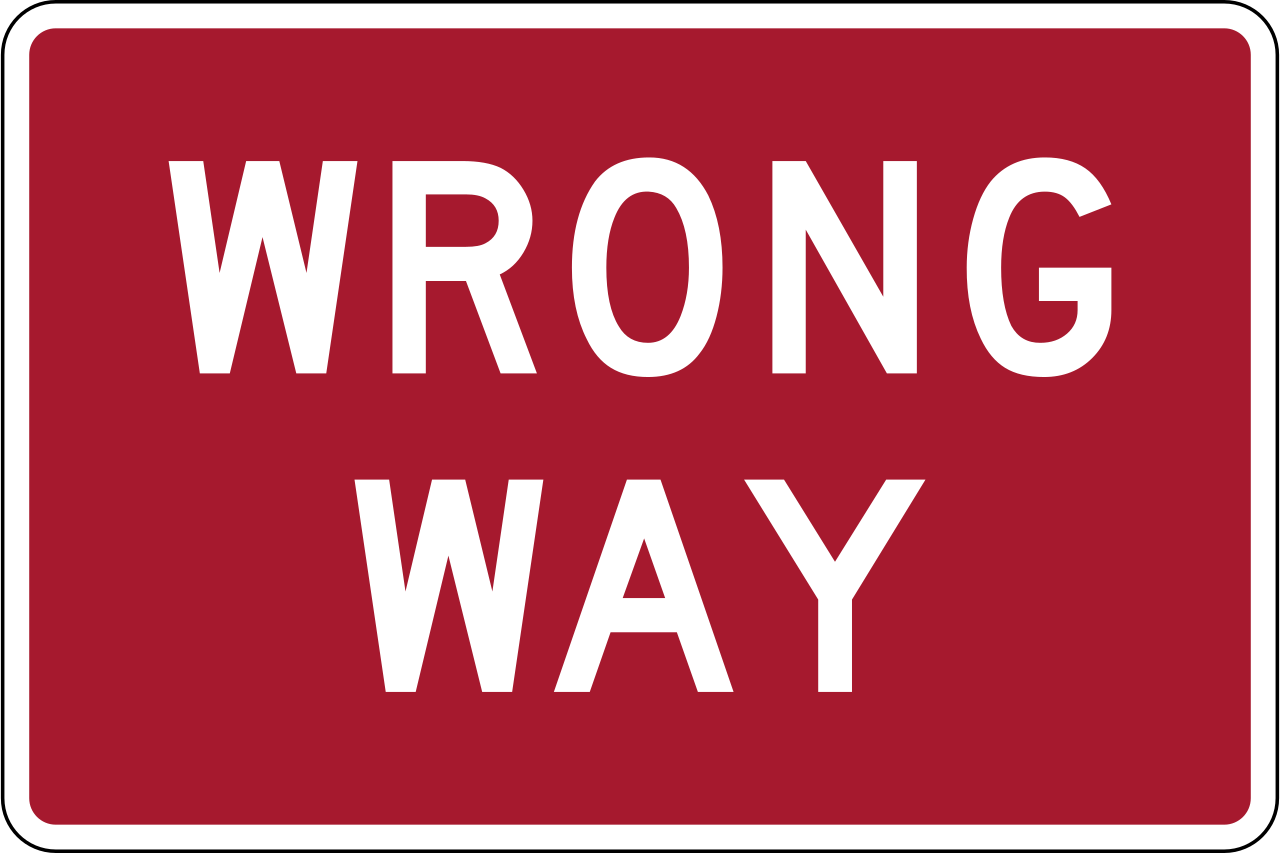
You are driving against the legal flow of traffic on a one-way street or freeway ramp. Immediately pull over, stop safely, and turn around when clear.
When drivers see this road sign:
A) they must come to a complete stop and call the police.
B) they must not drive past this sign.
C) they must turn around immediately.
8.
You can reduce the chance of a collision with a large vehicle if you:
A) delay near it.
B) cut abruptly in front of it.
C) pay close attention to the turn signals.
9.
Treat the flashing red signal exactly like a STOP sign: come to a complete stop, yield to cross traffic and pedestrians, then proceed when safe.
What does a flashing red light mean?
A) NO TURN ON RED.
B) The same thing as a stop sign.
C) Drivers may move forward with caution.
10.
A broken yellow line on your side of the roadway only means:
A) Passing is permitted on both sides.
B) Passing is permitted on your side of the roadway.
C) Passing is not permitted on either side.
11.
When being passed by another vehicle, drivers should:
A) slow down.
B) slightly increase their speed.
C) maintain a constant speed.
12.
When driving in fog, you should never use your high beams because:
A) the light will reflect back into your eyes.
B) vehicles behind you may follow too closely.
C) oncoming vehicles might not see you.
13.
___________ are green with white letters and symbols.
A) Warning signs
B) Destination signs (guide signs)
C) Regulation signs (regulatory signs)
14.
When children are close, what should you do before you back out of a driveway?
A) Rely on your mirrors.
B) Get out of the car and check behind the car.
C) Look through your back window for children.
15.
You face a green light, but traffic on the other side of the intersection does not allow you to travel all the way through the intersection. What must you do?
A) Enter the intersection and wait until traffic ahead clears.
B) Wait for the next green light.
C) Wait until traffic ahead clears, so you do not block the intersection.
16.
Give the right-of-way to any pedestrian:
A) on the opposite side of the street.
B) if you have the green light.
C) in a marked crosswalk.
17.
Which shape is a stop sign?
A) Diamond
B) Octagon
C) Upside-down triangle
18.
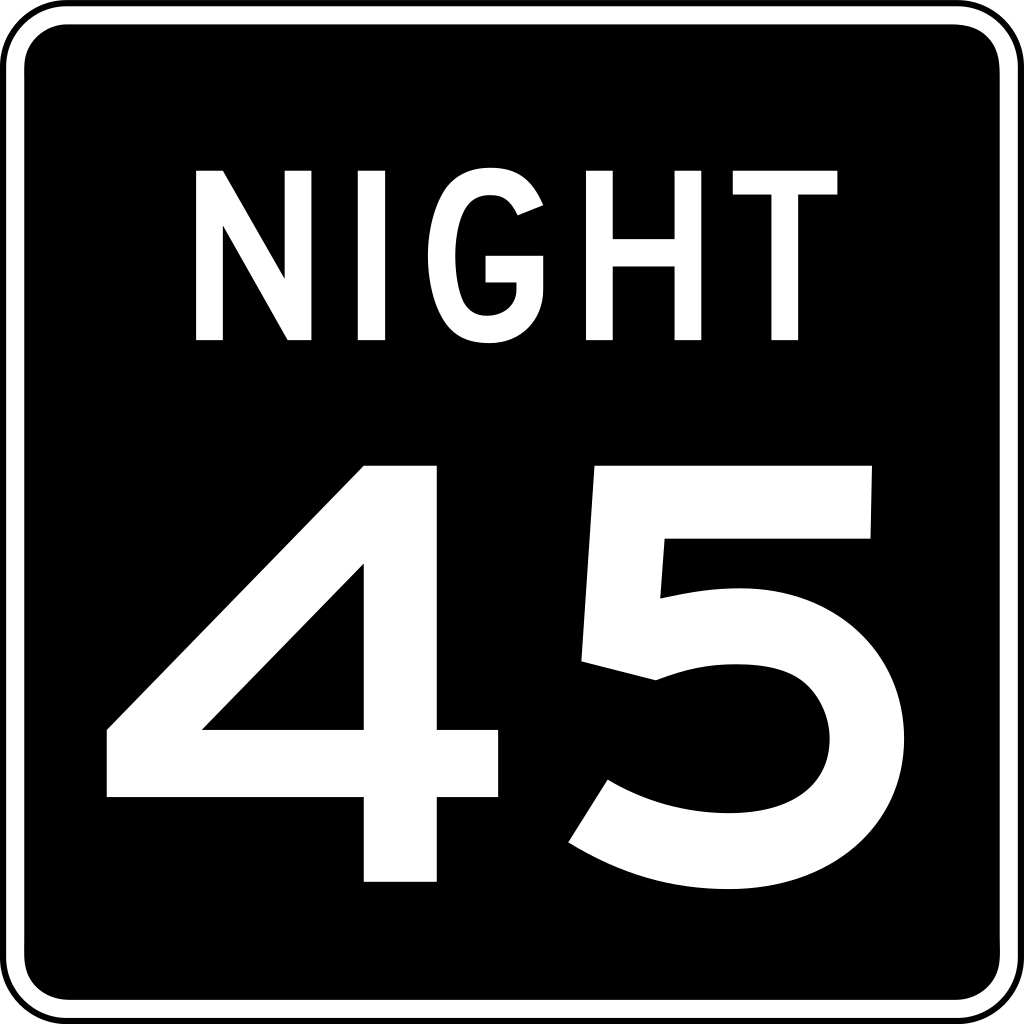
Indicates a lower maximum legal speed limit that applies only during nighttime hours for safety.
This sign means:
A) Take route 45 if you are driving at night.
B) The night-time speed limit is 45 MPH.
C) The minimum speed limit is 45 MPH.
19.
All approaching traffic must stop completely. The first vehicle to reach the intersection and stop has right-of-way; if two vehicles arrive simultaneously, the vehicle on the right goes first.
A 4-way stop sign means:
A) The first vehicle to reach the intersection should move forward first.
B) Traffic from all four directions must stop.
C) There are four stop signs at the intersection.
D) All of the above.
20.
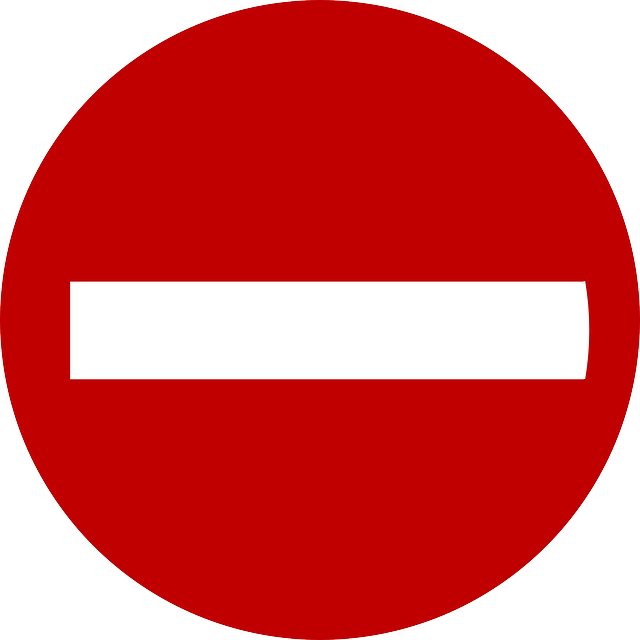
Indicates you have entered an exit ramp or one-way street in the incorrect direction. Stop immediately and safely turn around.
This road sign means:
A) No left turn
B) Lane ends
C) Do not enter
21.
Parking is not allowed:
A) in an intersection, unless permitted by signs.
B) within 300 feet of a pedestrian safety area.
C) on public roads
22.
When passing another vehicle, you should:
A) assume the other vehicle will maintain a constant speed.
B) check your mirrors and blind spots.
C) drive at the same speed as the vehicle you are passing.
23.
Large trucks:
A) have high-tech air brakes which allow them to stop quickly.
B) take longer to stop than passenger vehicles.
C) are more maneuverable than passenger vehicles.
24.
When passing another car, you have enough room to return to the driving lane when:
A) you cannot see the vehicle directly to your right.
B) you are at least 50 feet in front of the vehicle.
C) you can see both headlights of the car you passed in your rearview mirror.
25.
What should drivers do when the red lights begin to flash?
A) Stop.
B) Yield.
C) Slow down.
26.
When you are angry or upset you should:
A) listen to loud music while driving.
B) take a few minutes to cool off before you drive.
C) drive fast to let off steam.
27.
BAC is:
A) the acronym for Beer ACcumulation.
B) the number of ounces of alcohol in your blood.
C) the percentage of alcohol in your blood.
28.
Always driving slower than other traffic:
A) is a good defensive driving technique.
B) is always safer than driving faster than other traffic.
C) can block traffic.
29.
If a tire suddenly blows out while you are driving, you should:
A) apply the brakes firmly.
B) slow down gradually and brake lightly.
C) pump the brakes rapidly.
30.
Which signs have black letters on a white background?
A) Warning signs (diamond)
B) Regulatory signs (vertical rectangle)
C) Guide signs (horizontal rectangle)
31.
To make a proper right turn:
A) swing to the left before turning right.
B) slow down and get into the lane nearest the centerline.
C) give the proper signal and get into the lane nearest the right curb.
32.
Warns of an upcoming STOP sign that may not be immediately visible. Begin slowing down to prepare for a complete stop.
When drivers come to this sign, they must:
A) be ready to stop at the stop sign.
B) warn other drivers that a stop sign is ahead.
C) brake sharply and come to a complete stop.
33.
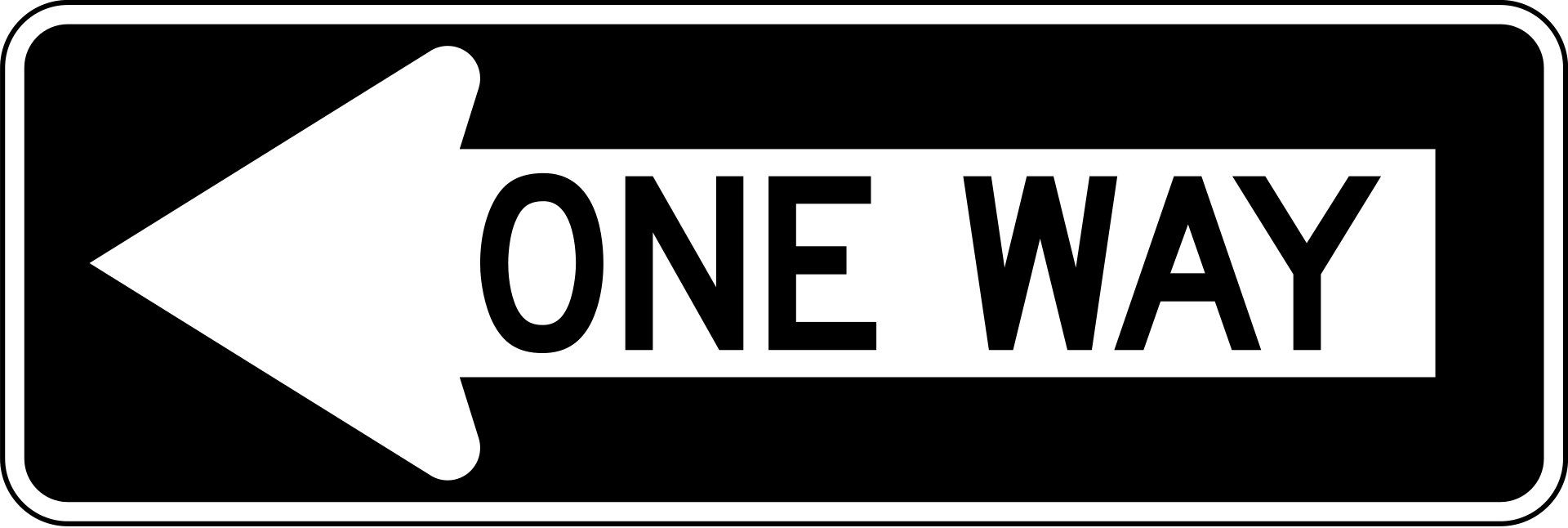
Traffic flows only in the direction indicated by the arrow. Never drive in the opposing direction.
This road sign means:
A) Two way Traffic
B) Traffic must move only in the direction of the arrow
C) Minimum Speed
34.
Right turns are strictly prohibited at this intersection under all circumstances.
This sign tells drivers that:
A) they must make a left turn at the intersection.
B) U-turns are not allowed.
C) they must not make a right turn.
D) None of the above.
35.
What should you do if your headlights suddenly go out?
A) Brake immediately and activate your emergency lights.
B) Use your emergency lights, parking lights or directional signals.
C) Ease your foot off the gas pedal and brake gently.
36.
To reduce road rage, you should:
A) always signal your intention when changing lanes.
B) use your horn frequently to warn other drivers.
C) talk on your cell phone while driving.
37.
The traffic light is green and you want to drive straight through an intersection. If a car is already in the intersection and is making a turn, you must:
A) enter the intersection and then stop.
B) drive through the intersection. You have the right-of-way.
C) let that car complete its turn before you enter the intersection.
38.
Your Driver’s License will:
A) expire on your birthday.
B) expire after five years of issuance.
C) never expire.
39.
Warns of an extremely sharp 180-degree curve ahead. Decelerate significantly before entering the turn.
This sign means:
A) Hairpin corner ahead.
B) Warning: U-turn ahead.
C) Sharp right turn ahead.
40.
It is unlawful­ to:
A) pass within 250 feet of any intersection.
B) exceed the posted speed limit when passing.
C) pass within 150 feet of any railroad crossing.
ANSWER KEY Check answers after completing the test.
1 A
2 C
3 A
4 C
5 C
6 A
7 C
8 C
9 B
10 B
11 C
12 A
13 B
14 B
15 C
16 C
17 B
18 B
19 D
20 C
21 A
22 B
23 B
24 C
25 A
26 B
27 C
28 C
29 B
30 B
31 C
32 A
33 B
34 C
35 B
36 A
37 C
38 A
39 A
40 B