DriveQuiz drivequiz.com

IN DMV PERMİT PRACTİCE TEST 3

Indiana
Duration: 45 min
|
Questions: 50
Student Name:
Date:
Correct:      Incorrect:      Score:      
1.

Prohibits drivers from making a 180-degree turn to travel in the opposite direction at this intersection or stretch of road.
This road sign means:
A) No left turn
B) No U-turn
C) Detour ahead
2.
Which of the following is true about the Anti-Locking Brake System?
A) It prevents skidding.
B) It allows drivers to steer during an emergency braking situation.
C) All of the above.
3.
If you are facing a red light or arrow, you may not enter the intersection until the light facing you turns green and the intersection is clear.
A) True
B) False
4.
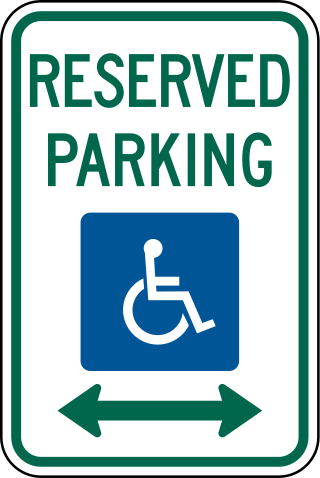
Disabled parking stall with statutory minimum fine ($250-$1,000) for unauthorized use.
This road sign means:
A) No parking
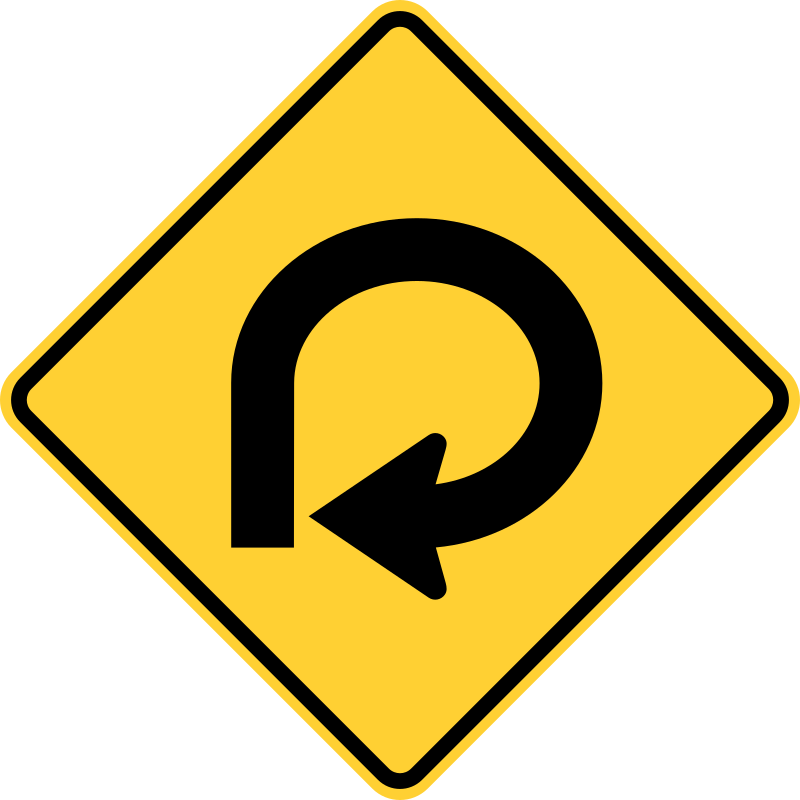
B) No Passing Zone
C) This parking is reserved for persons with disabilities.
5.
You may not turn right (or left from a one-way onto a one-way) while the traffic signal is red. Wait for the green signal before turning.
This sign tells drivers:
A) they must wait for the traffic signal to turn green before turning right or left.
B) they may not turn right or left during the red light.
C) All of the above.
6.
A large vehicle is backing up to unload goods. You should:
A) enter one of the blind spots and wait.
B) try to pass close behind.
C) be patient and wait until the large vehicle has completed its backup maneuver.
7.
When passing another vehicle, before turning back into the right-hand lane drivers should wait until they can see the vehicle they are passing in the rearview mirror.
A) True
B) False
8.
When driving in fog, you should turn on your high beams.
A) True
B) False
9.
To avoid becoming an aggressive driver, you should:
A) Adjust your schedule to drive during times with the most highway traffic.
B) Allow enough travel time to reach your destination on schedule.
C) Listen to heavy metal music.
10.
A signalized intersection is ahead. Prepare to stop if the light turns yellow or red.
This road sign means:
A) Traffic signal ahead
B) Stop
C) Yield the right-of-way
11.
If your brakes are wet, you can dry them by:
A) riding the pedal lightly.
B) pull over to the right and wait until it stops raining.
C) having them checked by a mechanic.
12.
Collisions can happen more often when one vehicle is traveling slower than the flow of traffic.
A) False
B) True
13.
If a vehicle starts to skid on water the driver should quickly apply the brakes.
A) True
B) False
14.
Drivers must yield the right-of-way to a bicyclist just as they would to another vehicle.
A) False
B) True
15.
If another vehicle passes you on the left, you must:
A) increase your speed slightly and keep to the right.
B) decrease your speed, then pull over to the right and stop.
C) decrease your speed slightly and keep to the right.
16.
What can you do to prevent skids on snow and ice?
A) Allow the wheels to keep turning.
B) Brake early and gently.
C) All of the above.
17.
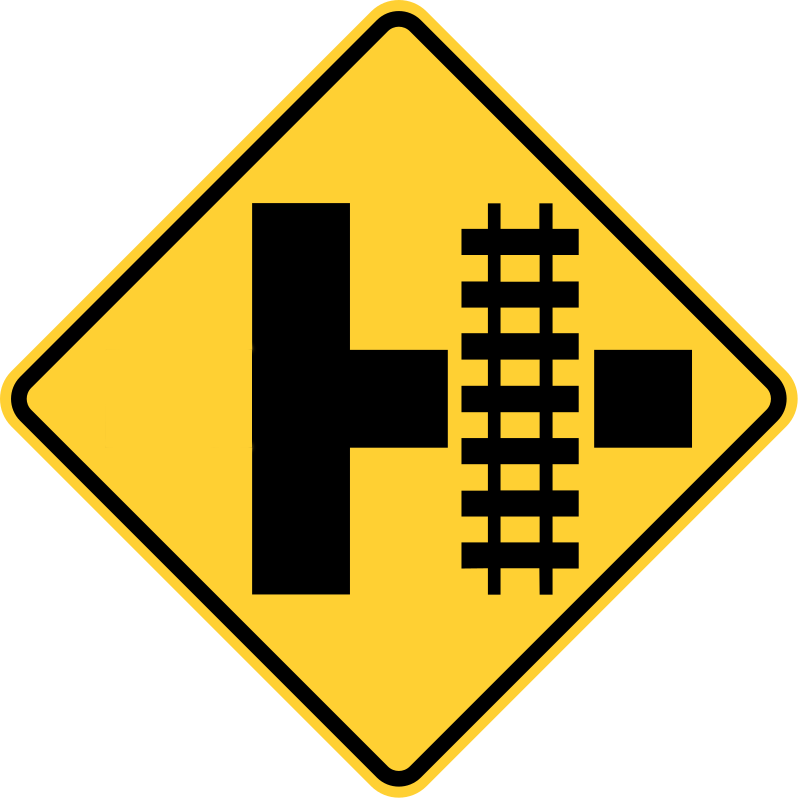
Four-way intersection ahead. Be prepared to yield right-of-way according to traffic control devices.
What does this sign indicate?
A) Parallel railroad crossing (side road)
B) Low ground clearance railroad crossing
C) Parallel railroad crossing (crossroad)
18.
Drivers can not pass a vehicle on the left if:
A) they approach the top of a hill on a two-way road and can not see over it.
B) they can not safely return to the right lane before they reach a solid yellow center line for the right lane.
C) All of the above.
19.
A good rule for drivers to follow is to stay at least two to three seconds behind the vehicle ahead.
A) True
B) False
20.
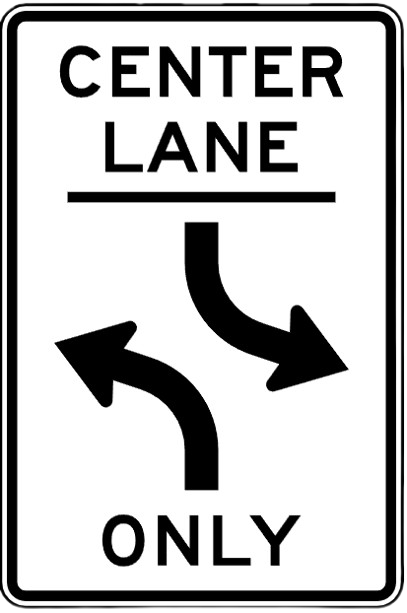
Indicates a two-way left-turn lane in the center of the road. Must only be used to make left turns or U-turns (where permitted), not for regular travel or passing.
This road sign means:
A) Vehicles may only travel in the center lane.
B) The center lane is shared for left turns in both directions of travel.
C) The center lane in both directions of travel will soon turn left.
21.
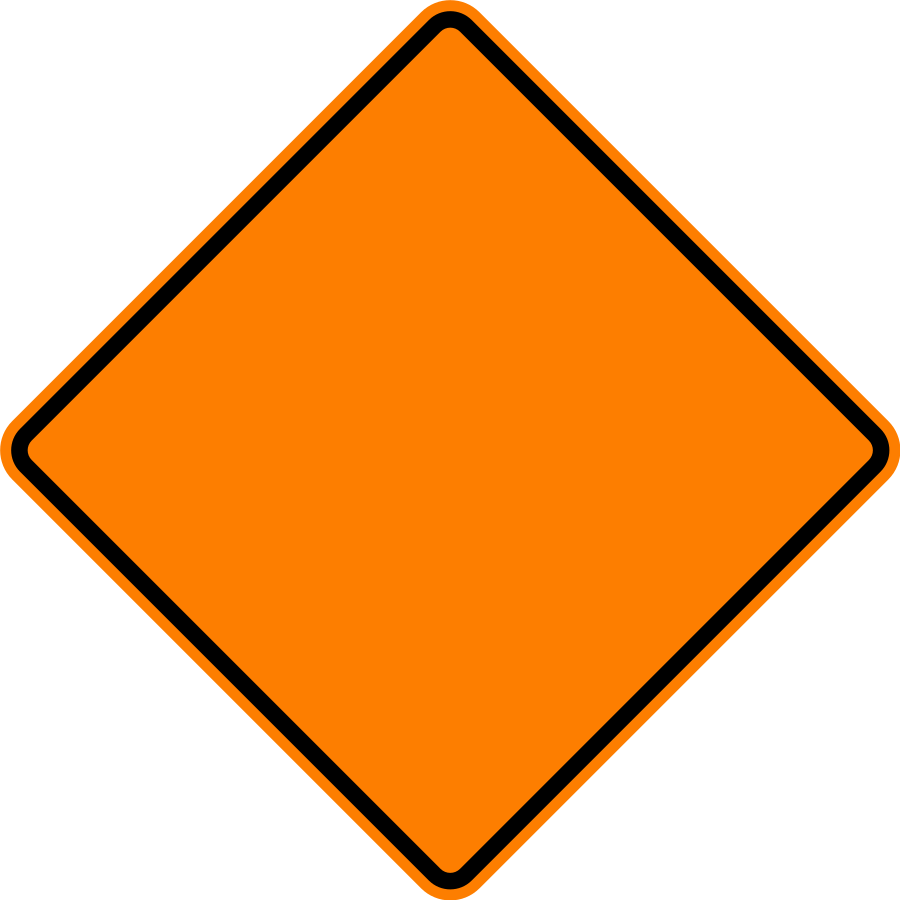
Yellow diamond-shaped signs always convey warnings about road hazards, changes in conditions, or upcoming requirements.
This road sign means:
A) Do not enter
B) Slow-Moving Vehicle
C) You must turn left ahead
D) Construction zone
22.
An individual’s driving privileges may be suspended under which of the following conditions?
A) Illegal transportation of alcohol twice in 12 months if ages 21 or older.
B) Three reckless driving offenses in 12 months.
C) Drag or street racing.
23.
What should you do if you see smoke come from under the hood?
A) Call the fire department and then pull off the road and park your vehicle.
B) Pull off the road and park your vehicle. Turn off the ignition, get away from the car and call the fire department.
C) Try to fight the fire yourself.
24.
The road curves gradually to the right ahead. Reduce speed before entering the curve.
This sign means:
A) The road will curve to the right.
B) Left turns are not allowed at the intersection.
C) Do not turn right.
25.
Your BAC depends on:
A) how much alcohol you drink.
B) how much time passes between drinks.
C) All of the above.
26.
The octagonal (8-sided) shape is exclusively reserved for STOP signs so drivers can identify it immediately even in poor visibility or from behind.
The octagonal shape is used:
A) for stop signs and railroad advance warning signs.
B) exclusively for stop signs.
C) to warn drivers of existing or possible hazards on roadways.
27.
Before crossing any railroad tracks, you must:
A) look and listen for trains.
B) make sure there is room for your vehicle on the other side.
C) All of the above.
28.
Warns of a circular exit or interchange ramp looping 270 degrees. Slow down significantly to the posted advisory speed.
This sign means:
A) Roundabout ahead.
B) 270 degree turn ahead.
C) Wrong way; Turn around immediately.
29.
Drivers may pass on a two-lane roadway marked with a single solid yellow line on their side of the center line.
A) False
B) True
30.
What do flashing red lights on a school bus indicate?
A) The bus is stopped to load or discharge passengers.
B) Traffic that approaches from either direction may proceed.
C) The bus is about to stop.
31.
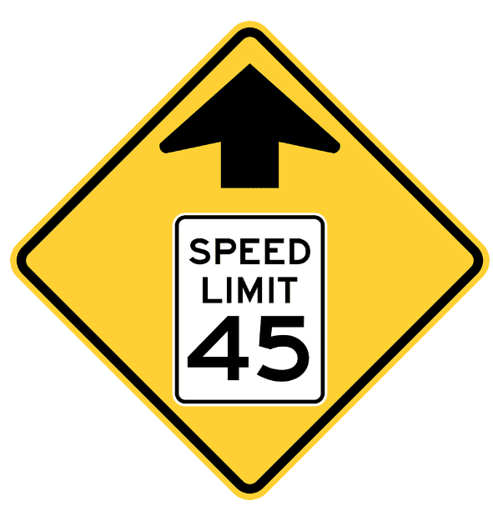
Recommended safe maximum driving speed in ideal conditions for an upcoming curve, ramp, or hazardous stretch of road.
This warning sign:
A) provides advance notice to upcoming speed limit change.
B) shows the current speed limit that all vehicles traveling in the direction of the arrow must not exceed.
C) indicates the suggested highest safe speed.
32.
Taillights are not required to be illuminated after dark.
A) True
B) False
33.
Which statement about blind spots is true?
A) Before changing lanes, you should check mirrors and look over your shoulder toward the rear.
B) Large trucks have smaller blind spots than most passenger vehicles.
C) If traffic conditions permit you should cruise in blind spot of the vehicle ahead.
34.
Does a vehicle prepared to enter a traffic circle or rotary have right-of-way over vehicles in the circle?
A) Yes, but only if they are entering the rotary from the right lane.
B) No. Vehicles already in the circle have the right-of-way.
C) Only if the light is green.
D) Yes.
35.
Treat the flashing red signal exactly like a STOP sign: come to a complete stop, yield to cross traffic and pedestrians, then proceed when safe.
What does a flashing red light mean?
A) NO TURN ON RED.
B) The same thing as a stop sign.
C) Drivers may move forward with caution.
36.
You are stopped at a stop sign and you are going to go straight through the intersection. A car on the cross road has stopped at a stop sign on your right and is going to go straight. Who has the right-of-way?
A) Whoever enters the intersection first.
B) You.
C) The car on your right.
37.
The median divider ends ahead, and you are returning to a two-way, two-lane undivided roadway. Watch for oncoming traffic on your left.
This sign means:
A) Reversible lane ahead.
B) The divided highway ends ahead.
C) Drivers are coming to a point where another traffic lane joins the one they are on.
38.
After a train clears a crossing that has flashing signals, drivers may proceed when there is evidence no trains are approaching the crossing and when the lights have stopped flashing.
A) True
B) False
39.
A vehicle is stopped at a crosswalk to permit a pedestrian to cross the roadway. The driver of the vehicle approaching from the rear should:
A) sound the horn.
B) overtake and pass the stopped vehicle.
C) not overtake and pass the stopped vehicle.
40.
Reflective orange triangle displayed on vehicles traveling at 25 MPH or slower (such as farm tractors or construction machinery). Approach with caution and pass safely.
This symbol is used for:
A) slow moving vehicles.
B) yield signs.
C) dangerous intersections.
41.
At intersections where two or more drivers stop at STOP signs at the same time and they are at right angles:
A) the driver on the left must yield to the driver on the right.
B) the driver who is late for work has the right-of-way.
C) the driver on the right must yield to the driver on the left.
42.
Proceed with caution. You do not need to stop unless pedestrians or hazards are present in the intersection.
What does a flashing yellow light mean?
A) The same thing as a stop sign.
B) Drivers may move forward with caution.
C) All of the above.
43.
When approaching a construction site, drivers should:
A) accelerate to get out of the way quickly.
B) slow down and adjust their driving manner.
C) honk their horn to alert construction workers of their presence.
44.
When following a vehicle at night you should dim your headlights.
A) True
B) False
45.
You should never depend on your mirrors when you prepare to change lanes. Why?
A) You should look over your shoulder instead.
B) Mirrors are useless.
C) Mirrors need to be adjusted.
D) Mirrors leave 'blind spots' behind both sides of vehicles.
46.
The only effective way to reduce your blood alcohol content (BAC) is:
A) drinking coffee.
B) fresh air.
C) not to drink over a period of time.
47.
Another road crosses the highway ahead. Look left and right for crossing or entering vehicles.
This sign indicates:
A) a side road.
B) a cross road.
C) a church zone ahead.
48.
Drivers must give the right or left turn signal when changing lanes.
A) False
B) True
49.
When you pass another vehicle, before you return to the right lane, you must:
A) look at your interior rear-view mirror.
B) signal.
C) All of the above.
50.
If you hear a thumping sound while driving, you should:
A) hook your shoe under the gas pedal and see if you can free it.
B) get off the road and check your tires.
C) try your emergency lights.
ANSWER KEY Check answers after completing the test.
1 B
2 C
3 A
4 C
5 C
6 C
7 A
8 B
9 B
10 A
11 A
12 B
13 B
14 B
15 C
16 C
17 A
18 C
19 A
20 B
21 D
22 A
23 B
24 A
25 C
26 B
27 C
28 B
29 A
30 A
31 A
32 B
33 A
34 B
35 B
36 C
37 B
38 A
39 C
40 A
41 A
42 B
43 B
44 A
45 D
46 C
47 B
48 B
49 C
50 B