DriveQuiz drivequiz.com

IN DMV PERMİT PRACTİCE TEST 2

Indiana
Duration: 45 min
|
Questions: 50
Student Name:
Date:
Correct:      Incorrect:      Score:      
1.
A traffic light shows both a red light and a green arrow. The driver may not turn in the direction of the arrow until the red light has changed.
A) True
B) False
2.
What is the first thing to do when you make a three-point turn?
A) Signal with your left turn signal, then check carefully for traffic coming toward you.
B) Signal with your right turn signal, then pull over to the right and stop.
C) Turn left, go across the road so you come to a stop while you face the edge of the road.
3.
Prohibits drivers from making a 180-degree turn to travel in the opposite direction at this intersection or stretch of road.
The picture shows a _________ sign.
A) no U-turn
B) no left turn
C) sharp turn
4.
Object marker used to mark obstacles or bridge abutments near the edge of the road to alert drivers at night.
When they see a yellow X signal, drivers should:
A) come to a complete stop at the marked stop line.
B) turn off the ignition.
C) prepare to leave the lane safely.
5.
You can reduce the chance of a collision with a large vehicle if you:
A) delay near it.
B) cut abruptly in front of it.
C) pay close attention to the turn signals.
6.
Prohibits drivers from making a 180-degree turn to travel in the opposite direction at this intersection or stretch of road.
This road sign means:
A) Left turns are not allowed where this sign is displayed.
B) Drivers cannot make a complete turn to go in the opposite direction.
C) Vehicles turning left must make a U-turn.
7.
A thumping sound can be a warning:
A) that a tire blowout is about to occur.
B) of a steering failure.
C) of a brake failure.
8.
When a bicyclist is approaching on the right, drivers turning right must let the bicyclist go through the intersection first before making a right turn.
A) False
B) True
9.
Warns that a one-way street or divided highway is ending, and you are entering a roadway with oncoming traffic in the opposing lane. Stay to the right.
This road sign means:
A) Divided highway ahead
B) Two-way traffic ahead
C) Four-lane traffic ahead
10.
In urban areas, drivers moving out of an alley, private road or driveway need not come to a complete stop before entering the roadway if the roadway is clear of traffic.
A) False
B) True
11.
Warns of an extremely sharp 180-degree curve ahead. Decelerate significantly before entering the turn.
This sign means:
A) Hairpin corner ahead.
B) Warning: U-turn ahead.
C) Sharp right turn ahead.
12.
The roadway ahead is narrowing or a lane is ending. Merge smoothly into the continuing lane.
This sign warns drivers that:
A) there is a one lane bridge ahead.
B) the right lane ends.
C) the road ahead is narrow.
13.
Where must a pedestrian walk when there are no sidewalks?
A) On the side of the road, in the same direction of traffic.
B) In the middle of the road, facing oncoming traffic.
C) On the side of the road, facing the traffic.
14.
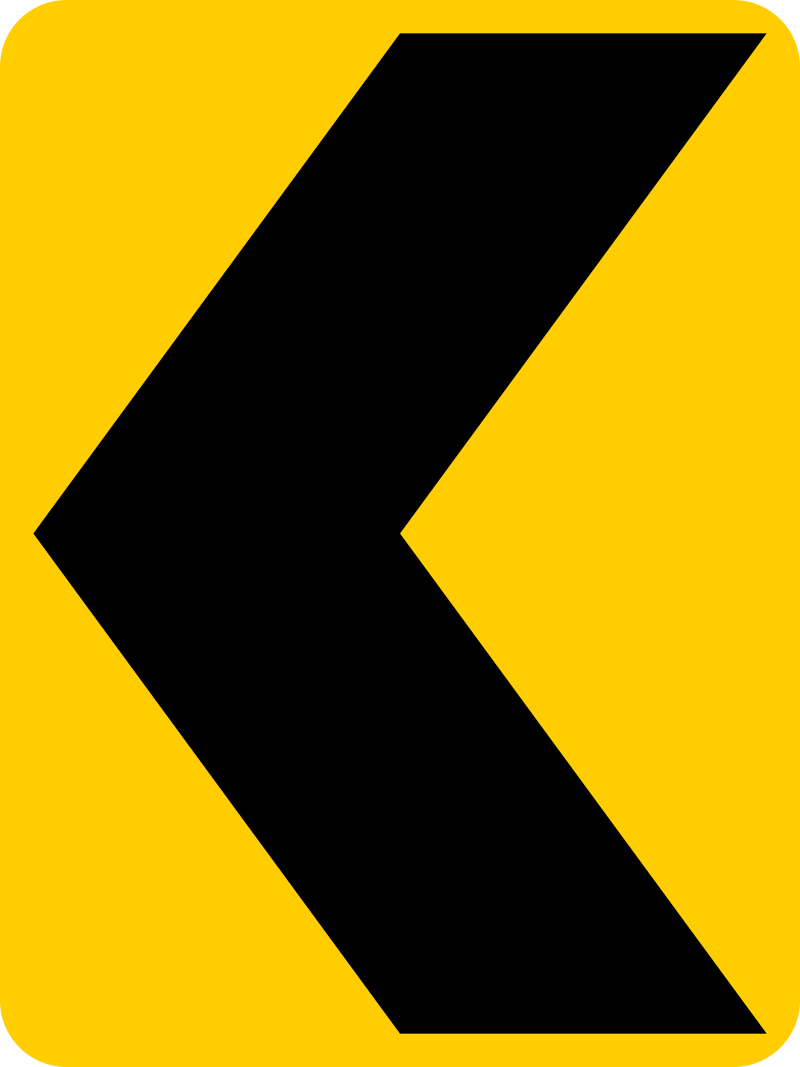
Sharp curve alignment marker guiding motorists through sharp turns at night or in low visibility.
This sign means:
A) Side road ahead
B) The road is curving sharply to the left
C) Warning: traffic is coming from the right
D) Construction zone ahead
15.
When parking on a public road, drivers should:
A) move as far away from traffic as possible.
B) always park on the left side of the roadway.
C) All of the above.
16.
You ________ traffic headed toward you when you turn left.
A) must not yield to
B) must interrupt
C) must yield to
17.
You can pass on the right:
A) when a vehicle ahead makes a right turn.
B) when a vehicle ahead makes a left turn.
C) when a vehicle that is approaching from the opposite direction is prepared to turn left.
18.
Drivers are permitted to wear a headset while driving.
A) False
B) True
19.
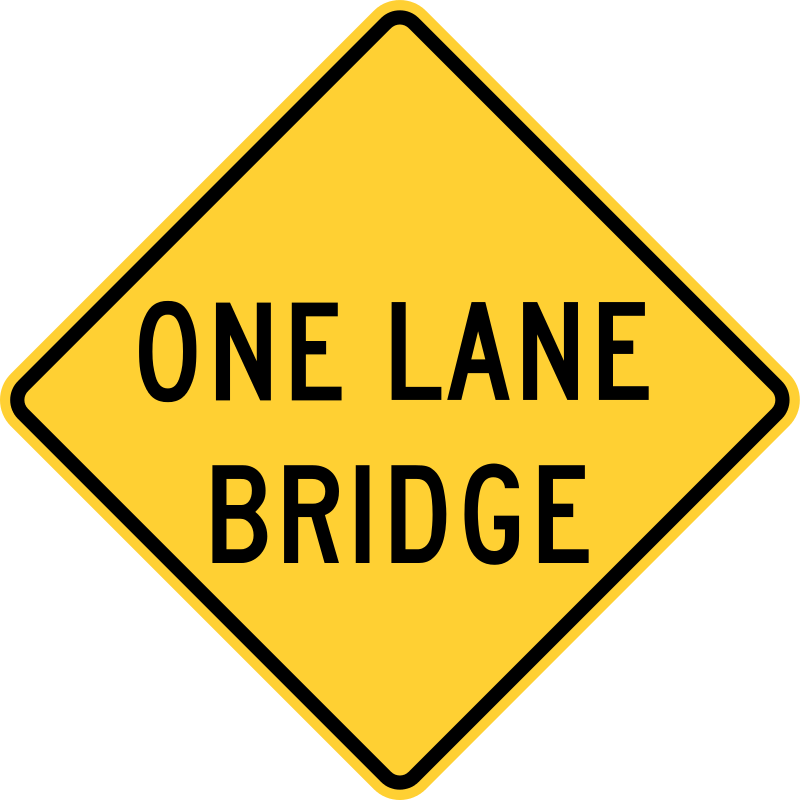
The bridge width allows only one vehicle to cross at a time. The vehicle reaching the bridge first has right-of-way; opposing traffic must wait.
What should drivers do when they see this sign?
A) Make sure the bridge is clear of oncoming traffic before they cross.
B) Look to the left and right for other traffic.
C) Allow others to merge smoothly.
20.
If your front wheels start to skid, the first thing you should do is:
A) Take your foot off the gas pedal and shift to neutral.
B) Immediately turn in the direction you want to go.
C) Speed up, pump your brakes and steer in the direction the vehicle is trying to go.
21.
Protected left turns have ended. You may make a left turn only after yielding to all oncoming vehicles and pedestrians.
What does a flashing left yellow arrow mean?
A) Vehicles turning left must stop if they can. The light will soon be red.
B) Only right turns are allowed.
C) Left turns are allowed. Yield to oncoming traffic and pedestrians.
D) None of the above.
22.
After parking, are you allowed to open a door on the road side of your vehicle?
A) Yes, always.
B) Yes, but only if it does not interfere with bicyclists and other traffic.
C) No, never.
23.
Indicates an upcoming bicycle crossing or shared road zone. Always leave at least 3 feet of clearance when passing cyclists.
This sign means:
A) Bicycles should yield to vehicles ahead.
B) Warning: a bikeway crosses the roadway ahead.
C) The lane ahead is reserved for bicycles.
24.
Examples of proper glass maintenance include:
A) Replacing worn wiper blades.
B) Keeping your windows clean and clear.
C) All of the above.
25.
Your car must have a horn that can be heard from a distance of 200 feet.
A) False
B) True
26.
Drivers may pass another vehicle by driving on the shoulder of the road.
A) True
B) False
27.
What should you do if a vehicle is approaching head-on in your lane?
A) Pull over to the left and use your emergency lights to stop the other driver.
B) Decrease speed, pull over to the right and sound your horn to warn the other driver.
C) Come to a complete stop and use your horn to warn the vehicles behind you.
D) Turn off the ignition if your vehicle has power steering.
28.
A vehicle that enters a road from a driveway:
A) has the right-of-way.
B) must yield to traffic approaching from the right, while it has the right-of-way over vehicles approaching from the left.
C) must stop and yield the right-of-way to traffic on the roadway and to pedestrians.
29.
BAC is expressed in:
A) percentage of alcohol to blood.
B) percentage of blood to alcohol.
C) ounces of alcohol in your blood.
30.
Where there is no bicycle lane, where on the road must a bicyclist ride?
A) on the left shoulder of the road.
B) near the right curb or edge of the road.
C) near the left edge of the road.
31.
Drivers should check their rearview mirrors:
A) often to see how traffic is moving behind them.
B) only when slowing down.
C) to see if a truck is in their blind spot.
32.
Alerts drivers to an upcoming crosswalk where pedestrians frequently cross. Slow down and yield right-of-way to anyone in or about to enter the roadway.
This road sign means:
A) Steep downgrade
B) No Passing Zone
C) Railroad crossing ahead
D) Construction zone ahead
33.
Parking is not allowed:
A) on the road side of a parked vehicle.
B) in a tunnel.
C) All of the above.
34.
When riding in a vehicle equipped with air bags is, children ages 12 and under are safer:
A) buckled up in the back seat.
B) in the bed of a pick-up truck.
C) buckled up in the front seat.
35.
The BMV may require drivers 21 years of age and older who are convicted of 2 or more traffic offenses within a 12-month period to complete a BMV-approved DSP course.
A) True
B) False
36.
Following another vehicle too closely is known as:
A) speedgating.
B) closetailing.
C) tailgating.
37.
If you have an Indiana credential, you must notify the BMV of a change of your principal address within 30 days of the address change.
A) True
B) False
38.
Drivers are required to stop within how many feet of the nearest railroad crossing when a train is approaching?
A) Between 10 and 15 feet.
B) Between 15 and 50 feet.
C) 10 feet
39.
Parking is permitted only during specified hours and days as posted on the sign. Vehicles parked outside these hours are subject to ticketing or towing.
This sign means:
A) You can only park between 8:30 AM and 5:30 PM.
B) Parking is not allowed at 8:30 AM and at 5:30 PM
C) No parking between 8:30 AM and 5:30 PM.
40.
Vertical panels, barricades, drums and cones are the most commonly used devices to guide drivers safely through work zones.
A) True
B) False
41.
Slower-moving vehicles must stay in the right-hand lane to allow faster traffic to pass safely on multi-lane highways.
This road sign is:
A) a speed reduction sign.
B) a warning sign.
C) a regulatory sign.
42.
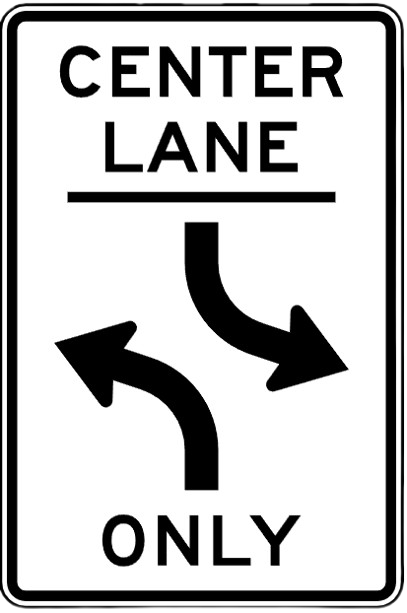
Indicates a two-way left-turn lane in the center of the road. Must only be used to make left turns or U-turns (where permitted), not for regular travel or passing.
This sign means:
A) The center lane is shared for left turns.
B) Left turns in both directions of travel are not permitted.
C) Vehicles may only turn left.
43.
When you prepare to make a left turn from a one-way road into a one-way road, you must:
A) move into the right lane, or to the left side of a single lane.
B) move into the right lane, or to the right side of a single lane.
C) move into the left lane, or to the left side of a single lane.
44.
For protection, motorcyclists are required to:
A) keep their headlights and taillights on at all times.
B) signal turns, lane changes and stops.
C) wear approved helmets.
45.
Designated school crosswalk location. You must yield to all schoolchildren and pedestrians in the crossing.
When they approach this sign, drivers must:
A) slow down and watch for children crossing the road.
B) obey signals from crossing guards.
C) stop if necessary.
D) All of the above.
46.
On average, how long does it take your body to remove the alcohol contained in 5 ounces of wine?
A) one hour.
B) 30 minutes.
C) 3 hours.
47.
If you are involved in or come upon a traffic crash, you should stop your vehicle in a safe, well-lighted public place that does not obstruct traffic, if able to do so.
A) True
B) False
48.
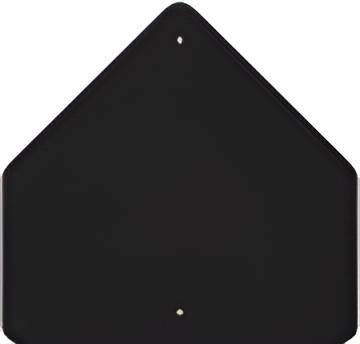
Pentagonal fluorescent yellow-green sign indicating a school crossing zone. High-visibility coloring is used to protect students.
A pentagon-shaped sign is a:
A) regulatory sign.
B) school crossing sign.
C) yield sign.
49.
The driver of an emergency vehicle that uses lights and a siren can legally:
A) pass red lights.
B) exceed the speed limit
C) All of the above.
50.
When driving at night with no other vehicles ahead, a driver should use:
A) high beam lights.
B) low-beam lights.
C) parking lights.
ANSWER KEY Check answers after completing the test.
1 B
2 B
3 A
4 C
5 C
6 B
7 A
8 B
9 B
10 A
11 A
12 B
13 C
14 B
15 A
16 C
17 B
18 A
19 A
20 A
21 C
22 B
23 B
24 C
25 B
26 B
27 A
28 C
29 A
30 B
31 A
32 C
33 C
34 A
35 A
36 C
37 A
38 B
39 C
40 A
41 C
42 A
43 C
44 C
45 D
46 A
47 A
48 B
49 C
50 A