You should use turn signals to indicate your intention with sufficient time to allow other drivers to see the signal:
A)if it’s raining.
B)AFTER you move.
C)BEFORE you move.
3.
Using a smartphone while driving is permitted as long as the driver is using a hands-free device.
A)True
B)False
4.
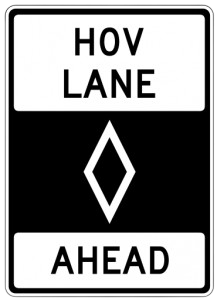
This road sign indicates that:
A)a lane is reserved for certain purposes or certain vehicles.
B)buses and car pools may not travel in the restricted lane.
C)vehicles cannot go straight ahead. Cars must turn either to the right or left.
5.
A flashing yellow light:
A)warns drivers to proceed with caution.
B)is used at dangerous intersections.
C)All of the above.
6.
The sign in the picture:
A)is a Construction and Maintenance Traffic Control sign.
B)is found at most intersections and indicates that drivers must yield to other vehicles.
C)is displayed on the rear of slow moving vehicles.
7.
This sign means:
A)You may make a U-turn.
B)Hairpin corner ahead.
C)You must make a U-turn.
8.
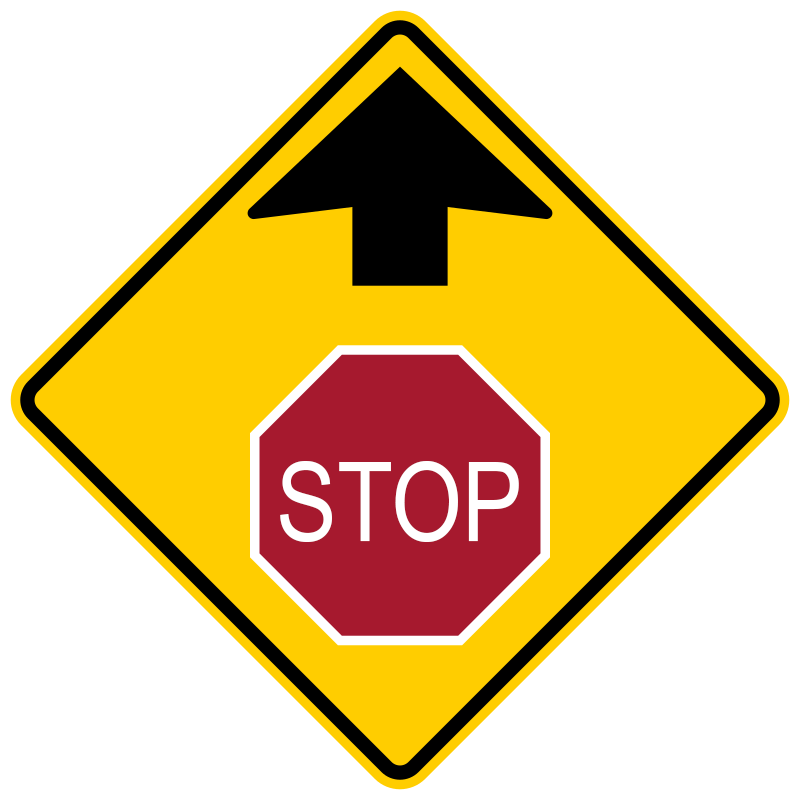
This road sign means:
A)Railroad Warning
B)Stop ahead
C)Yield ahead
D)Side Road
9.
This road sign means:
A)Winding road
B)Side road ahead
C)Slippery when wet
10.
If you are arrested with a blood-alcohol concentration (BAC) of .08 percent or more, your driving privileges will be suspended for at least six months.
A)False
B)True
11.
Slow vehicles should travel in the the left-hand lane except when passing or making a left turn.
A)False
B)True
12.
Traffic lights are normally ____________ from the top to bottom or left to right.
A)red, green and yellow
B)green, yellow and red
C)red, yellow and green
13.
When an emergency vehicle approaches using a siren, air horn or a red or blue flashing light, drivers must move to the right side of the road and stop until the vehicle has passed.
A)True
B)False
14.
You hear a siren close by but can not see where the emergency vehicle is. What do you do?
A)Keep driving until you are sure the emergency vehicle is headed toward you.
B)Stop immediately and activate your emergency flashers.
C)Pull over to the right side of the road and stop until you are sure the emergency vehicle is not headed toward you.
15.
Speed limit signs are:
A)service signs
B)regulation signs (regulatory signs)
C)warning signs
16.
Your driving privileges may be revoked for giving false information to the Secretary of State.
A)False
B)True
17.
How can you prevent fatigue on a long trip?
A)Plan to drive long trips with a companion.
B)Get enough sleep.
C)All of the above.
18.
This sign means:
A)No traffic signal ahead
B)Traffic signal ahead
C)Open intersection ahead
19.
What is the most important rule to remember in any emergency?
A)Do not panic.
B)Run away.
C)Call the police.
20.
Most rear-end collisions are caused by vehicle operators following another vehicle more closely than is reasonable and prudent.
A)True
B)False
21.
If the front right wheel of a vehicle runs off the pavement, the driver should slow down by easing off the accelerator, then gently steer back onto the pavement.
A)False
B)True
22.
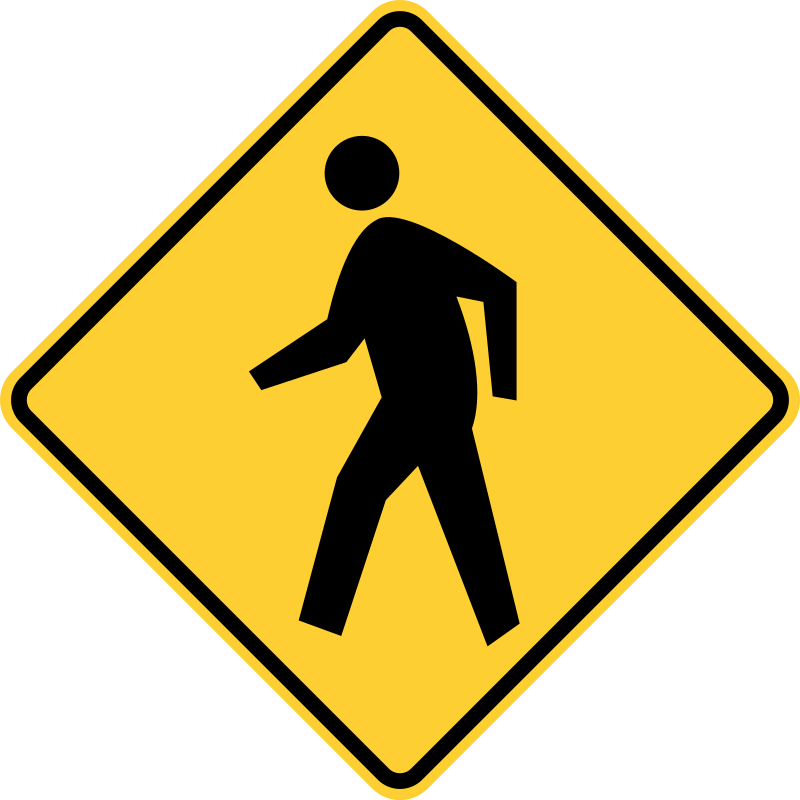
This road sign means:
A)Side Road
B)Watch for blind people
C)Pedestrian Crossing
23.
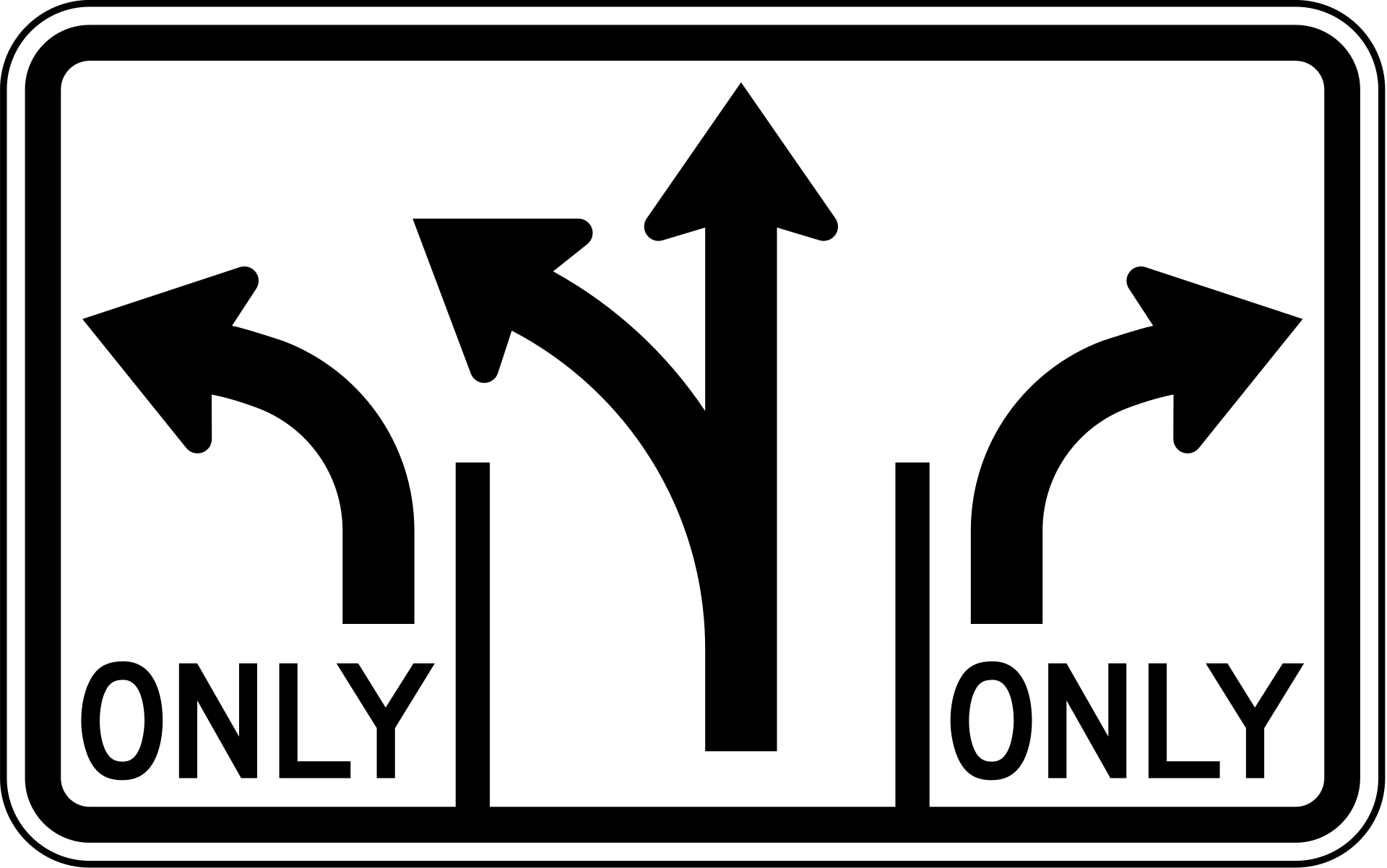
This regulatory sign tells drivers that:
A)traffic in the left lane must turn left at the intersection ahead.
B)all vehicles must turn left immediately.
C)traffic in the right lane must go straight.
24.
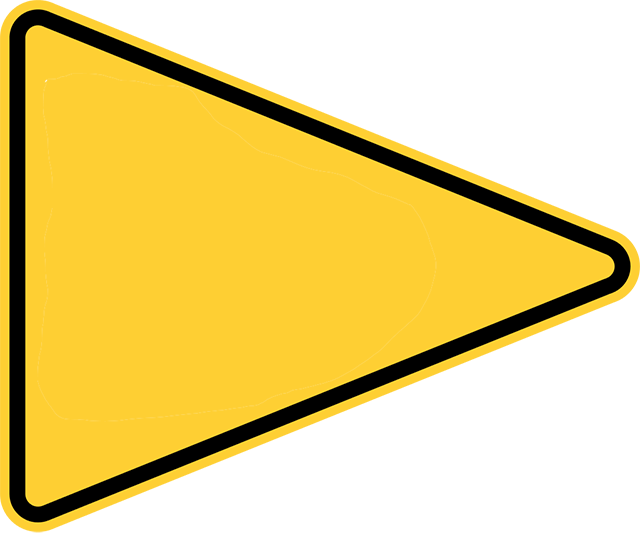
What message will be found on this pennant shaped sign?
A)Right turns only.
B)No passing zone.
C)Drive with caution: the road ahead turns right.
25.
This sign warns drivers that:
A)they must turn either to the right or left.
B)there is a double curve ahead.
C)there is a winding road ahead.
26.
On two-lane, two-way streets or highways, you should start left turns close to the center line.
A)True
B)False
27.
You want to turn left at an intersection ahead. A car reaches the intersection from the opposite direction and moves straight ahead. You:
A)can turn left. You have the right of way.
B)must wait for the car to go through before you turn.
C)may not enter the intersection to prepare for your left turn if the light is green.
28.
If your car goes into water, you should:
A)wait for water to rush in and let it out in small breaths through your nose.
B)call the fire department immediately.
C)remove yourself before it starts to sink.
29.
A broken white line:
A)means passing or crossing is prohibited in that lane.
B)separates two lanes traveling in the same direction.
C)marks the right edge of the roadway.
30.
This road sign means:
A)Trucks have the right-of-way
B)Hill
C)Trucks merging from the right
31.
Motorcyclists are entitled to use the full width of a traffic lane; therefore, a driver should pass a motorcycle the same way as passing another vehicle.
A)False
B)True
32.
Trying to beat a tractor-trailer to a single-lane construction zone creates a particularly dangerous situation.
A)False
B)True
33.
When you prepare to make a left turn from a one-way road into a two-way road, you must:
A)enter the two-way road to the left of its center line.
B)approach the turn in the right lane or from the right side of a single lane.
C)approach the turn in the left lane or from the left side of a single lane.
34.
What should you do as you prepare to turn right at an intersection?
A)Honk your horn.
B)Yield to bicyclists coming from the opposite direction.
C)Signal your turn, check for bicyclists, and do not turn directly in front of a bicyclist.
35.
If the entrance lane is too short to allow acceleration to expressway speed, you should:
A)stop and wait for a large space in traffic.
B)enter the expressway and accelerate quickly.
C)reduce your speed to 15 MPH or less and blend with traffic.
36.
Alcohol is the single greatest factor in fatal motor vehicle accidents.
A)False
B)True
37.
What does the flashing signal in the picture indicate?
A)The same thing as a stop sign.
B)Pedestrians should finish crossing the street if started.
C)Pedestrians should start crossing the street.
38.
Which of the following drugs could affect your ability to drive?
A)A cold remedy.
B)Marijuana.
C)All of the above.
39.
What should you do in case of a steering failure?
A)Pump your gas pedal a few times to increase the pressure.
B)Don't panic. Turn on your emergency lights to let other drivers know you are having car problems. Move toward the side of the road and bring the car to a gradual stop.
C)Leave the road immediately.
40.
Drivers should treat a railroad crossbuck sign the same as a yield sign.
A)False
B)True
41.
Which of the following is a defensive driving skill/technique?
A)Maintain the correct speed.
B)Do not drive if you are very weary.
C)All of the above.
42.
A driver who approaches an intersection:
A)must yield the right-of-way to traffic already in the intersection.
B)must drive straight through the intersection, even if another vehicle is already in the intersection.
C)has the right-of-way over traffic already in the intersection.
43.
Where must you position your vehicle when you prepare to make a left turn from a two-way roadway into a one-way roadway?
A)As far to the right as possible.
B)On the right curb.
C)As close as possible to the center line.
44.
If you are continually being passed on the right, you should:
A)move into the right lane and allow other vehicles to pass you on the left.
B)move into the left lane and allow other vehicles to pass you on the right.
C)increase your speed immediately.
45.
If a traffic officer signals you to drive through a red light:
A)you must do it.
B)you must wait for the red light to turn green.
C)you must not obey the officer. Signs and signals take precedence over directions given by traffic officers.
46.
After you stop for a school bus, you must:
A)turn off your engine.
B)pass the bus before the red lights stop flashing.
C)None of the above.
47.
Are drivers allowed to exceed the speed limit to pass other vehicles?
A)Yes, but only by 10 MPH or less.
B)No.
C)Yes, but only if they drive with caution.
48.
A motorist who refuses to submit to a chemical test will face a suspension of driving privileges for up to two years.
A)True
B)False
49.
Your car stalls on the tracks at a railroad crossing, and a collision with a train is imminent. After getting yourself and your passengers out of the car, you should:
A)run toward the train but stay off the tracks.
B)signal the train to stop.
C)cross the tracks.
50.
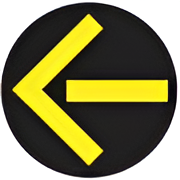
What does a yellow arrow signal mean?
A)The same as the yellow light, but applies only to movement in the direction of the arrow.
B)The same as a green light.
C)Vehicles moving in all directions must stop if they can. The light will soon be red.
ANSWER KEYCheck answers after completing the test.