DriveQuiz drivequiz.com

ID DMV PERMİT PRACTİCE TEST 9

Idaho
Duration: 36 min
|
Questions: 40
Student Name:
Date:
Correct:      Incorrect:      Score:      
1.

Prohibits drivers from making a 180-degree turn to travel in the opposite direction at this intersection or stretch of road.
This road sign means:
A) Left turns are not allowed where this sign is displayed.
B) Drivers cannot make a complete turn to go in the opposite direction.
C) Vehicles turning left must make a U-turn.
2.
Pedestrians must yield to motor vehicles:
A) when crossing the street in a marked crosswalk.
B) when crossing the street where there is no crosswalk or intersection.
C) in work zones only.
D) when the motor vehicle is a large commercial vehicle.
3.
One broken line indicates:
A) You can pass other vehicles and change lanes, if it is safe.
B) You can not pass other vehicles or go across the line.
C) You can change lanes, but only when traffic conditions or obstructions in the road make it necessary.
4.
Keeping a space cushion between you and the other vehicles around you is important because it:
A) gives you time to react to situations.
B) prevents distractions from other vehicles.
C) keeps other drivers alert.
D) keeps traffic flowing at a safe pace.
5.
Drivers can not pass a vehicle on the left if:
A) they approach the top of a hill on a two-way road and can not see over it.
B) they can not safely return to the right lane before they reach a solid yellow center line for the right lane.
C) All of the above.
6.
How can you prevent fatigue on a long trip?
A) Plan to drive long trips with a companion.
B) Get enough sleep.
C) All of the above.
7.
Service signs are ____ with ____ letters and symbols.
A) blue; white
B) white; black
C) green; white
8.
If cars approaching from opposite directions reach an intersection at the same time:
A) a car that moves straight must yield to cars that turn left.
B) a car that turns left must yield to cars that move straight or turn right.
C) a car that turns right must yield to cars that move straight or turn left.
9.
Drivers should allow a larger space cushion when stopping:
A) at a stop sign.
B) on an up-hill.
C) at an intersection.
D) at a yield sign.
10.
The amount of space you need to cross traffic depends on the:
A) road and weather conditions and oncoming traffic.
B) number of cars behind you.
C) presence of a yield sign.
D) number of cars in front of you.
11.
Alcohol:
A) makes you less aware of what is happening to your driving abilities.
B) makes it easier to make correct decisions.
C) improves your reaction time.
12.
When worn, safety belts:
A) help you maintain control of your car on rough roads.
B) help you maintain control of your car on winding roads.
C) reduce your chances of serious injury in an auto crash.
D) All of the above.
13.
When the road is slippery, you should:
A) brake suddenly carefully.
B) pump your brakes.
C) press your brakes in slow, steady strokes.
14.
The road ahead is divided by a median strip or physical barrier into two separate one-way roadways. Keep to the right of the divider.
This road sign means:
A) Keep left
B) Divided highway begins
C) Lane ends
15.
A steep downhill grade is ahead. Trucks and heavy vehicles should downshift to a lower gear to prevent brake overheating.
This sign warns of a ________ ahead.
A) hill
B) no passing zone
C) soft shoulder
16.
Before changing lanes:
A) signal at least 500 feet in advance on residential streets.
B) begin signaling as you move into the next lane.
C) always check your blind spot.
D) check your blind spot only if you have an older vehicle without all of its mirrors.
17.
When driving in fog, drivers should use:
A) low beam headlights.
B) parking lights.
C) high beam headlights.
18.
If an approaching driver does not dim the headlights, you should:
A) move your eyes to the left to help avoid the glare of approaching high beams.
B) move your eyes to the right and avoid looking directly at the bright lights.
C) flash your headlights to low beam for a second, then return to high beam.
19.
A flashing yellow traffic signal means:
A) Slow down and be alert at the upcoming intersection.
B) The same thing as a stop sign.
C) Stop and proceed when a green light appears.
D) No right turn.
20.
To drive more safely at night:
A) don’t drive when you are tired.
B) make sure your headlights are working properly.
C) increase following distance.
D) All of the above.
21.
Two drivers reach an uncontrolled intersection at the same time. Who has the right of way?
A) The driver on the left.
B) No one.
C) The driver on the right.
22.
At intersections marked with stop lines, drivers must:
A) come to a complete stop.
B) slow down and enter the intersection.
C) signal other vehicles to stop.
23.
When you pass another vehicle, before you return to the right lane, you must:
A) look at your interior rear-view mirror.
B) signal.
C) All of the above.
24.
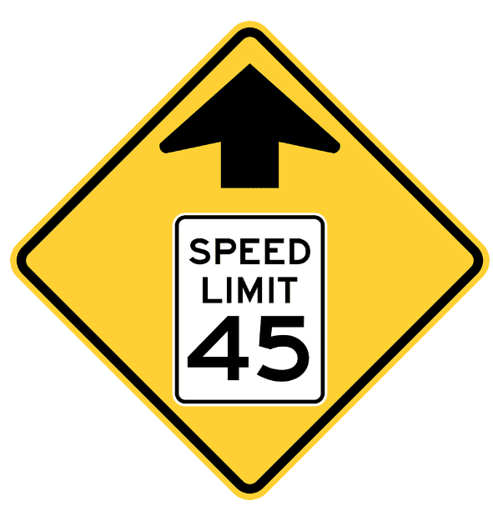
Recommended safe maximum driving speed in ideal conditions for an upcoming curve, ramp, or hazardous stretch of road.
This warning sign:
A) provides advance notice to upcoming speed limit change.
B) shows the current speed limit that all vehicles traveling in the direction of the arrow must not exceed.
C) indicates the suggested highest safe speed.
25.
Bicyclists must:
A) ride in a bicycle lane, if available.
B) remain to the right when they prepare for a left turn.
C) remain near the left edge of the road.
26.
When driving in heavy rain, drivers should use:
A) parking lights.
B) low beam headlights.
C) high beam headlights.
27.
When following other vehicles, maintain a space cushion of at least:
A) two seconds.
B) three seconds.
C) 300 feet
D) 200 feet
28.
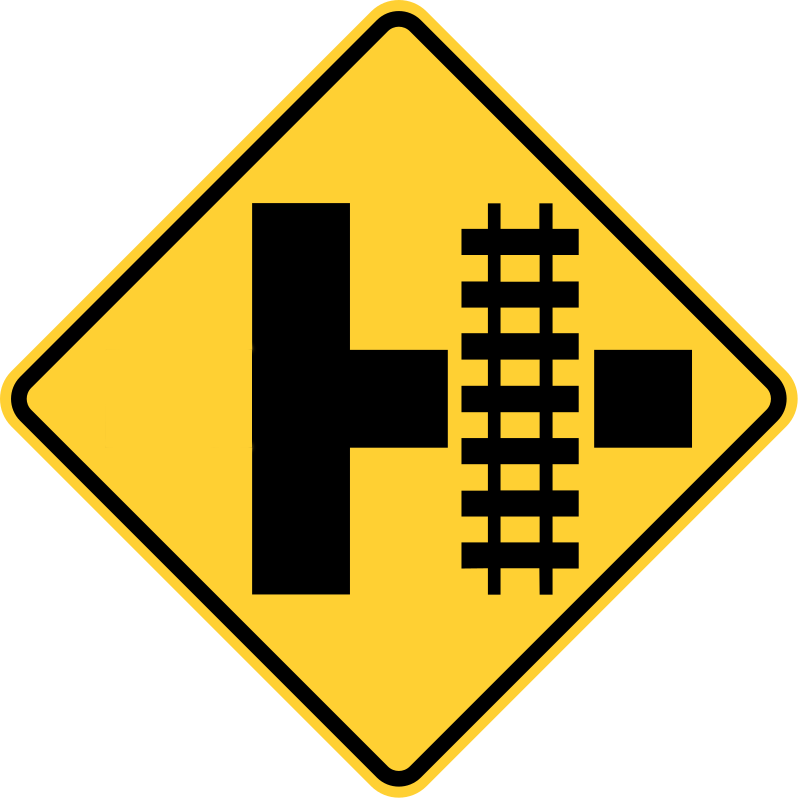
Four-way intersection ahead. Be prepared to yield right-of-way according to traffic control devices.
What does this sign indicate?
A) Parallel railroad crossing (side road)
B) Low ground clearance railroad crossing
C) Parallel railroad crossing (crossroad)
29.
Before crossing any railroad tracks, you must:
A) look and listen for trains.
B) make sure there is room for your vehicle on the other side.
C) All of the above.
30.
Warns that a one-way street or divided highway is ending, and you are entering a roadway with oncoming traffic in the opposing lane. Stay to the right.
This sign warns drivers that:
A) they cannot go straight ahead.
B) they will soon be facing oncoming traffic.
C) a shared lane starts ahead.
31.
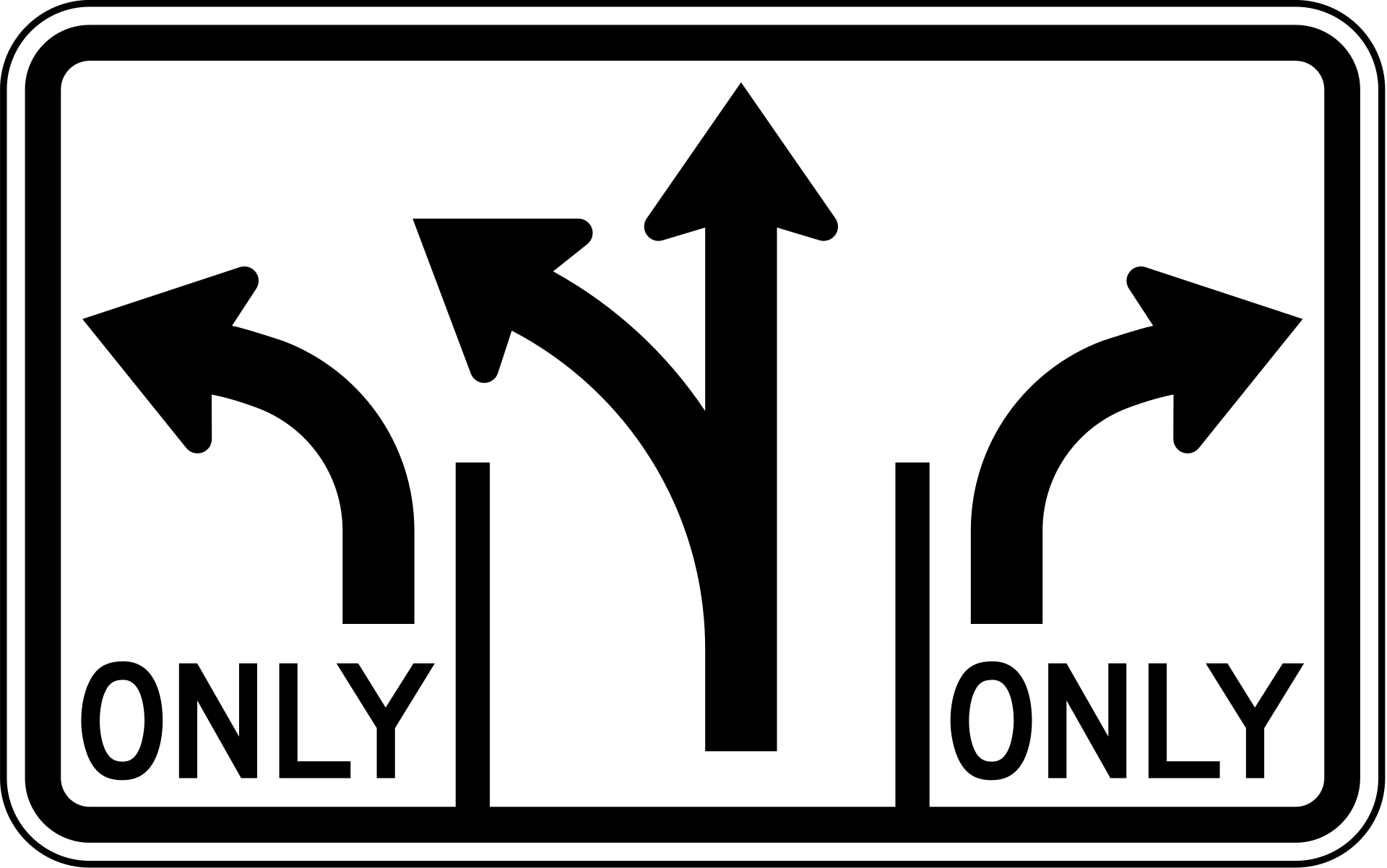
Warns of a traffic signal ahead that may not yet be visible due to a curve or hill. Be prepared to slow down and stop if the light changes.
This regulatory sign tells drivers that:
A) traffic in the left lane must turn left at the intersection ahead.
B) all vehicles must turn left immediately.
C) traffic in the right lane must go straight.
32.
When entering a highway from an entrance ramp, drivers should:
A) enter slowly to avoid other vehicles.
B) stop first, then gradually enter traffic.
C) accelerate to the speed of traffic.
D) drive above the speed of traffic to get ahead.
33.
Designated school crosswalk location. You must yield to all schoolchildren and pedestrians in the crossing.
At a school crossing, drivers should:
A) always stop, whether there’s a stop sign or not.
B) always sound their horn and stay alert.
C) watch for children and be ready to stop.
34.
What should you do if you see smoke come from under the hood?
A) Call the fire department and then pull off the road and park your vehicle.
B) Pull off the road and park your vehicle. Turn off the ignition, get away from the car and call the fire department.
C) Try to fight the fire yourself.
35.
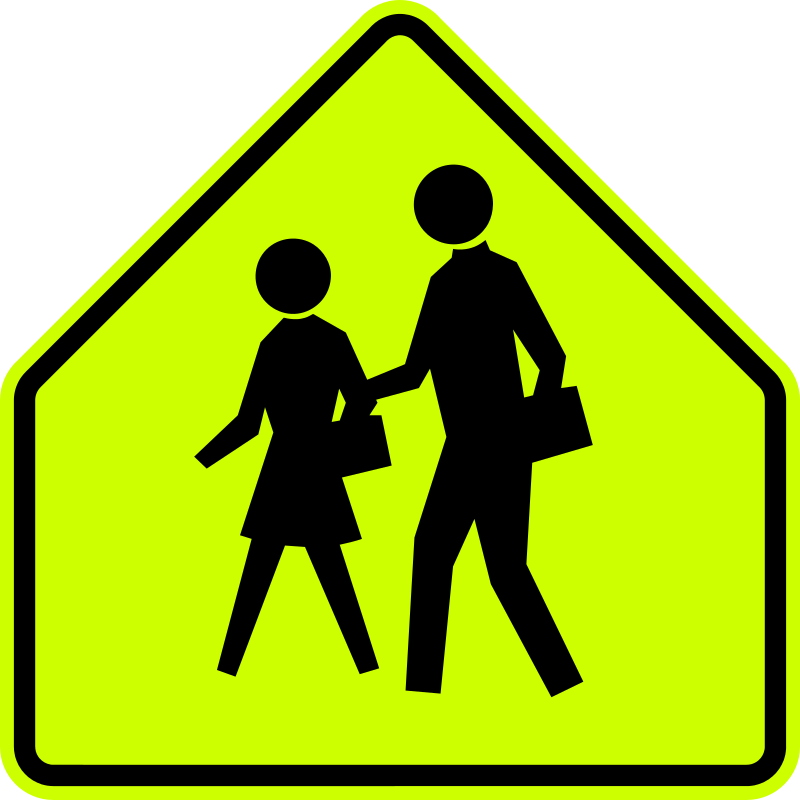
Five-sided pentagon sign indicating an upcoming school area. Watch for children crossing, school buses, and observe posted reduced school speed limits.
This sign means:
A) Business area nearby. Watch for business people.
B) There is a work zone ahead. Watch for workers.
C) The driver is near a school and should watch for children.
36.
Which of the following is a common cause of a traffic collisions?
A) Following too closely.
B) Excessive speed for conditions.
C) Distracted driving.
D) All of the above.
37.
A red traffic sign means?
A) Construction warning.
B) Railroad crossing.
C) Stop.
38.
Tailgating:
A) cannot result in a traffic citation.
B) helps reduce traffic congestion.
C) is a defensive driving tecnique.
D) can frustrate other drivers and make them angry.
39.
Warns of two consecutive curves in opposite directions (e.g., curves right then left). Slow down to maintain control.
This road sign means:
A) A road joins from the left
B) The road ahead turns sharply right then sharply left
C) Sharp right turn
D) Winding road ahead
40.
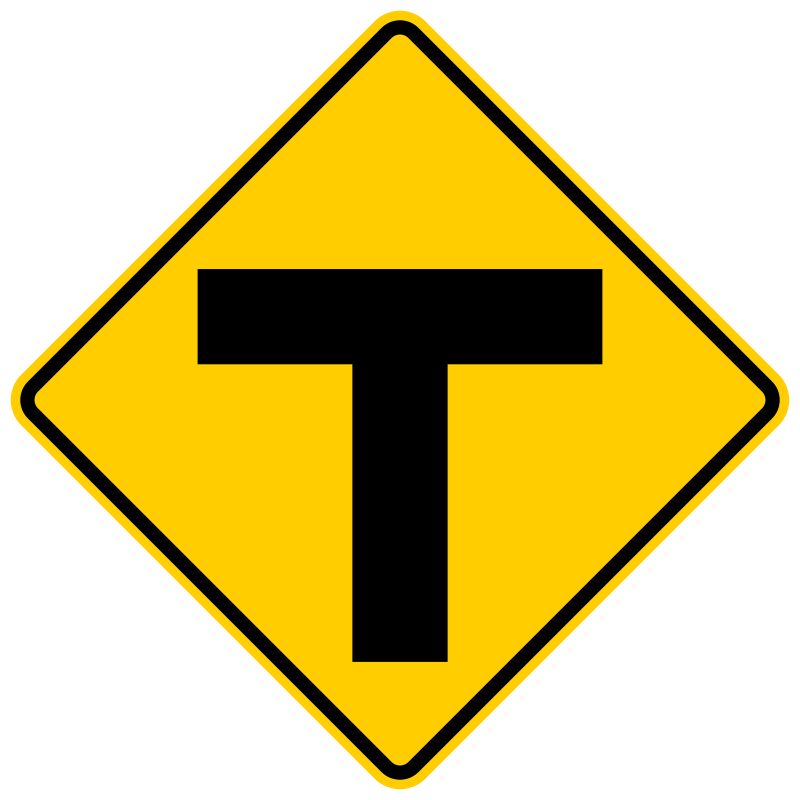
The roadway ends ahead at a T-junction. You must turn either left or right after yielding right-of-way to traffic on the cross street.
This road sign means:
A) Side road
B) T-intersection ahead
C) Keep right
D) Left lane must turn left
ANSWER KEY Check answers after completing the test.
1 B
2 B
3 A
4 A
5 C
6 C
7 A
8 B
9 B
10 A
11 A
12 D
13 C
14 B
15 A
16 C
17 A
18 B
19 A
20 D
21 C
22 A
23 C
24 A
25 A
26 B
27 B
28 A
29 C
30 B
31 A
32 C
33 C
34 B
35 C
36 D
37 C
38 D
39 B
40 B