DriveQuiz drivequiz.com

ID DMV PERMİT PRACTİCE TEST 5

Idaho
Duration: 36 min
|
Questions: 40
Student Name:
Date:
Correct:      Incorrect:      Score:      
1.

Right turns are strictly prohibited at this intersection under all circumstances.
This road sign means:
A) Right turn is not permitted
B) Left turns are permitted
C) You may turn right after yielding the right-of-way to oncoming traffic
2.
You should use turn signals to indicate your intention with sufficient time to allow other drivers to see the signal:
A) if it’s raining.
B) AFTER you move.
C) BEFORE you move.
3.
Drive below the posted speed limit when:
A) anything makes conditions less than perfect.
B) you are on a four lane road.
C) entering a highway where there are other cars.
D) others drive below the speed limit.
4.
A signalized intersection is ahead. Prepare to stop if the light turns yellow or red.
This sign means:
A) You must stop ahead
B) Railroad crossing ahead
C) No Passing Zone
D) There is a traffic signal ahead
5.
When entering a crowded freeway, to merge into traffic you should:
A) yield to vehicles already on the freeway.
B) use the acceleration lane to adjust your speed to the same speed as freeway traffic.
C) check your blind spots.
D) All of the above.
6.
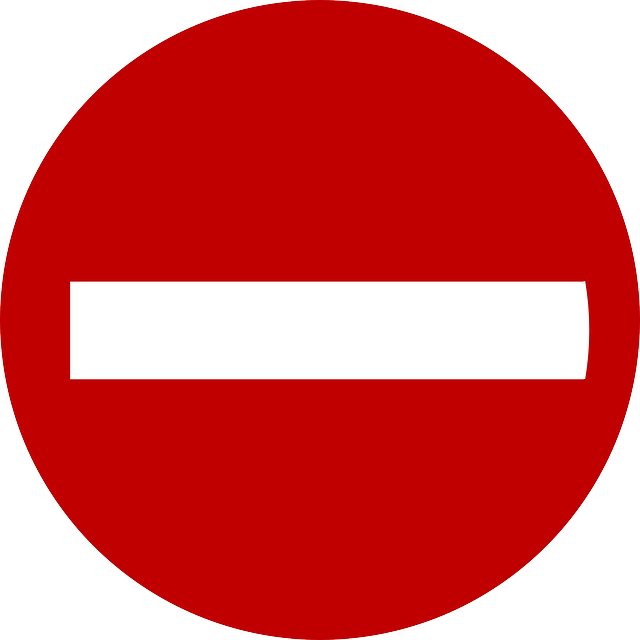
Indicates you have entered an exit ramp or one-way street in the incorrect direction. Stop immediately and safely turn around.
This road sign means:
A) No left turn
B) Lane ends
C) Do not enter
7.
A broken white line:
A) means passing or crossing is prohibited in that lane.
B) separates two lanes traveling in the same direction.
C) marks the right edge of the roadway.
8.
When driving in fog:
A) turn on your hazard lights.
B) do not drive over 10 MPH.
C) turn on your low beams.
D) drive the speed limit.
9.
When driving behind a motorcycle, drivers must:
A) remembers that motorcyclists have the right to use a complete traffic lane.
B) pass the motorcycle in the same lane.
C) drive on the shoulder beside the motorcycle.
D) share the lane with the motorcycle.
10.
When you see an emergency vehicle with flashing lights, you must:
A) stop exactly where you are.
B) pull to the curb and stop.
C) speed up and take the nearest exit.
D) slow down and keep moving in your lane.
11.
Drinking alcoholic beverages:
A) gives you a feeling of false confidence.
B) impairs your judgement.
C) slows your reaction time.
D) All of the above.
12.
The median divider ends ahead, and you are returning to a two-way, two-lane undivided roadway. Watch for oncoming traffic on your left.
This road sign means:
A) Curves ahead
B) Divided highway ahead
C) Divided highway ends
13.
___________ are green with white letters and symbols.
A) Warning signs
B) Destination signs (guide signs)
C) Regulation signs (regulatory signs)
14.
A speed restriction sign:
A) shows the recommended speed for a curve/turn.
B) is blue with white lettering.
C) must be ignored in snow conditions.
D) has a diamond shape.
15.
When approaching any intersection or driveway, drivers should:
A) look both ways and be ready to stop.
B) pass other vehicles and then stop.
C) drive at the fastest speed just before entering the intersection.
16.
Standard yellow warning sign outline used across the US for all caution, hazard, and roadway change notifications.
This sign is a:
A) regulatory sign.
B) warning sign.
C) guide sign.
17.
After stopping for a school bus that is unloading children you should:
A) accelerate quickly and pass.
B) put on your emergency flashers.
C) watch for children walking along the side of the road.
D) wait at least 4 minutes.
18.
A large vehicle is backing up to unload goods. You should:
A) enter one of the blind spots and wait.
B) try to pass close behind.
C) be patient and wait until the large vehicle has completed its backup maneuver.
19.
What is the meaning of blue traffic signs?
A) A blue background indicates a regulatory sign.
B) They give directional information.
C) Blue indicates road user services.
20.
Indicates a series of three or more consecutive sharp turns or curves ahead. Reduce speed and maintain lane control.
This road sign means:
A) Winding Road Ahead
B) No turns are allowed on this road
C) Right lane closed
D) Do Not Enter
21.
As you approach an intersection, the traffic light changes from green to yellow. You should:
A) apply the brakes sharply and come to a complete stop.
B) be prepared to stop before the intersection.
C) be prepared to stop in the middle of the intersection.
D) speed up to beat the red light.
22.
Drivers can proceed through an intersection with a stop sign, but no stop line or crosswalk:
A) after slowing down to at least 15 MPH before proceeding.
B) after coming to a complete stop, when it is safe to proceed.
C) after stopping at least 50 feet prior to the intersection.
D) after slowing down to ensure there is no cross-traffic.
23.
Right turns are strictly prohibited at this intersection under all circumstances.
This road sign means:
A) Right turn permitted on red light
B) Drivers must turn right
C) No U-turns
D) No right turn permitted
24.
An orange-colored sign means:
A) Railroad crossing ahead
B) School zone ahead
C) Construction zone ahead
D) You must change lanes ahead
25.
Before turning left, it is important to:
A) swing to the right side of your lane.
B) sound your horn to warn the other drivers.
C) yield to oncoming vehicles.
D) flash your headlights to alert the other drivers.
26.
Designated school crosswalk location. You must yield to all schoolchildren and pedestrians in the crossing.
When you approach this sign, you must:
A) stop if necessary.
B) watch for workers crossing the road.
C) None of the above.
27.
A speed limit is the __________ speed at which a vehicle may legally travel on the road under ideal conditions.
A) maximum
B) minimum
C) suggested
D) None of the above.
28.
Highway hypnosis is a driving condition that can result from:
A) heavy traffic.
B) staring at the roadway for long periods of time.
C) travelling on HOV lanes.
D) frequent rest stops.
29.
Drivers under 21 years of age are considered to be driving under the influence if their blood alcohol concentration (BAC) is:
A) .10% or higher.
B) .05% or higher.
C) .08% or higher.
D) .02% or higher.
30.
Vehicle stopping distance never depends on:
A) the condition of your vehicle's brakes.
B) your own reaction time.
C) the time of day.
D) the condition and type of vehicle tires.
31.
___________ are the most frequent fatality in work zone crashes.
A) Motorcyclists
B) Construction workers
C) Drivers and their passengers
D) Bicyclists
32.
At a stop sign there is no stop line or crosswalk. You must stop:
A) before you enter the intersection.
B) at the next crosswalk.
C) after you enter the intersection, if you have a clear view of traffic on the intersecting roadway.
33.
When you need to enter a freeway exit ramp:
A) don't slow down on the freeway itself. Wait until you are in the deceleration lane.
B) pass slower vehicles on the right.
C) slow down before entering the exit ramp.
D) don't slow down on the freeway itself, and maintain your speed once in the exit ramp.
34.
___________ normally are white rectangles with black letters or symbols.
A) Warning signs
B) Destination signs (guide signs)
C) Regulation signs (regulatory signs)
35.
Which of the following is a defensive driving skill/technique?
A) Maintain the correct speed.
B) Do not drive if you are very weary.
C) All of the above.
36.
The octagonal (8-sided) shape is exclusively reserved for STOP signs so drivers can identify it immediately even in poor visibility or from behind.
The octagonal shape is used:
A) for stop signs and railroad advance warning signs.
B) exclusively for stop signs.
C) to warn drivers of existing or possible hazards on roadways.
37.
When making a turn, drivers must _____ their speed.
A) reduce
B) maintain
C) increase
D) double
38.
Drivers can not pass a vehicle on the left if:
A) they approach the top of a hill on a two-way road and can not see over it.
B) they can not safely return to the right lane before they reach a solid yellow center line for the right lane.
C) All of the above.
39.
When you are driving in the right lane of a freeway, you should allow room for vehicles merging onto the freeway by:
A) using your emergency flashers to make them aware of your presence.
B) slowing way down to allow them access.
C) always driving in the far left lane.
D) moving into the next lane to allow them access.
40.
When an approaching driver at night blinds you by failing to dim their high beams, you should look:
A) straight down the middle of the road.
B) towards the left side of the road.
C) None of the other answers is correct.
D) towards the right side of the road.
ANSWER KEY Check answers after completing the test.
1 A
2 C
3 A
4 D
5 D
6 C
7 B
8 C
9 A
10 B
11 D
12 C
13 B
14 A
15 A
16 B
17 C
18 C
19 C
20 A
21 B
22 B
23 D
24 C
25 C
26 A
27 A
28 B
29 D
30 C
31 C
32 A
33 A
34 C
35 C
36 B
37 A
38 C
39 D
40 D