DriveQuiz drivequiz.com

ID DMV PERMİT PRACTİCE TEST 3

Idaho
Duration: 36 min
|
Questions: 40
Student Name:
Date:
Correct:      Incorrect:      Score:      
1.
Drivers may pass another vehicle on the right if the vehicle is waiting to:
A) turn left.
B) turn into a driveway on the right.
C) park at the curb.
D) turn right.
2.
The maximum legal speed under ideal driving conditions is 50 miles per hour. Always adjust speed downward for adverse weather, traffic, or road conditions.
This sign indicates the _______________ vehicles can safely travel in this area.
A) suggested speed
B) maximum speed
C) minimum speed
3.
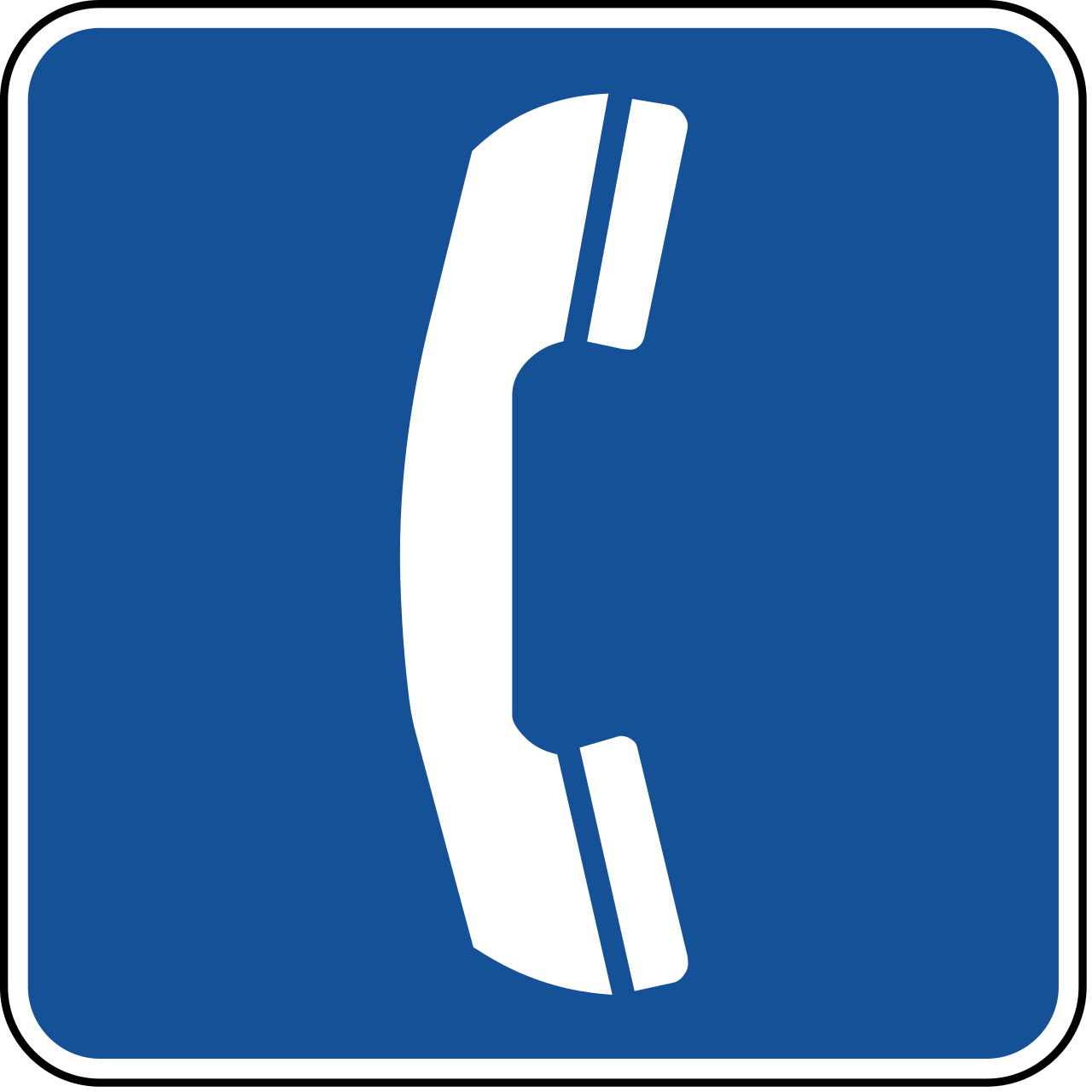
Blue motorist service sign indicating the availability of a public emergency telephone along the highway.
This sign indicates:
A) Phone service ahead
B) Emergency line available
C) Cell phone shop ahead
4.
You reach an intersection that is not controlled at the same time as a driver on your right, and both of you prepare to go straight. Who has the right-of-way?
A) You.
B) No one.
C) The other driver.
5.
When you need to change lanes, it is important to:
A) make sure the lane you are about to enter is clear.
B) signal your intentions ahead of time.
C) check your blind spots.
D) All of the above.
6.
A steep downhill grade is ahead. Trucks and heavy vehicles should downshift to a lower gear to prevent brake overheating.
This road sign means:
A) Merging traffic
B) Steep grade ahead
C) Intersection ahead
7.
Slow down and give right-of-way to all oncoming vehicles, cyclists, and pedestrians. Stop completely if necessary before entering the intersection or merging.
The yield sign means:
A) Drive with caution in wet weather.
B) You must come to a complete stop.
C) Slow down and give vehicles crossing your path the right-of-way.
8.
A red traffic sign means?
A) Do not enter.
B) Stop.
C) All of the above.
9.
Alerts drivers to an upcoming crosswalk where pedestrians frequently cross. Slow down and yield right-of-way to anyone in or about to enter the roadway.
What should drivers do when they see this road sign?
A) come to a complete stop and wait for a train to cross.
B) slow down, look for a train, and be prepared to stop.
C) look for a human flagger.
10.
The median divider ends ahead, and you are returning to a two-way, two-lane undivided roadway. Watch for oncoming traffic on your left.
What does this sign indicate?
A) The highway ahead is divided into two one-way roadways.
B) Winding road ahead. Drive with caution.
C) Drivers will soon be on a roadway with two-way traffic.
11.
Warns drivers that two separate lanes moving in the same direction are merging into one. Drivers in the right lane must adjust speed and merge smoothly with existing traffic.
This sign indicates:
A) Winding road
B) Merging traffic
C) Divided highway ends
12.
When following a motorcycle, drivers must remember that motorcycles can ____________ than other vehicles.
A) accelerate much faster
B) stop much more quickly
C) stop much more slowly
13.
To keep your vehicle from rolling into traffic when parked on a hill, if you are facing uphill you should:
A) turn the front wheels away from the curb or edge of the road.
B) turn the back wheels towards the curb or edge of the road.
C) set the parking brake and keep the front wheels straight.
D) turn the front wheels towards the curb or edge of the road.
14.
Slow down and give right-of-way to all oncoming vehicles, cyclists, and pedestrians. Stop completely if necessary before entering the intersection or merging.
The yield sign means:
A) Go. The light will soon be red.
B) If the way is clear, you may move forward slowly without stopping.
C) Stop if you can.
15.
If there are two railroad tracks next to each other:
A) when one train passes, watch out for another train on the other track.
B) when one train passes, proceed with caution.
C) sound your horn as you cross the tracks.
D) you must always stop.
16.
When driving at night with no other vehicles ahead, a driver should use:
A) high beam lights.
B) low-beam lights.
C) parking lights.
17.
Indicates the maximum bridge or underpass vertical clearance. Vehicles taller than the posted height must not proceed.
This sign indicates:
A) the maximum width of a vehicle allowed on the highway.
B) the maximum legal height allowed in this State.
C) the overpass ahead has a low clearance.
D) a steep grade
18.
Indicates an upcoming bicycle crossing or shared road zone. Always leave at least 3 feet of clearance when passing cyclists.
This sign means:
A) Bicycles should yield to vehicles ahead.
B) Warning: a bikeway crosses the roadway ahead.
C) The lane ahead is reserved for bicycles.
19.
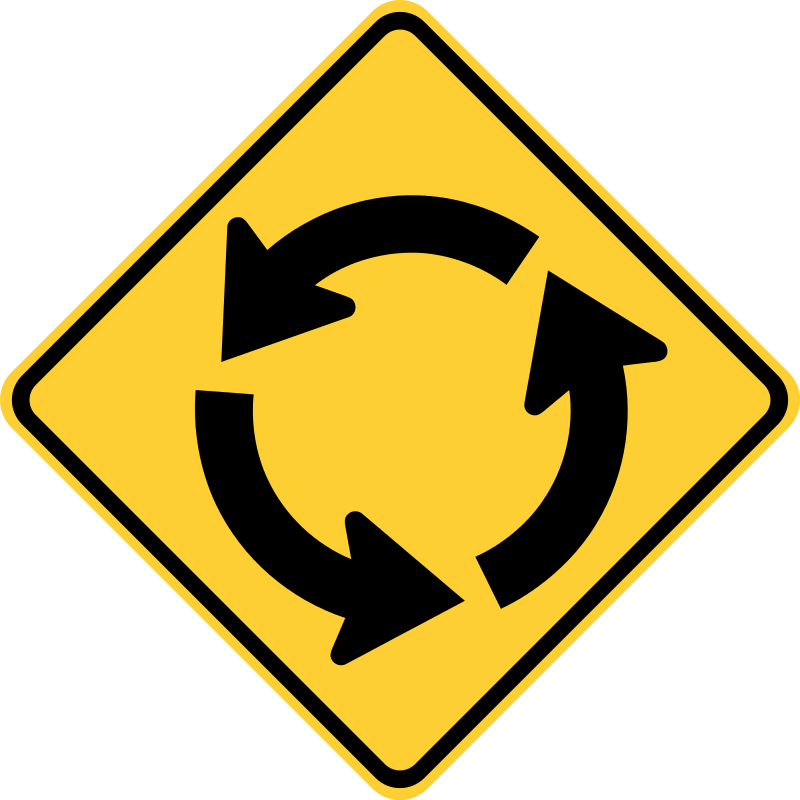
A circular intersection is ahead. Vehicles inside the roundabout have right-of-way; entering traffic must yield to traffic approaching from the left.
This road sign:
A) warns drivers of a sharp turn left. Drivers should slow their speed and keep to the left.
B) provides an advance notice of a roundabout.
C) warns drivers that U-turns are not permitted.
D) is a no-right-turns sign.
20.
Which of the following does NOT affect the distance that it takes to stop your vehicle?
A) Perception time.
B) Braking distance.
C) Reaction distance.
D) Steering ability.
21.
You must stop for a school bus:
A) whenever the driver waves at you.
B) whenever the school bus approaches you, even if its lights are not flashing.
C) if its red lights are flashing on a two-lane highway.
D) when the school bus is parked on the shoulder of the road and no one is in it.
22.
Drivers should be aware that a motorcyclist may:
A) decrease speed and rise off the seat when approaching a railroad crossing.
B) quickly change speed or lane position.
C) All of the above.
23.
Double solid lines on the roadway mean:
A) you cannot pass.
B) you can not go across the lines except to turn left to enter or leave the highway.
C) All of the above.
24.
What is Idaho’s 'basic rule' law for driving speed?
A) Always drive 5 MPH below the posted speed limit just to be safe.
B) No person shall drive a vehicle at a speed greater than is reasonable and prudent under the current conditions.
C) Always drive the posted speed.
D) Drive at the same speed as the vehicles around you.
25.
To enter a freeway:
A) signal, yield, and enter at the same speed that traffic is moving.
B) drive slowly so you can check traffic.
C) signal and enter the freeway. You have the right-of-way.
D) make a complete stop before entering the freeway.
26.
When you approach a railroad crossing without flashing warning signals or crossing gates, you should:
A) always stop.
B) cross the tracks as slowly as possible.
C) yield to all trains at the crossing.
D) speed up to beat the train.
27.
When merging onto a freeway, drivers should:
A) accelerate to the speed of the freeway traffic.
B) merge over two lanes at once and speed up.
C) proceed slowly while waiting for an opening.
D) accelerate to a speed that is faster than the freeway traffic.
28.
If a driver follows you too closely, you should:
A) move to another lane if possible.
B) activate your stop lights.
C) brake suddenly.
29.
Indicates the maximum bridge or underpass vertical clearance. Vehicles taller than the posted height must not proceed.
This sign means:
A) Narrow bridge ahead. Slow down and drive with caution.
B) Do not to enter if your vehicle is taller than the height listed on the sign.
C) No passing zone ahead.
30.
You are stopped at a stop sign and you are going to go straight through the intersection. A car on the cross road has stopped at a stop sign on your right and is going to go straight. Who has the right-of-way?
A) Whoever enters the intersection first.
B) You.
C) The car on your right.
31.
When you make a left turn from a one-way road into a one-way road, if the road you enter has two lanes, you:
A) must turn into its right lane.
B) can not turn left.
C) must turn into its left lane.
32.
To avoid being in a truck driver’s blind spot, you should:
A) never pass the truck and put your headlights on.
B) avoid driving on either side of the truck and don’t tailgate.
C) flash your lights.
D) sound your horn.
33.
Which of the following is true about the Anti-Locking Brake System?
A) It prevents skidding.
B) It allows drivers to steer during an emergency braking situation.
C) All of the above.
34.
The road makes a sharp 90-degree right turn ahead. Slow down considerably before entering the turn.
This sign warns drivers of:
A) a side road.
B) a sharp turn.
C) a cross road.
35.
When an aggressive driver confronts you, you should:
A) Try to move away safely.
B) Remain calm and relaxed.
C) All of the above.
36.
__________ are blue with white letters and symbols.
A) Warning signs
B) Service signs
C) Destination signs (guide signs)
37.
Right turns are strictly prohibited at this intersection under all circumstances.
This road sign means:
A) No left turn
B) No right turn
C) No U-turns
38.
If another vehicle passes you on the left, you must:
A) increase your speed slightly and keep to the right.
B) decrease your speed, then pull over to the right and stop.
C) decrease your speed slightly and keep to the right.
39.
Alerts drivers to an upcoming crosswalk where pedestrians frequently cross. Slow down and yield right-of-way to anyone in or about to enter the roadway.
The picture shows:
A) a railroad advance warning sign.
B) a speeding fines doubled sign.
C) a reversible road sign.
40.
You can pass on the right:
A) when a vehicle ahead makes a right turn.
B) when a vehicle ahead makes a left turn.
C) when a vehicle that is approaching from the opposite direction is prepared to turn left.
ANSWER KEY Check answers after completing the test.
1 A
2 B
3 A
4 C
5 D
6 B
7 C
8 C
9 B
10 C
11 B
12 B
13 A
14 B
15 A
16 A
17 C
18 B
19 B
20 D
21 C
22 C
23 C
24 B
25 A
26 C
27 A
28 A
29 B
30 C
31 C
32 B
33 C
34 B
35 C
36 B
37 B
38 C
39 A
40 B