A)pass the vehicle as safely and as quickly as possible.
B)honk your horn repeatedly to warn the other driver.
C)there is no need to signal.
D)you can exceed the posted speed limit.
5.
When you get in a car to drive, the first thing you should do is:
A)check your rear view mirror.
B)adjust the steering wheel.
C)adjust your seat belt.
D)adjust your seat.
6.
Anything that requires you to _______ could cause you to crash.
A)take your hands off the wheel
B)take your attention away from driving
C)take your eyes off the road
D)All of the above.
7.
This sign warns drivers of:
A)low clearance.
B)a narrow bridge ahead.
C)a low place in the road.
8.
When the driver behind you wants to pass, you should:
A)change lanes.
B)speed up.
C)use your brake lights.
D)slow down to allow room for the other driver to complete the pass safely.
9.
When there is a _______ at an intersection, you should come to a complete stop, yield to cross traffic/pedestrians, and then proceed when clear.
A)a solid green light
B)a solid red light
C)a flashing red light
D)a flashing yellow light
10.
If you miss your exit from an interstate expressway, you should:
A)go to the next exit and come back to the exit you missed.
B)use the right turn signal, check your mirrors and move to the right.
C)pull over to the right and back up with caution until you reach the exit ramp.
D)make a quick U-turn from your lane of travel.
11.
When driving on wet roads, you should remember:
A)driving on wet roads can cause hydroplaning.
B)you should give yourself additional time to stop.
C)to stay farther behind the vehicle ahead of you.
D)All of the above.
12.
Drivers do not have to stop for a school bus if:
A)they are traveling in the opposite direction on roadways with a total of four or more lanes (two or more lanes in each direction).
B)the speed limit in the area is under 25 MPH.
C)they are traveling in a residential area and the road has a large shoulder on each side.
D)they are traveling in the same direction as the bus on a four-lane highway with two lanes going in the opposite direction.
13.
If your car starts to skid, turn your steering wheel:
A)in the direction you want to go.
B)in the opposite direction of the skid.
C)to keep the front wheels straight.
D)in any direction. It doesnt matter.
14.
You are entering a roadway from a private road, and you need to turn left. You have to yield to:
A)vehicles from the right.
B)vehicles from the left.
C)vehicles from both directions.
15.
This sign means:
A)narrow road ahead.
B)no turns are allowed on this road.
C)series of curves ahead.
D)the road may be slippery when wet.
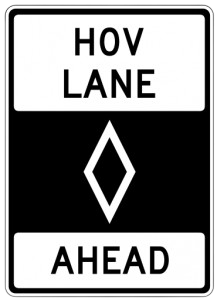
16.
This road sign indicates that:
A)a lane is reserved for certain purposes or certain vehicles.
B)buses and car pools may not travel in the restricted lane.
C)vehicles cannot go straight ahead. Cars must turn either to the right or left.
17.
The traffic light is green and you want to drive straight through an intersection. If a car is already in the intersection and is making a turn, you must:
A)enter the intersection and then stop.
B)drive through the intersection. You have the right-of-way.
C)let that car complete its turn before you enter the intersection.
18.
If the entrance lane is too short to allow acceleration to highway speed, you should:
A)go to the next entrance ramp.
B)stop and wait for a large gap in traffic, then enter the highway and accelerate quickly.
C)merge into highway traffic as soon as possible.
19.
When they see this sign, drivers should:
A)increase their speed and keep well to the right.
B)slow down and keep well to the right.
C)slow down and keep well to the left.
20.
Your red traffic signal changes to green while a pedestrian is crossing in your traffic lane. The right of way should be given:
A)by the pedestrian, but only when vehicles are turning left.
B)by the pedestrian.
C)to the pedestrian.
21.
It is illegal to drive below the speed limit:
A)when the pavement is wet.
B)only in residential areas.
C)when driving slowly disrupts the normal flow of traffic.
D)only in rural areas.
22.
This sign indicates that the road ahead:
A)turns sharply right, then left.
B)is a divided highway.
C)curves right, then left.
D)curves right.
23.
When driving on slick roads, drivers should:
A)accelerate quickly.
B)take turns more slowly.
C)use alternate routes.
D)drive as they would on dry roads.
24.
After parking, are you allowed to open a door on the road side of your vehicle?
A)Yes, always.
B)Yes, but only if it does not interfere with bicyclists and other traffic.
C)No, never.
25.
This road sign tells drivers that:
A)they must change lane immediately.
B)they must turn either to the right or left.
C)the one-way street or roadway ahead ends.
D)None of the above.
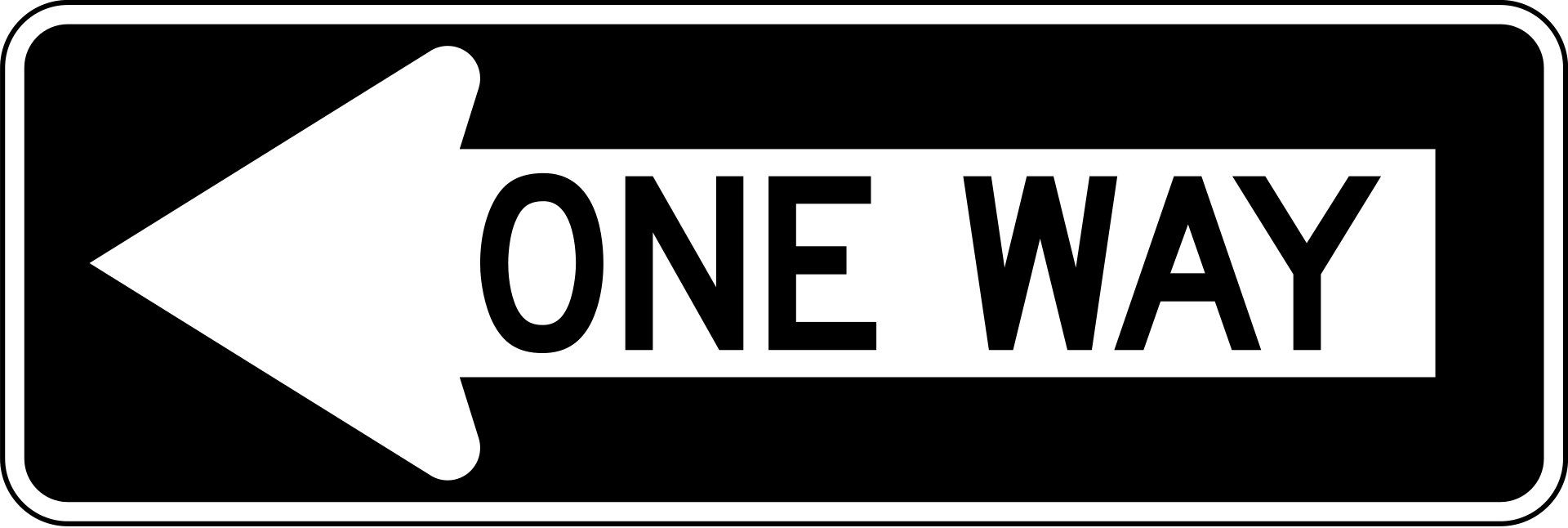
26.
This road sign means:
A)Traffic flows only in the direction of the arrow
B)Turn right or left
C)No right turn
D)Sharp curve ahead
27.
Which shape is a speed limit sign?
A)Round
B)Pentagon
C)Vertical rectangle
28.
This road sign is:
A)a speed reduction sign.
B)a warning sign.
C)a regulatory sign.
29.
You can reduce the chance of a collision with a large vehicle if you:
A)delay near it.
B)cut abruptly in front of it.
C)pay close attention to the turn signals.
30.
Are drivers allowed to exceed the speed limit to pass other vehicles?
A)Yes, but only by 10 MPH or less.
B)No.
C)Yes, but only if they drive with caution.
31.
When they see this sign, drivers:
A)should be prepared to make sharp turns at a high speed.
B)need to be prepared to turn right and then left quickly.
C)should not speed up or brake quickly.
32.
Your BAC depends on:
A)how fit you are.
B)the type of beverage you drink.
C)the amount of alcohol you drink.
33.
On slippery roads, drivers should:
A)slow down.
B)increase their speed to avoid hydroplaning.
C)not drive faster than 25 MPH.
D)go faster.
34.
This road sign means:
A)Pedestrians must not cross
B)School zone ahead
C)Pedestrian crossing ahead
35.
When parking on a public road, drivers should:
A)move as far away from traffic as possible.
B)always park on the left side of the roadway.
C)All of the above.
36.
This road sign means:
A)Divided highway ahead - stay to the right
B)Do not enter
C)Do not pass
37.
You must yield to other drivers:
A)when it helps to prevent collisions.
B)when they are driving a truck.
C)when the other drivers are on your left and you have reached an unmarked intersection at the same time.
D)when your traffic signal is a green.
38.
Your car stalls on the tracks at a railroad crossing, and a collision with a train is imminent. After getting yourself and your passengers out of the car, you should:
A)run toward the train but stay off the tracks.
B)signal the train to stop.
C)cross the tracks.
39.
When following motorcycles, drivers should:
A)reduce the minimum following distance.
B)try to pass them as they have different braking capabilities than other motor vehicles.
C)keep more space in front of their vehicle.
40.
This road sign means:
A)Cars in right lane must slow down
B)Merging traffic ahead
C)Pass only in the right lane
D)No left turn
ANSWER KEYCheck answers after completing the test.