DriveQuiz drivequiz.com

IA DMV PERMİT PRACTİCE TEST 3

Iowa
Duration: 31 min
|
Questions: 34
Student Name:
Date:
Correct:      Incorrect:      Score:      
1.

The road makes a sharp 90-degree right turn ahead. Slow down considerably before entering the turn.
What does a flashing yellow light mean?
A) Drivers may move forward with caution.
B) The same thing as a stop sign.
C) Warning: hospital ahead.
D) All of the above.
2.
Directions given by traffic officers ___________ signs, signals or pavement markings.
A) take precedence over
B) are less important than
C) must obey
3.
When the road is slippery, you should:
A) brake suddenly carefully.
B) pump your brakes.
C) press your brakes in slow, steady strokes.
4.
What is the first thing you should do if your wheels move off the pavement?
A) Pull the steering wheel back.
B) Pull over to the right and sound your horn to warn the other drivers.
C) Ease your foot off the gas pedal and brake gently.
5.
Drivers may pass another vehicle if the line dividing two lanes is a ________ line.
A) broken white
B) double solid yellow
C) solid yellow
D) solid white
6.
Blue service guide sign indicating that emergency medical and hospital facilities are located in the direction of the arrow.
What does this road sign indicate?
A) Hospital service
B) Area reserved for people with disabilities
C) Interstate highway
7.
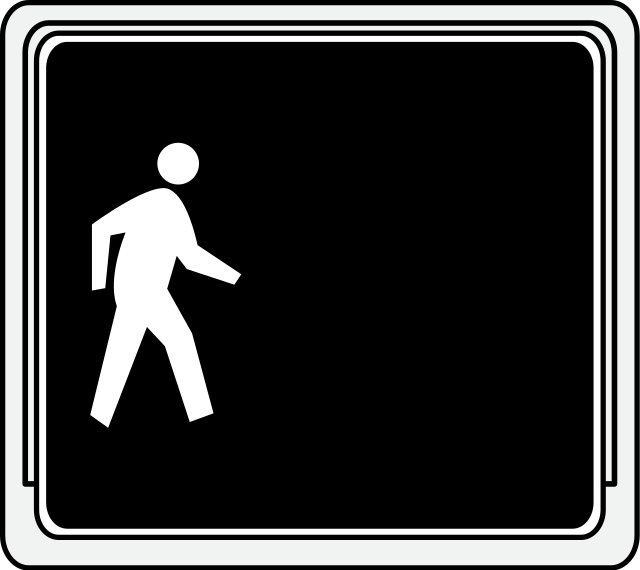
Illuminated white walking person indicates pedestrians have right-of-way to begin crossing the street in the designated crosswalk.
What does the pictured signal indicate?
A) A pedestrian may begin crossing the street.
B) Pedestrians may turn right.
C) A pedestrian may not not begin crossing the street.
8.
The road makes a sharp 90-degree right turn ahead. Slow down considerably before entering the turn.
This road sign means:
A) School zone ahead
B) Side road
C) Construction zone ahead
D) Sharp turn, slow down
9.
Before changing lanes or attempting to pass another vehicle, you should:
A) signal your intention before changing lanes.
B) check your blind spots and, mirrors.
C) All of the above.
10.
What should you do if one of your tires blows out?
A) Hold the steering wheel tight and brake immediately to avoid the risk of skidding.
B) Leave the road immediately.
C) Hold the steering wheel tight and slowly take your foot off the gas pedal.
11.
A defensive driver:
A) never drives below the speed limit.
B) knows when it is safe to pass other vehicles.
C) considers what other drivers might do and is always prepared to act.
12.
Continuous hard braking on ice and snow often:
A) is the best option during winter.
B) keeps the brakes from freezing.
C) causes the front wheels to lock.
13.
What should you do in case of a steering failure?
A) Pump your gas pedal a few times to increase the pressure.
B) Don't panic. Turn on your emergency lights to let other drivers know you are having car problems. Move toward the side of the road and bring the car to a gradual stop.
C) Leave the road immediately.
14.
To avoid hydroplaning you should:
A) keep your tires properly inflated.
B) slow down when roads are wet.
C) All of the above.
15.
Indicates a series of three or more consecutive sharp turns or curves ahead. Reduce speed and maintain lane control.
This road sign means:
A) Pavement ends
B) Winding road
C) Double curve ahead
16.
Aggressive drivers:
A) run stop signs.
B) are high risk drivers.
C) tailgate other vehicles and make improper lane changes.
D) All of the above.
17.
What does BAC stand for?
A) Blood Alcohol Commission
B) Blood Alcohol Concentration
C) Blood Alcohol Content
18.
When changing lanes, you can check your blind spot by:
A) using the outside rearview mirror.
B) using the inside rearview mirror.
C) turning your head and glancing over your shoulder.
D) checking the rearview and outside mirrors.
19.
Broken yellow lines:
A) separate lanes of traffic moving in opposite directions.
B) indicate you are in a no passing zone.
C) separate lanes of traffic moving in the same direction.
20.
If you are feeling tired while driving, you should:
A) stop and get some rest.
B) open a window.
C) drink coffee.
21.
To avoid becoming an aggressive driver, you should:
A) Adjust your schedule to drive during times with the most highway traffic.
B) Allow enough travel time to reach your destination on schedule.
C) Listen to heavy metal music.
22.
Unlike passenger cars, trucks have blind spots:
A) on the right.
B) directly behind them.
C) on the front.
23.
Tailgating:
A) cannot result in a traffic citation.
B) helps reduce traffic congestion.
C) is a defensive driving tecnique.
D) can frustrate other drivers and make them angry.
24.
Drive below the posted speed limit when:
A) anything makes conditions less than perfect.
B) you are on a four lane road.
C) entering a highway where there are other cars.
D) others drive below the speed limit.
25.
Your car stalls on the tracks at a railroad crossing, and a collision with a train is imminent. After getting yourself and your passengers out of the car, you should:
A) run toward the train but stay off the tracks.
B) signal the train to stop.
C) cross the tracks.
26.
Posted on the far side of a sharp curve or T-intersection to indicate a sharp change in direction of travel.
This sign means:
A) Not enter
B) Detour to the right
C) The road to the right is for one-way traffic only
27.
Prohibits drivers from making a 180-degree turn to travel in the opposite direction at this intersection or stretch of road.
This road sign means:
A) No left turn
B) No U-turn
C) Detour ahead
28.
To avoid panic stops, you should:
A) scan the road ahead for hazards.
B) drive with your window down.
C) pump your brakes to make sure they work.
29.
What do pennant-shaped signs indicate?
A) A school crossing
B) Yield
C) A No Passing Zone
30.
Right turns are strictly prohibited at this intersection under all circumstances.
This road sign means:
A) Right turn permitted on red light
B) Drivers must turn right
C) No U-turns
D) No right turn permitted
31.
When driving on the freeway behind large trucks, you should:
A) move to the right of the truck and pass it quickly.
B) drive closer behind the truck than for a passenger vehicle.
C) increase your following distance.
32.
When exiting a highway, you should slow down:
A) when you first see the exit sign.
B) before moving into the exit lane.
C) once you have moved into the exit lane.
D) once you see the toll booth.
33.
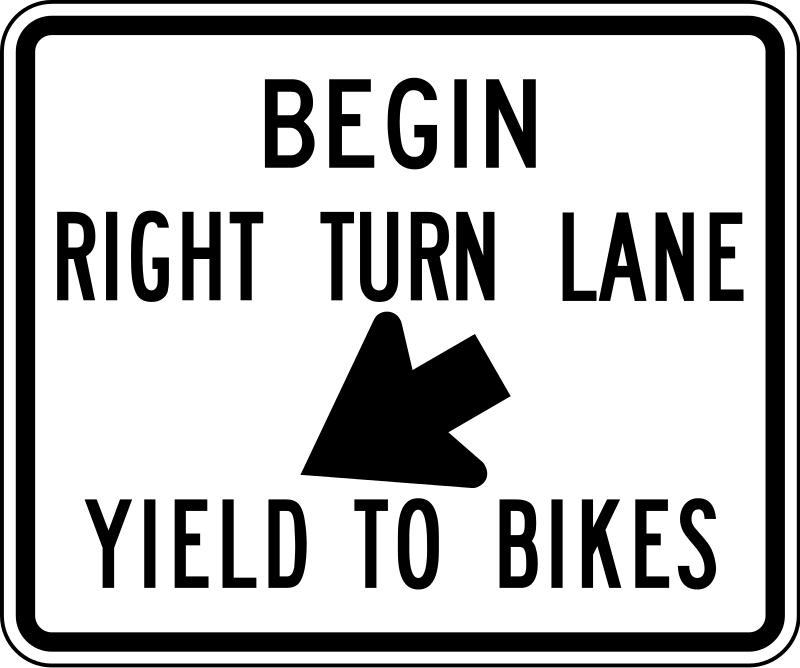
Drivers turning right must merge into the bike lane before turning, first checking mirrors and blind spots and yielding to all cyclists.
What does this road sign indicate?
A) Drivers have the right of way over bikes turning left.
B) Vehicles turning left must yield to bikes entering a right turn lane.
C) Motor vehicles entering an exclusive right-turn lane must weave across bicycle traffic in bicycle lanes.
34.
Drivers should allow a larger space cushion when stopping:
A) at a stop sign.
B) on an up-hill.
C) at an intersection.
D) at a yield sign.
ANSWER KEY Check answers after completing the test.
1 A
2 A
3 C
4 C
5 A
6 A
7 A
8 D
9 C
10 C
11 C
12 C
13 B
14 C
15 B
16 D
17 B
18 C
19 A
20 A
21 B
22 B
23 D
24 A
25 A
26 B
27 B
28 A
29 C
30 D
31 C
32 C
33 C
34 B