DriveQuiz drivequiz.com

IA DMV PERMİT PRACTİCE TEST 10

Iowa
Duration: 32 min
|
Questions: 35
Student Name:
Date:
Correct:      Incorrect:      Score:      
1.

A signalized intersection is ahead. Prepare to stop if the light turns yellow or red.
This sign means:
A) No traffic signal ahead
B) Traffic signal ahead
C) Open intersection ahead
2.
You are approaching an intersection with a yellow flashing light. You should:
A) stop and wait for the light to change.
B) speed up to beat the red light.
C) prepare to stop; the light is about to turn red.
D) proceed with caution through the intersection.
3.
A side road enters the highway from the right or left. Watch for traffic turning onto or crossing your lane.
This road sign means:
A) Merge
B) Side Road
C) Merging Traffic
D) All traffic must go straight ahead
4.
To reduce their chances of colliding with an animal, drivers should:
A) scan the sides of the road to watch for the reflection of vehicle headlights in the eyes of animals.
B) look well down the road and far off to each side.
C) All of the above.
5.
Warning signs normally are:
A) rectangles.
B) triangles.
C) diamond-shaped.
6.
Another road crosses the highway ahead. Look left and right for crossing or entering vehicles.
This road sign means:
A) Church ahead
B) Intersection ahead
C) Do not enter
D) Side road
7.
Which of the following is true about the Anti-Locking Brake System?
A) It prevents skidding.
B) It allows drivers to steer during an emergency braking situation.
C) All of the above.
8.
When approaching a stopped school bus, you must come to a complete stop and remain stopped as long as the red lights flash or the stop arm is out. The only exception to this is:
A) where you are approaching the bus from the same direction on a road with at least two lanes in each direction.
B) where you are approaching the bus from the opposite direction on a road with at least two lanes in each direction.
C) where you are approaching the bus from the opposite direction on a road with one lane in each direction.
9.
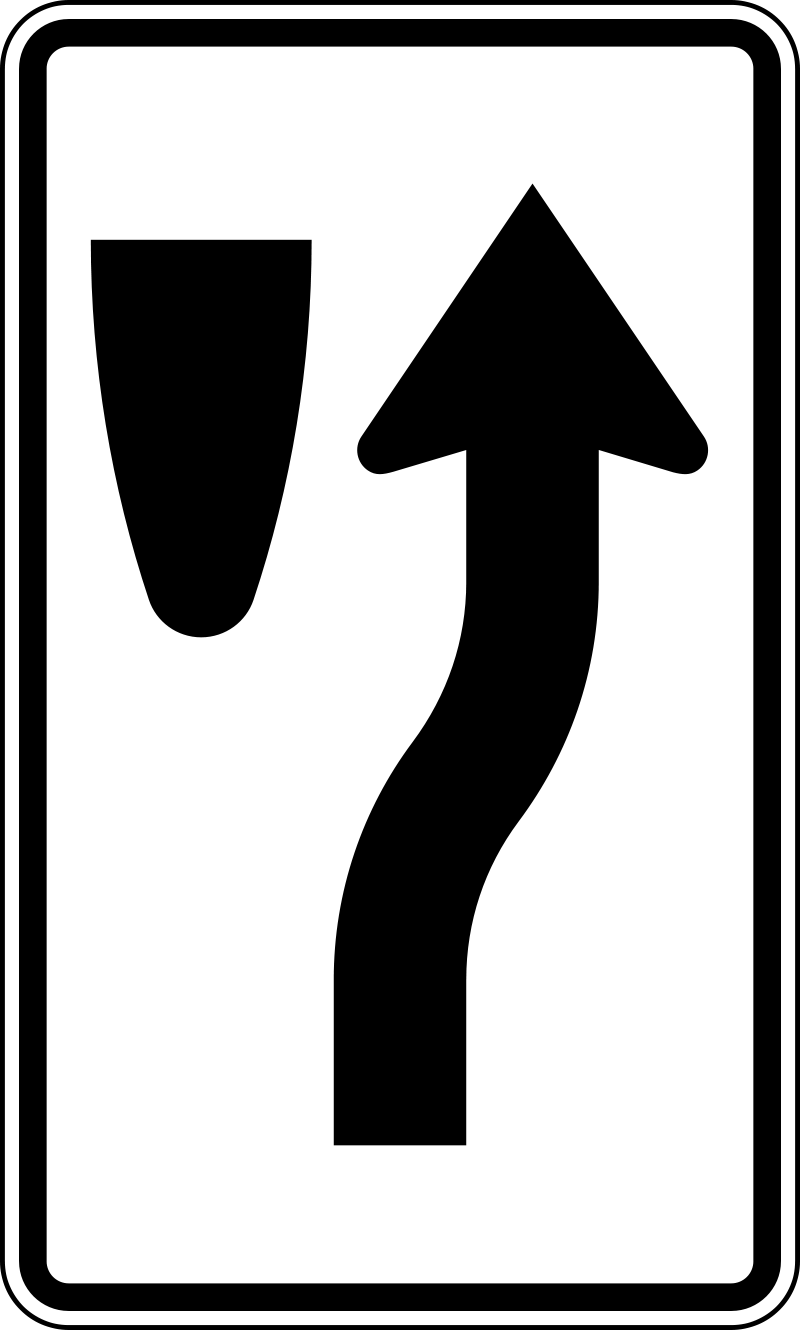
Drivers must pass to the right side of a traffic island, median barrier, or highway divider.
This road sign means:
A) Stop sign ahead
B) Keep to the side indicated by the arrow
C) Side road
D) Low shoulder
10.
Before turning, you should:
A) increase your speed.
B) sound your horn to alert the other drivers.
C) give the proper turn signal.
D) change lanes.
11.
What should drivers do when the red lights begin to flash?
A) Stop.
B) Yield.
C) Slow down.
12.
Drivers should be aware that a motorcyclist may:
A) decrease speed and rise off the seat when approaching a railroad crossing.
B) quickly change speed or lane position.
C) All of the above.
13.
The road is the most slippery:
A) when it first starts to rain.
B) after it rains.
C) All of the above.
14.
When passing another car, you have enough room to return to the driving lane when:
A) you cannot see the vehicle directly to your right.
B) you are at least 50 feet in front of the vehicle.
C) you can see both headlights of the car you passed in your rearview mirror.
15.
Warns drivers that two separate lanes moving in the same direction are merging into one. Drivers in the right lane must adjust speed and merge smoothly with existing traffic.
This road sign means:
A) Merging traffic from the right
B) Sharp curves ahead
C) Intersection ahead
16.
A steep downhill grade is ahead. Trucks and heavy vehicles should downshift to a lower gear to prevent brake overheating.
This road sign means:
A) Do not pass trucks
B) Truck must back up
C) Steep downgrade ahead
17.
If another vehicle passes you on the left, you must:
A) increase your speed slightly and keep to the right.
B) decrease your speed, then pull over to the right and stop.
C) decrease your speed slightly and keep to the right.
18.
Your first response to reduced visibility should be:
A) to look for road edge markings to guide you.
B) to turn on your windshield wipers.
C) to reduce your speed.
D) to turn on your headlights.
19.
Slowing down just to look at collisions or anything else out of ordinary:
A) causes traffic congestion.
B) improves traffic flow.
C) helps prevent rear-end collisions.
20.
A flashing yellow traffic signal means:
A) Slow down and be alert at the upcoming intersection.
B) The same thing as a stop sign.
C) Stop and proceed when a green light appears.
D) No right turn.
21.
Yellow traffic signs:
A) guide drivers.
B) when combined with an octagonal shape, tell drivers they must come to a complete stop at the marked stop line.
C) warn drivers.
22.
On slippery roads, drivers should:
A) leave more space in front of their vehicle.
B) increase their speed to avoid hydroplaning.
C) come to a complete stop.
23.
Another road crosses the highway ahead. Look left and right for crossing or entering vehicles.
This road sign means:
A) A four-way intersection is ahead
B) Do not pass
C) A steep grade is ahead
24.
Yellow diamond warning that pedestrians may be crossing ahead. Exercise caution and yield.
This road sign means:
A) Pedestrian crossing
B) School zone
C) School crossing
25.
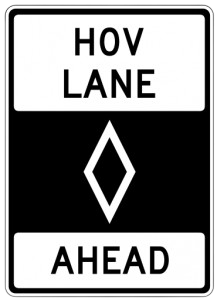
High-Occupancy Vehicle (HOV) diamond lane ahead. Only vehicles carrying the minimum required number of passengers (usually 2 or more) may use this lane.
This road sign indicates that:
A) a lane is reserved for certain purposes or certain vehicles.
B) buses and car pools may not travel in the restricted lane.
C) vehicles cannot go straight ahead. Cars must turn either to the right or left.
26.
What is the first thing to do when you make a three-point turn?
A) Signal with your left turn signal, then check carefully for traffic coming toward you.
B) Signal with your right turn signal, then pull over to the right and stop.
C) Turn left, go across the road so you come to a stop while you face the edge of the road.
27.
Right turns are strictly prohibited at this intersection under all circumstances.
This sign tells drivers that:
A) they must make a left turn at the intersection.
B) U-turns are not allowed.
C) they must not make a right turn.
D) None of the above.
28.
When driving near light rail vehicles, drivers should:
A) never drive around lowered crossing gates.
B) expect trains on any track at any time.
C) always obey signs and traffic signals.
D) All of the above.
29.
After parking, are you allowed to open a door on the road side of your vehicle?
A) Yes, always.
B) Yes, but only if it does not interfere with bicyclists and other traffic.
C) No, never.
30.
A side road enters the highway from the right or left. Watch for traffic turning onto or crossing your lane.
This is:
A) a side road sign.
B) a merging traffic sign.
C) a right curve sign.
31.
The road ahead is divided by a median strip or physical barrier into two separate one-way roadways. Keep to the right of the divider.
This road sign means:
A) Divided highway ahead - stay to the right
B) Do not enter
C) Do not pass
32.
If you see a 'lane closed ahead' sign you should:
A) make a U-turn. You are on the wrong side of the road.
B) merge into the correct lane when it is safe.
C) speed to the end of the closed lane and try to get into the other lane.
D) None of the above.
33.
Worn tires:
A) may cause you to hydroplane even with very little water on the road.
B) can increase your stopping distance.
C) can make turning more difficult.
D) All of the above.
34.
When passing a vehicle, it is safe to return to your lane when:
A) you look over your shoulder and see no vehicle behind you.
B) you can see both headlights of the vehicle you passed in your rearview mirror.
C) the driver you just passed signals you over.
35.
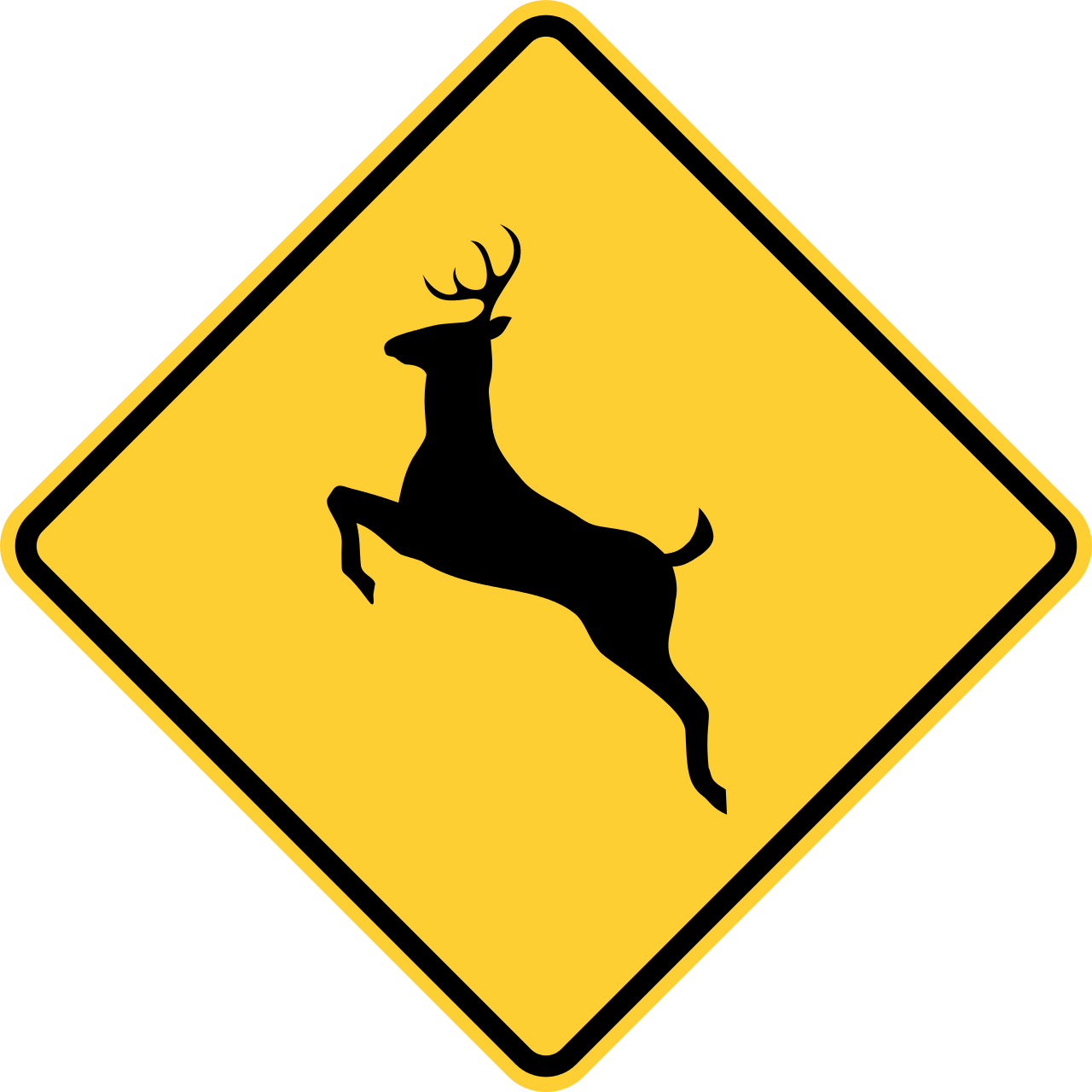
Wildlife and deer frequently cross in this area, especially at dawn and dusk. Scan the roadside and be prepared to brake safely.
When they see this road sign, drivers should:
A) drive carefully because the animal pictured on the sign is extremely rare in the area.
B) watch for this species crossing the road.
C) park in the zoo area.
ANSWER KEY Check answers after completing the test.
1 B
2 D
3 B
4 C
5 C
6 B
7 C
8 B
9 B
10 C
11 A
12 C
13 A
14 C
15 A
16 C
17 C
18 C
19 A
20 A
21 C
22 A
23 A
24 A
25 A
26 B
27 C
28 D
29 B
30 A
31 A
32 B
33 D
34 B
35 B