DriveQuiz drivequiz.com

HI DMV PERMİT PRACTİCE TEST 15

Hawaii
Duration: 27 min
|
Questions: 30
Student Name:
Date:
Correct:      Incorrect:      Score:      
1.
What should you do if your rear wheels start to skid?
A) Steer left if your rear wheels slide right.
B) If the vehicle has ABS, pump the pedal carefully.
C) Turn the steering wheel in the direction the vehicle is trying to go.
2.
Traffic lights are normally ____________ from the top to bottom or left to right.
A) red, green and yellow
B) green, yellow and red
C) red, yellow and green
3.
In general, you should pass vehicles going in the same direction as you are going:
A) only if the other driver signals it is safe.
B) whenever you have the opportunity to do so.
C) on the right.
D) on the left.
4.
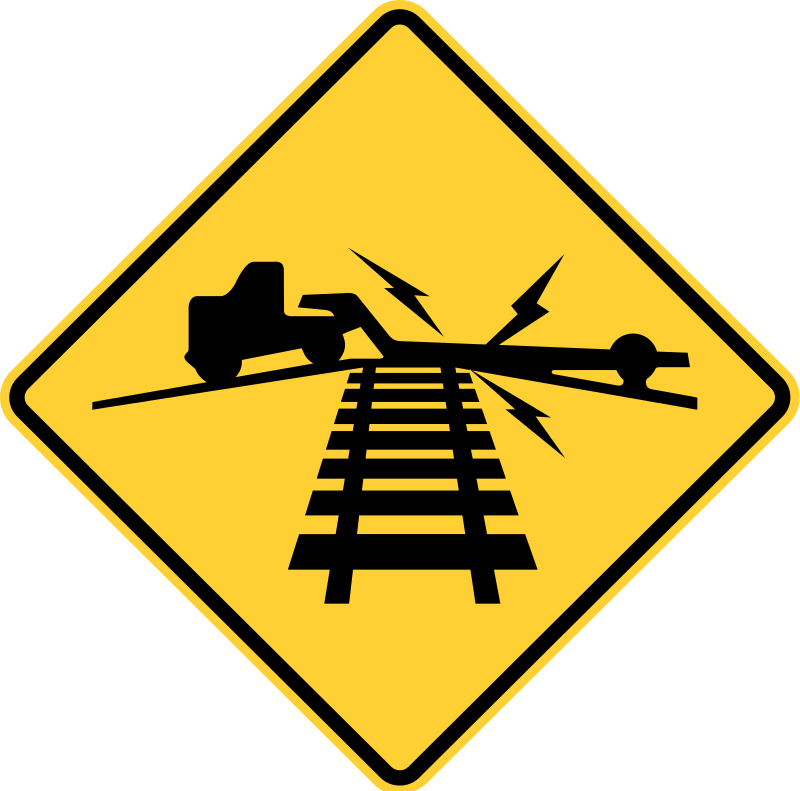
Warns of a high-centered or steep railroad hump crossing where long-wheelbase or low-slung vehicles may become stuck on the tracks.
This road sign means:
A) Winding road ahead
B) Pedestrian crossing
C) Low ground railroad crossing
D) No-passing zone
5.
Parking is not allowed:
A) on the road side of a parked vehicle.
B) in a tunnel.
C) All of the above.
6.
A vehicle using emergency signals is approaching from the opposite direction on a two-lane street. Drivers should:
A) slow down, move as far to the right as possible and stop.
B) immediately come to a complete stop.
C) disregard the emergency vehicle and proceed.
D) None of the above.
7.
Which of the following does NOT affect the distance that it takes to stop your vehicle?
A) Perception time.
B) Braking distance.
C) Reaction distance.
D) Steering ability.
8.
When towing a trailer large enough to obstruct your inside rear-view mirror, you are required to:
A) have an outside rear-view mirror installed on the right side of your vehicle.
B) have an outside rear-view mirror installed on the driver’s side of your vehicle.
C) have a person in the vehicle to clear you for right turns.
D) have outside rear-view mirrors installed on both sides of your vehicle.
9.
If an aggressive driver is behind you:
A) sound your horn and move to the left lane.
B) slow down and confront the aggressive driver.
C) try to get out of the aggressive driver’s way.
D) increase you speed and flash your brake lights.
10.
The road ahead is divided by a median strip or physical barrier into two separate one-way roadways. Keep to the right of the divider.
This sign means:
A) The highway ahead is divided into two one-way roadways.
B) Roundabout ahead. Slow down.
C) The divided highway on which drivers are traveling ends ahead.
11.
When you prepare to make a left turn from a one-way road into a one-way road, you must:
A) move into the right lane, or to the left side of a single lane.
B) move into the right lane, or to the right side of a single lane.
C) move into the left lane, or to the left side of a single lane.
12.
_________________ your mirrors when you prepare to change lanes.
A) Never depend on
B) Never use
C) Always rely on
13.
Unlike passenger cars, trucks have blind spots:
A) on the right.
B) directly behind them.
C) on the front.
14.
Who's responsible for the mechanical condition of a vehicle?
A) The Department of Transport.
B) The garage mechanic.
C) The driver and registered owner of the vehicle.
D) The insurance company.
15.
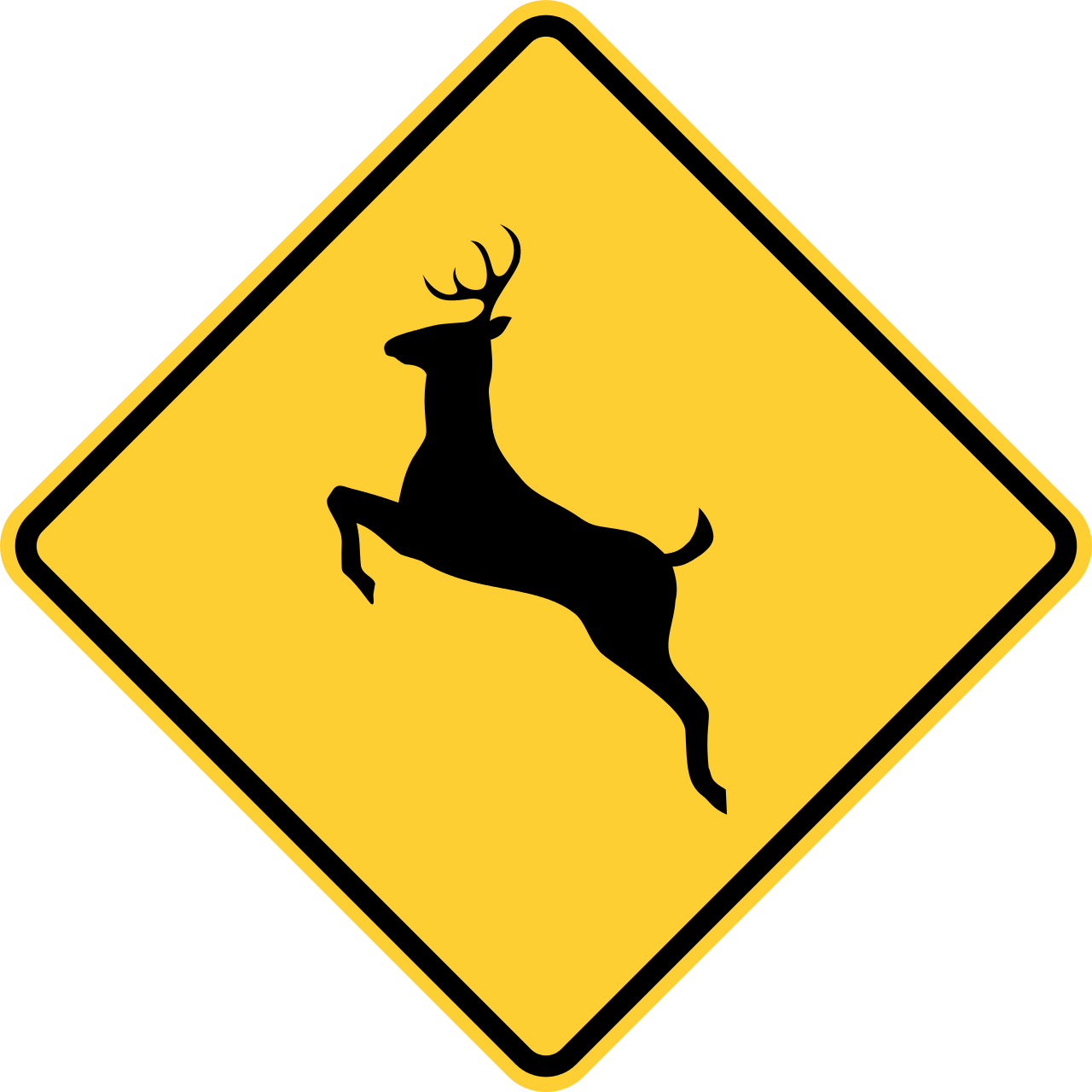
Wildlife and deer frequently cross in this area, especially at dawn and dusk. Scan the roadside and be prepared to brake safely.
When they see this road sign, drivers should:
A) drive carefully because the animal pictured on the sign is extremely rare in the area.
B) watch for this species crossing the road.
C) park in the zoo area.
16.
You may not pass another vehicle on either side of a _______ centerline.
A) solid or broken yellow
B) single broken white
C) double solid yellow
D) single broken yellow
17.
Parking is permitted only during specified hours and days as posted on the sign. Vehicles parked outside these hours are subject to ticketing or towing.
This sign means:
A) You can only park between 8:30 AM and 5:30 PM.
B) Parking is not allowed at 8:30 AM and at 5:30 PM
C) No parking between 8:30 AM and 5:30 PM.
18.
This lane is exclusively designated for making U-turns. Through traffic and right turns are not allowed from this lane.
This sign means:
A) You may make a U-turn.
B) Hairpin corner ahead.
C) You must make a U-turn.
19.
You face a green light, but traffic on the other side of the intersection does not allow you to travel all the way through the intersection. What must you do?
A) Enter the intersection and wait until traffic ahead clears.
B) Wait for the next green light.
C) Wait until traffic ahead clears, so you do not block the intersection.
20.
__________________ give you right-of-way to make a left turn.
A) A green arrow pointing left
B) A flashing red light
C) A flashing yellow light
D) A solid green light
21.
When you approach a railroad crossing without flashing warning signals or crossing gates, you should:
A) always stop.
B) cross the tracks as slowly as possible.
C) yield to all trains at the crossing.
D) speed up to beat the train.
22.
As you drive on the expressway, make sure:
A) you cut off vehicles behind you when you change lanes.
B) to signal all lane changes.
C) your directional signal goes off before you change lanes.
23.
Roads are most slippery:
A) just before it rains.
B) when it stops raining.
C) when it first starts to rain.
24.
If cars approaching from opposite directions reach an intersection at the same time:
A) a car that moves straight must yield to cars that turn left.
B) a car that turns left must yield to cars that move straight or turn right.
C) a car that turns right must yield to cars that move straight or turn left.
25.
When drivers see the ‘Wrong Way’ sign:
A) they are going the wrong way on an expressway exit ramp.
B) they must drive past this sign and reach the next intersection.
C) they must not leave the pavement except in an emergency.
26.
If you stop at a railroad crossing with more than one track:
A) proceed with caution until you see a train.
B) go through when one of the tracks is free.
C) go through as soon as the first train passes.
D) wait until you have a clear view of both tracks.
27.
Alcohol:
A) makes you less aware of what is happening to your driving abilities.
B) makes it easier to make correct decisions.
C) improves your reaction time.
28.
It is illegal to drive below the speed limit:
A) when the pavement is wet.
B) only in residential areas.
C) when driving slowly disrupts the normal flow of traffic.
D) only in rural areas.
29.
The road curves gradually to the right ahead. Reduce speed before entering the curve.
When they see this sign, drivers should:
A) increase their speed and keep well to the right.
B) slow down and keep well to the right.
C) slow down and keep well to the left.
30.
Yellow diamond warning that pedestrians may be crossing ahead. Exercise caution and yield.
This road sign means:
A) School zone ahead
B) Pedestrians must not cross here
C) Pedestrian crossing ahead
ANSWER KEY Check answers after completing the test.
1 C
2 C
3 D
4 C
5 C
6 A
7 D
8 D
9 C
10 A
11 C
12 A
13 B
14 C
15 B
16 C
17 C
18 C
19 C
20 A
21 C
22 B
23 C
24 B
25 A
26 D
27 A
28 C
29 C
30 C