DriveQuiz drivequiz.com

HI DMV PERMİT PRACTİCE TEST 10

Hawaii
Duration: 27 min
|
Questions: 30
Student Name:
Date:
Correct:      Incorrect:      Score:      
1.
Which sign has white letters on a red background?
A) Stop
B) School zone
C) Yield
2.
Your car stalls on the tracks at a railroad crossing, and a collision with a train is imminent. After getting yourself and your passengers out of the car, you should:
A) run toward the train but stay off the tracks.
B) signal the train to stop.
C) cross the tracks.
3.
Another road crosses the highway ahead. Look left and right for crossing or entering vehicles.
This road sign means:
A) You must turn right
B) Railroad crossing
C) Crossroad ahead
D) 4-way stop
4.
Protected left turns have ended. You may make a left turn only after yielding to all oncoming vehicles and pedestrians.
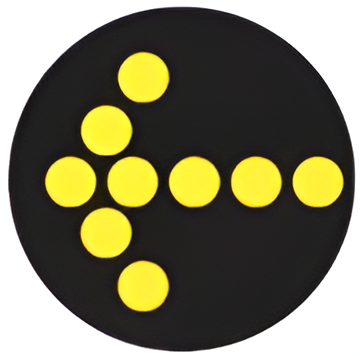
What does a flashing left yellow arrow mean?
A) Vehicles turning left must stop if they can. The light will soon be red.
B) Only right turns are allowed.
C) Left turns are allowed. Yield to oncoming traffic and pedestrians.
D) None of the above.
5.
Unless a sign states otherwise, a stopped vehicle facing a circular red traffic light may:
A) turn right at any time.
B) turn right after yielding to other traffic and pedestrians that were there first.
C) None of the other answers are correct.
D) turn right after the red light has turned to yellow.
6.
Signs containing information about hazardous conditions are known as _____ signs.
A) regulatory
B) guide
C) information
D) warning
7.
The effect that alcohol has on your judgment:
A) is greater if you were drinking hard liquor.
B) is less if you were only drinking wine.
C) is less if you were only drinking beer.
D) depends on the amount of alcohol in your blood.
8.
BAC is:
A) the acronym for Beer ACcumulation.
B) the number of ounces of alcohol in your blood.
C) the percentage of alcohol in your blood.
9.
A few drinks after work before driving home:
A) should be avoided because they impair your judgement.
B) should be avoided unless you really need them.
C) are acceptable as far as they are part of your daily routine.
D) have no effect on your driving ability.
10.
Pentagonal signs are used to indicate:
A) possible hazards on roadways.
B) no passing zones.
C) school crossings.
11.
To avoid being in a truck driver’s blind spot, you should:
A) never pass the truck and put your headlights on.
B) avoid driving on either side of the truck and don’t tailgate.
C) flash your lights.
D) sound your horn.
12.
If you are blinded by headlights on an approaching vehicle, you should:
A) avoid looking directly at the bright lights.
B) glance toward the side of the road, then look quickly ahead to determine the other vehicle’s position.
C) All of the above.
13.
If you missed your exit on a freeway, you should:
A) use the right turn signal, check your mirrors and move to the right.
B) None of the above.
C) go to the next exit and come back to the exit you missed.
D) make a quick U-turn from your lane of travel.
14.
The seat belt should be adjusted so that it:
A) is loose.
B) is buckled snugly across your hip bones and lower abdomen.
C) is hidden beneath the seat.
D) keeps the seat belt buzzer or light from operating.
15.
One broken line indicates:
A) You can pass other vehicles and change lanes, if it is safe.
B) You can not pass other vehicles or go across the line.
C) You can change lanes, but only when traffic conditions or obstructions in the road make it necessary.
16.
Which shape is a stop sign?
A) Diamond
B) Octagon
C) Upside-down triangle
17.
Standard rectangular shape used for general regulatory instructions and speed limits.
Vertical rectangles tell drivers:
A) the law.
B) what is not allowed.
C) the direction they should travel.
18.
Prohibits drivers from making a 180-degree turn to travel in the opposite direction at this intersection or stretch of road.
This road sign means:
A) No left turn
B) No U-turn
C) Detour ahead
19.
After you stop for a school bus, you must:
A) turn off your engine.
B) pass the bus before the red lights stop flashing.
C) None of the above.
20.
The following symptoms are associated with drowsy driving:
A) You continue to yawn.
B) You don’t remember driving the last few miles.
C) All of the above.
21.
In the following situations, drivers should increase their following interval:
A) When following vehicles that are required to come to a stop at railroad crossings.
B) When it is hard to see ahead because of bad weather.
C) All of the above.
22.
Drinking alcohol will affect you:
A) only if you have more than one drink.
B) more rapidly on an empty stomach.
C) the same way at all times.
D) more rapidly just after eating.
23.
You are driving and you are feeling drowsy. You should:
A) avoid drinking coffee.
B) turn on the radio to keep you awake.
C) find a safe place to stop for a break.
24.
When you drive near parks and playgrounds, you should expect children:
A) not to cross unless they are with an adult.
B) to know when it is safe to cross.
C) to stop at the curb before crossing the street.
D) to suddenly run into the street.
25.
When driving in bad weather, drivers should:
A) decrease the following distance.
B) increase their speed to get to their destination more quickly.
C) increase the following distance.
D) None of the above.
26.
You should never depend on your mirrors when you prepare to change lanes. Why?
A) You should look over your shoulder instead.
B) Mirrors are useless.
C) Mirrors need to be adjusted.
D) Mirrors leave 'blind spots' behind both sides of vehicles.
27.
If you drive much slower than the posted speed limit you:
A) are a defensive driver.
B) might cause a crash.
C) always have the right of way.
D) are driving safely and can avoid tailgaters.
28.
Two motorcyclists are allowed to:
A) ride side-by-side in a single lane.
B) share the lane with another vehicle.
C) race on empty roads.
29.
Aggressive driving includes:
A) quick lane changes without a signal.
B) chasing or challenging other drivers.
C) All of the above.
30.
Your red traffic signal changes to green while a pedestrian is crossing in your traffic lane. The right of way should be given:
A) by the pedestrian, but only when vehicles are turning left.
B) by the pedestrian.
C) to the pedestrian.
ANSWER KEY Check answers after completing the test.
1 A
2 A
3 C
4 C
5 B
6 D
7 D
8 C
9 A
10 C
11 B
12 C
13 C
14 B
15 A
16 B
17 A
18 B
19 C
20 C
21 C
22 B
23 C
24 D
25 C
26 D
27 B
28 A
29 C
30 C