DriveQuiz drivequiz.com

FL DMV PERMİT PRACTİCE TEST 2

Florida
Duration: 45 min
|
Questions: 50
Student Name:
Date:
Correct:      Incorrect:      Score:      
1.
The Florida “standard” speed limits in municipal speed areas is:
A) 25 MPH.
B) 55 MPH.
C) 30 MPH.
D) 20 MPH.
2.
A side road enters the highway from the right or left. Watch for traffic turning onto or crossing your lane.
This road sign warns drivers that:
A) left turns are not allowed at the intersection.
B) the road will make a sharp turn to the right.
C) another road enters the highway from the direction shown.
3.
Overhead multi-phase traffic signal managing complex lane assignments and turn movements at intersections.
The picture shows:
A) a flashing arrow panel.
B) a sharp curve sign.
C) a one way sign.
D) a no-left-turn sign.
4.
Parking is allowed:
A) within intersections.
B) on crosswalks.
C) on public roads.
D) within 15 feet of a fire hydrant.
5.
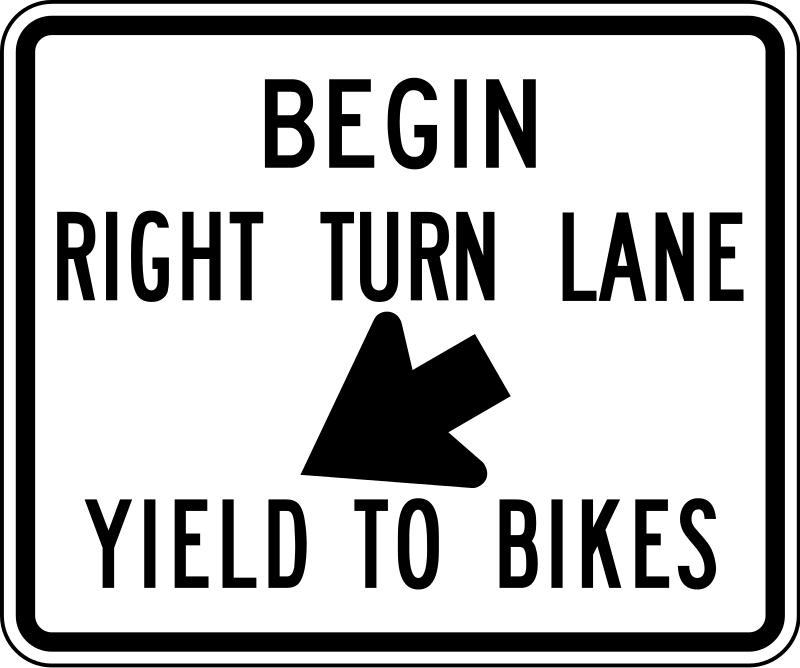
Drivers turning right must merge into the bike lane before turning, first checking mirrors and blind spots and yielding to all cyclists.
What does this road sign indicate?
A) Drivers have the right of way over bikes turning left.
B) Vehicles turning left must yield to bikes entering a right turn lane.
C) Motor vehicles entering an exclusive right-turn lane must weave across bicycle traffic in bicycle lanes.
6.
Braking distance is:
A) usually 50 feet.
B) how far a vehicle will travel, in ideal conditions, while the driver is braking.
C) the total distance a vehicle has traveled until it comes to a complete stop.
D) how far a vehicle will continue to travel before the driver hits the brakes.
7.
Which of the following is NOT defensive driving:
A) Looking for possible danger.
B) Acting right away to prevent a crash.
C) Thinking ahead.
D) Smiling to other drivers.
8.
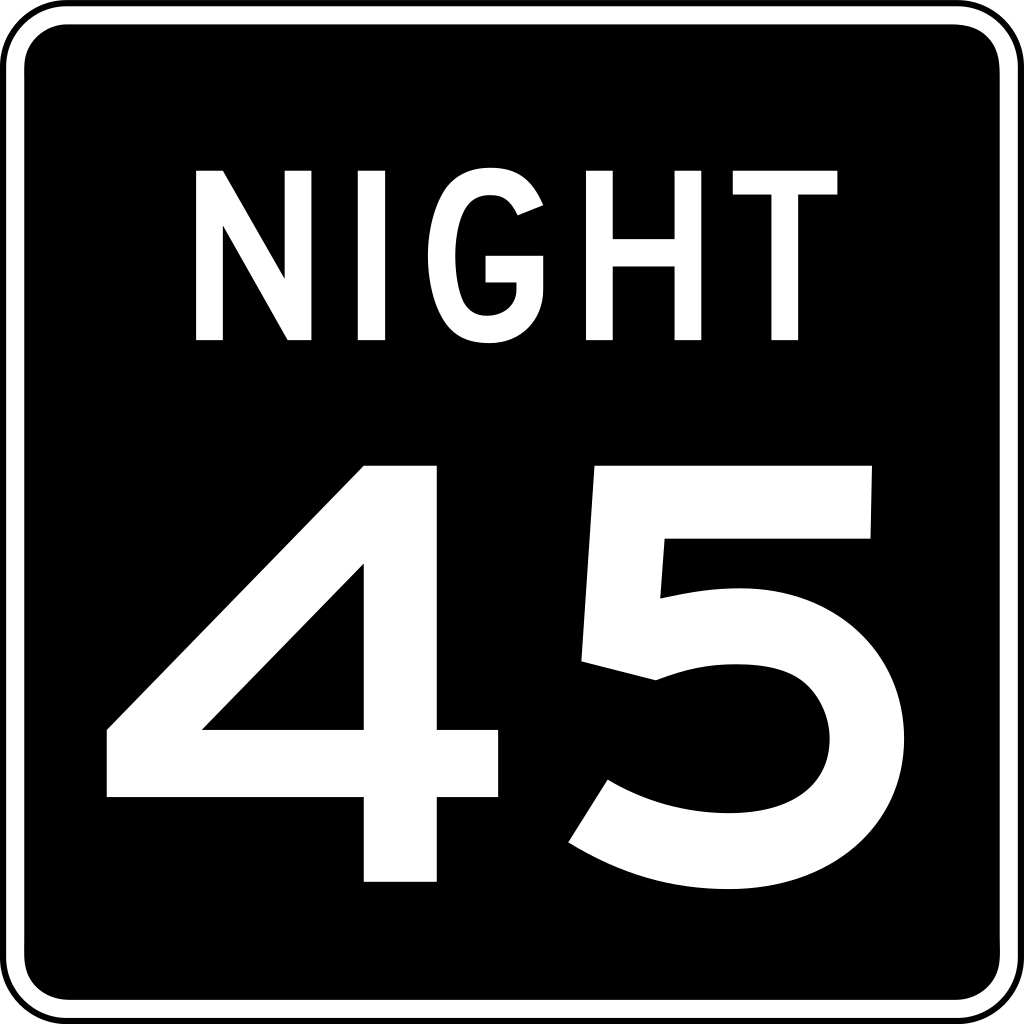
Indicates a lower maximum legal speed limit that applies only during nighttime hours for safety.
This sign means:
A) Take route 45 if you are driving at night.
B) The night-time speed limit is 45 MPH.
C) The minimum speed limit is 45 MPH.
9.
Driving 16 MPH or more over lawful or posted speed will result in __ points being added.
A) 4
B) 2
C) 6
D) 3
10.
On a highway, you are moving in the opposite direction of a stopped school bus which is picking up or dropping off children. You:
A) can pass the bus.
B) must always stop.
C) must stop if the bus’ stop arm is withdrawn.
D) do not have to stop if the highway is divided by a raised barrier or an unpaved median at least five feet wide.
11.
Which of the following is true? Your license will be SUSPENDED:
A) if you commit retail theft.
B) if you are found guilty of racing on the highway.
C) if you park next to a fire hydrant.
D) All of the above.
12.
A driver is approaching a highway-railroad crossings and is following a bus. The driver should:
A) pass the bus and come to a complete stop within 15 feet of the crossing.
B) be alert as the bus may have to stop at the crossing even when the gates are up.
C) overtake and pass the bus before reaching the crossing.
D) None of the above.
13.
Which line on a pavement permits the passing of other vehicles?
A) Solid yellow line.
B) Broken yellow line
C) Broken white line
D) Solid white line.
14.
To reduce their chances of colliding with an animal, drivers should:
A) scan the sides of the road to watch for the reflection of vehicle headlights in the eyes of animals.
B) look well down the road and far off to each side.
C) All of the above.
15.
Which of the following is true when crossing a railroad track:
A) Do not move forward until it's safe to do so.
B) If there is more than one track, make sure all tracks are clear before starting to cross.
C) In heavy traffic, make sure there is room for their vehicle on the other side before crossing.
D) All of the above.
16.
Prohibits drivers from making a 180-degree turn to travel in the opposite direction at this intersection or stretch of road.
This road sign means:
A) Left turns are not allowed where this sign is displayed.
B) Drivers cannot make a complete turn to go in the opposite direction.
C) Vehicles turning left must make a U-turn.
17.
Parking is not allowed within __ feet of a railroad crossing.
A) 100
B) 200
C) 30
D) 50
18.
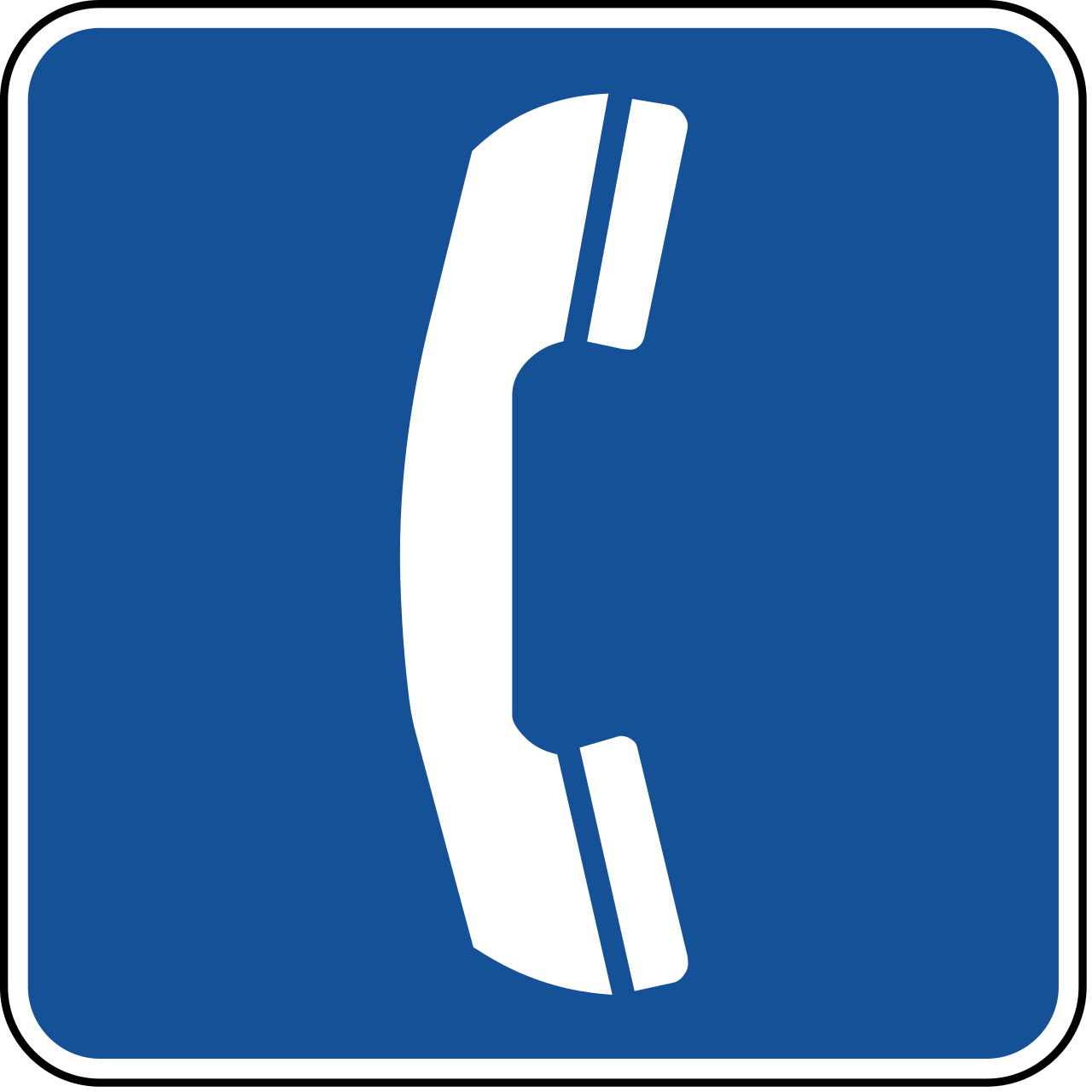
Blue motorist service sign indicating the availability of a public emergency telephone along the highway.
This sign indicates:
A) Phone service ahead
B) Emergency line available
C) Cell phone shop ahead
19.
Car pool vehicles are those with:
A) 2 or more occupants in the car.
B) 3 or more occupants in the car.
C) less than 4 occupants in the car.
D) anti-hydroplaning tires.
20.
In Florida, bicyclists on public roads have the same rights and responsibilities as:
A) sidewalk riders.
B) drivers of motorized vehicles.
C) pedestrians on sidewalks and in crosswalks.
D) mopeds.
21.
If traffic signals are out of order, drivers must:
A) treat the light as if it is a four-way stop sign.
B) treat the light as if it is a yellow light.
C) stop if they can.
D) treat the light as if it is a green light.
22.
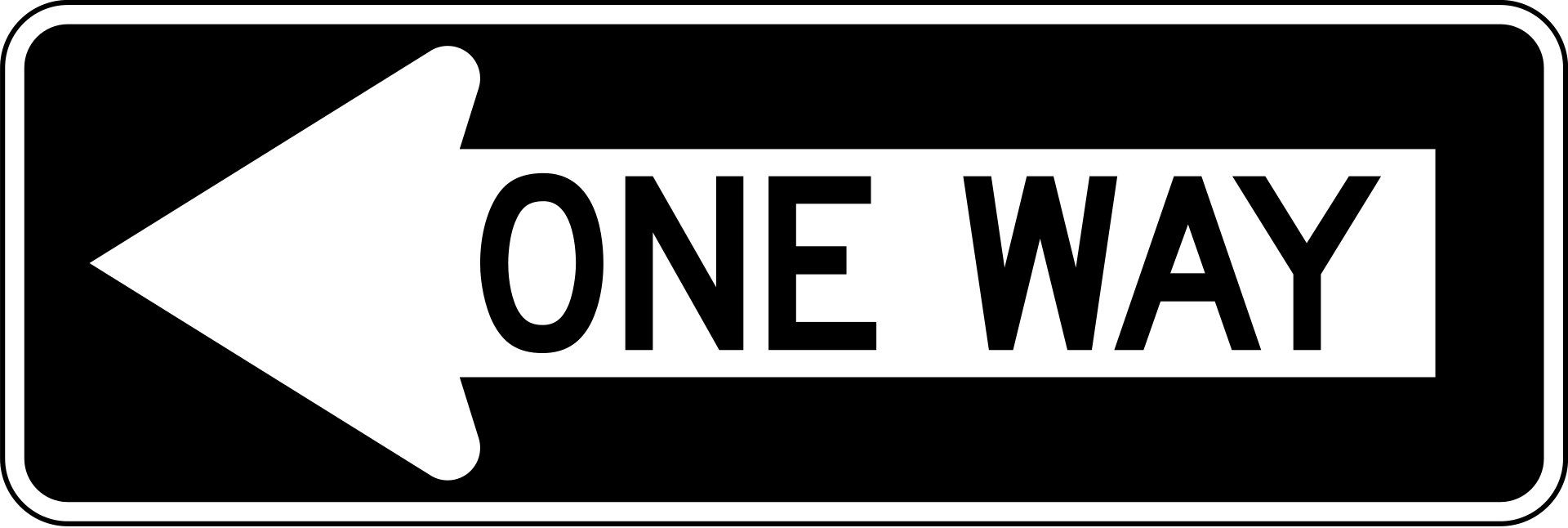
Traffic flows only in the direction indicated by the arrow. Never drive in the opposing direction.
The ‘One Way’ sign means that:
A) only vehicles turning left may travel in the direction of the arrow.
B) there is only one road that turns left at the intersection.
C) drivers may travel only in the direction of the arrow.
23.
When a school bus stops to unload children on a divided highway, should the vehicles traveling in the same direction as the bus stop?
A) No, only vehicles traveling in the opposite direction have to stop.
B) Yes, if you are in a school zone.
C) Yes, always.
D) Stopping is optional in this specific case.
24.
On an expressway, drivers should:
A) follow other vehicles closely.
B) drive on the median strip.
C) park on the left lane.
D) stop driving when they feel tired.
25.
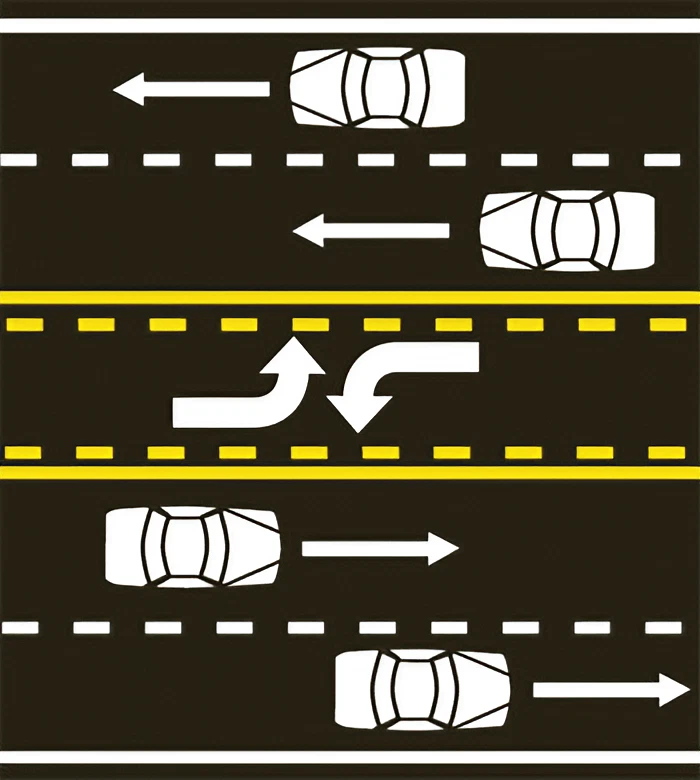
Center lane flanked by solid and broken yellow lines used exclusively for entering or exiting driveways and making left turns in either direction.
The picture shows:
A) a reversible road with reserved lanes.
B) a divided highway with a shared lane.
C) a highway with a reversible lane.
D) a two-way roadway with a center lane for left turns.
26.
Your red traffic signal changes to green while a pedestrian is crossing in your traffic lane. The right of way should be given:
A) by the pedestrian, but only when vehicles are turning left.
B) by the pedestrian.
C) to the pedestrian.
27.
The Financial Responsibility Law requires drivers to:
A) be financially responsible for damages they may cause to others when a motor vehicle crash happens.
B) pay $15,000 of Property Damage Liability (PDL)
C) share the financial risk of road crashes with the other drivers
D) pay their car insurance.
28.
Drivers should keep a minimum following distance of:
A) 3 to 4 seconds, with an additional second for any unusual weather or traffic conditions.
B) 1 second, with an additional second when approaching an intersection.
C) 55 milliseconds, with an additional millisecond for every drop of rain in a 2 miles radius.
D) 1 to 2 seconds, with an additional second for any vehicle in front of them.
29.
Which of the following is NOT true? Before you start your engine you should:
A) make sure your safety belt is clean.
B) adjust the seat so you can reach all controls.
C) make sure your car is in park or neutral gear.
D) adjust the inside and outside rearview mirrors.
30.
Parking is not allowed within __ feet of any flashing signal, stop sign or traffic signal.
A) 50
B) 30
C) 15
D) 100
31.
When the light is red, drivers:
A) must stop after entering the intesection.
B) must yield to oncoming traffic and pedestrians.
C) must come to a complete stop before moving into the intersection.
D) can go, but only if the intersection is clear.
32.
Passing is allowed:
A) at intersections
B) on hills
C) on two-lane highways
D) None of the above.
33.
Before pulling out from a right-side parallel parking space, drivers must:
A) check for approaching traffic and give a left turn signal.
B) enter the traffic flow and then give a left turn signal.
C) make sure no law enforcement officer who is directing traffic.
D) None of the above.
34.
If you want to go to a social event where you might drink alcohol, you should:
A) arrange to go with two or more people and agree that one of you will not drink alcohol.
B) arrange to remain overnight or ride home with a friend who does not drink.
C) use public transportation or a taxi, if available.
D) All of the above.
35.
On slippery roads, drivers should:
A) leave more space in front of their vehicle.
B) increase their speed to avoid hydroplaning.
C) come to a complete stop.
36.
What is the meaning of red traffic signs?
A) High emphasis warning.
B) Stop, do not enter or wrong way.
C) Regulatory.
37.
Indicates a series of three or more consecutive sharp turns or curves ahead. Reduce speed and maintain lane control.
This sign warns drivers that:
A) they must turn either to the right or left.
B) there is a double curve ahead.
C) there is a winding road ahead.
38.
Any driver under the age of 18 who accumulates six or more points within a 12 month period is automatically restricted for one year to:
A) operating the motor vehicle only between 7:00 a.m. and 11:00 p.m.
B) driving for “Business Purposes ONLY”.
C) driving within 25 miles from home.
D) driving only during weekends.
39.
Crossbuck signs are:
A) speed limit signs.
B) yield signs.
C) stop signs.
D) flashing signals.
40.
A bicyclist on the road ahead has their left arm extended downward to their left. You should assume the bicyclist is signaling that he/she is:
A) turning left.
B) about to turn right.
C) slowing down or stopping.
D) tired.
41.
Which of the following is NOT true? When you enter an open intersection, you must yield the right-of-way if:
A) the traffic light is red.
B) a vehicle is already in the intersection.
C) you plan to make a left turn and a vehicle is approaching from the opposite direction.
D) All of the above.
42.
A large percentage of motorist bicycle crashes occur:
A) on interstate highways.
B) at intersections.
C) because there are too many byciclists.
D) on sidewalks.
43.
Passengers under the age of 18:
A) must always be restrained by a safety belt or a child restraint device.
B) must be restrained by a safety belt or a child restraint device when seating in front.
C) do not have to be restrained by a safety belt or a child restraint device.
44.
An eight-lane highway has ________ pedestrian countdown period ___ a four-lane road.
A) the same; as
B) a longer; than
C) half the; of
D) a shorter; than
45.
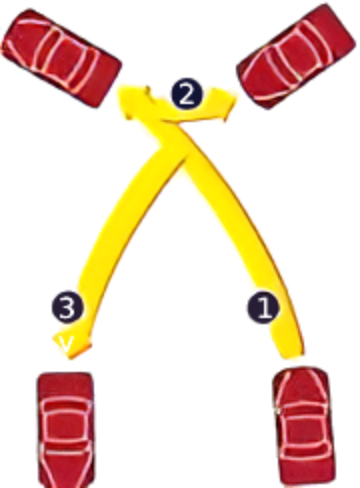
Illustration of right-of-way rules at an uncontrolled or controlled 3-vehicle junction.
The picture shows:
A) a three-point turn.
B) that car number 1 should yield to car number 2, while car number 2 should yield to car number 3.
C) a U-turn.
D) an intersection with 4 cars.
46.
Unlawful speed resulting in a crash will result in __ points being added.
A) 2
B) 3
C) 6
D) 4
47.
A second refusal to take a blood or breath test will result in:
A) a fine of $1,500.
B) an 18 month suspension and a first degree misdemeanor.
C) a fine of $1,000.
D) a 12 month suspension and a second degree misdemeanor.
48.
At intersections marked with stop lines, drivers must:
A) stop behind the lines and yield the right-of-way to all other traffic and pedestrians at stop signs.
B) stop only if a pedestrian is crossing the road.
C) yield the right-of-way to other vehicles and pedestrians and then stop.
D) enter the intersection and then yield to pedestrians.
49.
At 50 MPH, a vehicle will travel a minimum of ___ feet before the driver can bring it to a complete stop.
A) 158
B) 100
C) 268
D) 55
50.
Parking is permitted only during specified hours and days as posted on the sign. Vehicles parked outside these hours are subject to ticketing or towing.
It's 10 AM. This sign tells you that:
A) you are allowed to park until 5:30 PM.
B) you must display a special permit in order to park here.
C) you are not allowed to park here.
ANSWER KEY Check answers after completing the test.
1 C
2 C
3 A
4 C
5 C
6 B
7 D
8 B
9 A
10 D
11 A
12 B
13 C
14 C
15 D
16 B
17 D
18 A
19 A
20 B
21 A
22 C
23 C
24 D
25 D
26 C
27 A
28 A
29 A
30 B
31 C
32 C
33 A
34 D
35 A
36 B
37 C
38 B
39 B
40 C
41 A
42 B
43 A
44 B
45 A
46 C
47 B
48 A
49 C
50 C