DriveQuiz drivequiz.com

DE DMV PERMİT PRACTİCE TEST 6

Delaware
Duration: 27 min
|
Questions: 30
Student Name:
Date:
Correct:      Incorrect:      Score:      
1.
What do warning signs mean?
A) Danger ahead.
B) Drivers are approaching a location where there is a special rule.
C) All of the above.
2.
Drivers should allow an extra cushion of space when following:
A) a passenger car.
B) drivers whose view to the rear is blocked.
C) an SUV.
3.
When passing another vehicle, you should return to your lane if:
A) you have passed the other vehicle’s front bumper.
B) you are at least 25 feet in front of the passed vehicle.
C) you can see both headlights in the rearview mirror.
4.
Drivers turning left must yield to:
A) None of the above.
B) oncoming vehicles going straight.
C) oncoming vehicles turning left.
5.
The roadway becomes particularly slippery during wet or rainy conditions. Reduce your speed, increase following distance, and avoid abrupt braking or steering.
When they see this sign, drivers:
A) should be prepared to make sharp turns at a high speed.
B) need to be prepared to turn right and then left quickly.
C) should not speed up or brake quickly.
6.
What should you do if one of your tires blows out?
A) Hold the steering wheel tight and brake immediately to avoid the risk of skidding.
B) Leave the road immediately.
C) Hold the steering wheel tight and slowly take your foot off the gas pedal.
7.
To avoid hydroplaning, drivers should:
A) slow down.
B) apply the brakes firmly.
C) drive at a constant speed.
8.
Proceed with caution. You do not need to stop unless pedestrians or hazards are present in the intersection.
What does a flashing yellow light mean?
A) The same thing as a stop sign.
B) Drivers may move forward with caution.
C) All of the above.
9.
A crosswalk is:
A) a special type of 4-way intersection.
B) an area designated for blind persons.
C) the area where pedestrians may cross the road.
10.
A curb painted red means:
A) No parking or stopping
B) Parking is for disabled persons with a special placard or plate.
C) Reserved for passengers pick up or drop off
11.
Drivers may cross a double yellow line to pass another vehicle if:
A) the yellow line next to the other side of the road is broken.
B) the vehicle ahead moves to the right to let them pass.
C) the yellow line next to their side of the road is broken.
12.
Blue service guide sign indicating that emergency medical and hospital facilities are located in the direction of the arrow.
What does this road sign indicate?
A) Hospital service
B) Area reserved for people with disabilities
C) Interstate highway
13.
You are approaching an intersection with a traffic signal indicating a steady yellow light. If you have not already entered the intersection, you should:
A) slow down and proceed with caution through the intersection.
B) speed up to cross the intersection before the light turns red.
C) stop before entering the intersection if it is safe to do so.
14.
After passing a vehicle, it is safe to return to your lane when:
A) the driver you passed slows down to let you return to your lane.
B) you can see both headlights of the vehicle you just passed in your rearview mirror.
C) you are at least 100 feet ahead of the vehicle you passed.
15.
You may drive faster than the posted speed limit:
A) when passing another vehicle, as long as it is safe to do so.
B) when your lane is empty.
C) Under no circumstances.
16.
The road makes a sharp 90-degree right turn ahead. Slow down considerably before entering the turn.
This sign warns drivers of:
A) a side road.
B) a sharp turn.
C) a cross road.
17.
A thumping sound can be a warning:
A) that a tire blowout is about to occur.
B) of a steering failure.
C) of a brake failure.
18.
When changing lanes, drivers should never:
A) check to see if other drivers are moving into the same lane.
B) change lanes abruptly.
C) glance over their shoulder to check for blind spots.
19.
The octagonal (8-sided) shape is exclusively reserved for STOP signs so drivers can identify it immediately even in poor visibility or from behind.
The octagonal shape is used:
A) for stop signs and railroad advance warning signs.
B) exclusively for stop signs.
C) to warn drivers of existing or possible hazards on roadways.
20.
When driving at night, drivers should:
A) always use their high beams.
B) increase their following distance.
C) look directly into the oncoming headlights of approaching vehicles.
21.
If you see orange construction signs and cones on a freeway, you must:
A) be prepared for workers and equipment ahead.
B) make a U-turn because the lane ends ahead.
C) maintain your current speed while changing lanes.
22.
What can you do to prevent skids on snow and ice?
A) Allow the wheels to keep turning.
B) Brake early and gently.
C) All of the above.
23.
When being passed by another vehicle, drivers should:
A) slow down.
B) slightly increase their speed.
C) maintain a constant speed.
24.
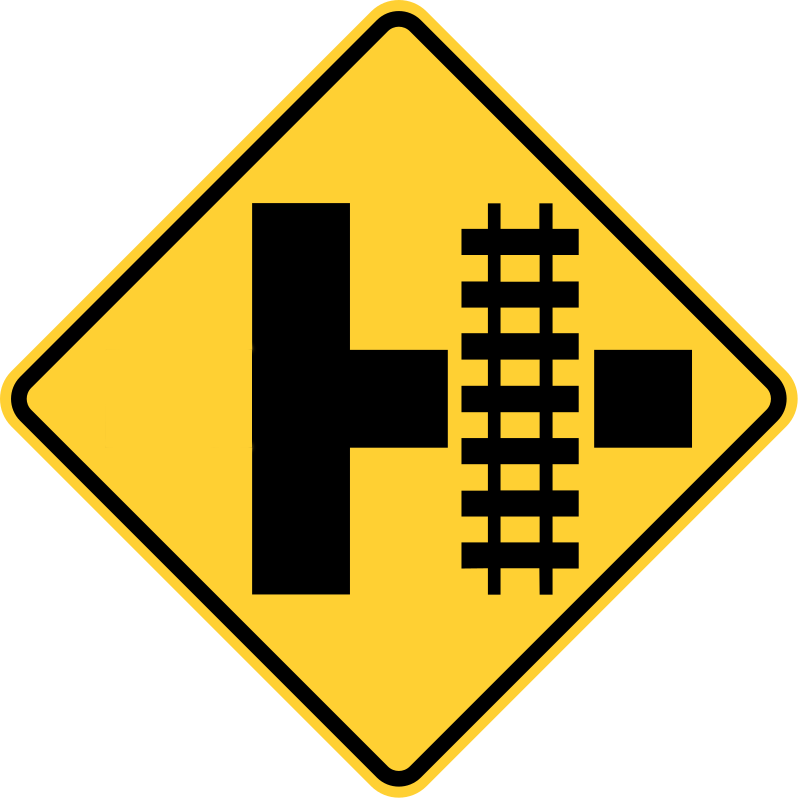
Four-way intersection ahead. Be prepared to yield right-of-way according to traffic control devices.
What does this sign indicate?
A) Parallel railroad crossing (side road)
B) Low ground clearance railroad crossing
C) Parallel railroad crossing (crossroad)
25.
Regulatory signs are:
A) Suggestions
B) Warnings
C) Law
26.
Warns of two consecutive curves in opposite directions (e.g., curves right then left). Slow down to maintain control.
This sign warns drivers that:
A) the highway ahead is divided into two one-way roadways. Drivers should keep to the right.
B) there is a winding road ahead.
C) there is a double curve ahead.
27.
If a bus needs to make a right turn and you are also turning right:
A) squeeze between the bus and the curb.
B) try to turn right before the bus does.
C) wait until the bus turns before turning right.
28.
One broken line indicates:
A) You can pass other vehicles and change lanes, if it is safe.
B) You can not pass other vehicles or go across the line.
C) You can change lanes, but only when traffic conditions or obstructions in the road make it necessary.
29.
Indicates a series of three or more consecutive sharp turns or curves ahead. Reduce speed and maintain lane control.
This sign warns drivers that:
A) they must turn either to the right or left.
B) there is a double curve ahead.
C) there is a winding road ahead.
30.
What is the first thing to do when you make a three-point turn?
A) Signal with your left turn signal, then check carefully for traffic coming toward you.
B) Signal with your right turn signal, then pull over to the right and stop.
C) Turn left, go across the road so you come to a stop while you face the edge of the road.
ANSWER KEY Check answers after completing the test.
1 C
2 B
3 C
4 B
5 C
6 C
7 A
8 B
9 C
10 A
11 C
12 A
13 C
14 B
15 C
16 B
17 A
18 B
19 B
20 B
21 A
22 C
23 C
24 A
25 C
26 C
27 C
28 A
29 C
30 B