DriveQuiz drivequiz.com

DE DMV PERMİT PRACTİCE TEST 13

Delaware
Duration: 27 min
|
Questions: 30
Student Name:
Date:
Correct:      Incorrect:      Score:      
1.
A red arrow on a traffic light means:
A) You may not turn in the direction of the arrow until a green light or arrow light goes on.
B) You may turn in in the direction of the arrow after coming to a complete stop.
C) You must stop and then proceed when the way is clear.
2.
Slow down and give right-of-way to all oncoming vehicles, cyclists, and pedestrians. Stop completely if necessary before entering the intersection or merging.
The yield sign means:
A) Drive with caution in wet weather.
B) You must come to a complete stop.
C) Slow down and give vehicles crossing your path the right-of-way.
3.
When entering an interstate highway, drivers should:
A) check for cars and slow down to 25 MPH before merging with the flow of traffic.
B) wait for an opening in traffic on the entrance ramp.
C) adjust speed to meet a traffic gap, then merge at a safe speed.
4.
If a vehicle suddenly cuts in front of you creating a hazard, which of these actions should you take first?
A) Sound your horn and step on the brake firmly.
B) Swerve into the lane next to you.
C) Take your foot off the gas pedal.
5.
A flashing red light at an intersection means:
A) Stop and yield the right of way.
B) You have the right-of-way.
C) Stop and wait for the green light
6.
As your speed increases it is most important to:
A) drive with both hands on steering wheel.
B) maintain a constant speed.
C) look farther ahead.
7.
The median divider ends ahead, and you are returning to a two-way, two-lane undivided roadway. Watch for oncoming traffic on your left.
This sign means:
A) Reversible lane ahead.
B) The divided highway ends ahead.
C) Drivers are coming to a point where another traffic lane joins the one they are on.
8.
When you approach an intersection with a flashing yellow light, you must:
A) come to a complete stop, then proceed.
B) slow and proceed with caution.
C) maintain your normal speed.
9.
You arrive at an intersection where you have a green light, but the path ahead is blocked, you should:
A) turn left and find another route.
B) stay out of the intersection until traffic clears.
C) enter the intersection and wait until traffic clears.
10.
Where are yield signs usually placed?
A) At intersections, if there is no marked stop line.
B) Where auxiliary roads lead into major roads.
C) Where major roads lead into auxiliary roads.
11.
Speed limit signs are:
A) service signs
B) regulation signs (regulatory signs)
C) warning signs
12.
What is the slow moving vehicle symbol?
A) A reflective yellow diamond
B) A reflective white triangle
C) A reflective orange triangle
13.
Warns of an upcoming STOP sign that may not be immediately visible. Begin slowing down to prepare for a complete stop.
When drivers come to this sign, they must:
A) be ready to stop at the stop sign.
B) warn other drivers that a stop sign is ahead.
C) brake sharply and come to a complete stop.
14.
Which of the following road surfaces freezes first when wet?
A) Bridges and overpasses.
B) Roundabouts.
C) Tunnels.
15.
Which statement about taking medications and driving is true?
A) Cold medications can make a person drowsy.
B) Prescribed drugs are safe to take at any time.
C) Over the counter drugs do not affect driving ability.
16.
Children under the age of 16:
A) may be restrained at their parents' discretion.
B) must be restrained only when driving on highways.
C) must be restrained at all times.
17.
__________________ is a safe driving technique.
A) Using your high beam lights in the fog
B) Starring at the road ahead of your vehicle
C) Checking your rearview mirrors frequently
18.
Which of the following is a common cause of traffic collisions?
A) Scanning the road ahead and staying focused on the driving task.
B) Driving too fast for conditions.
C) Pedestrians being key participants in the transportation system.
19.
Warns of two consecutive curves in opposite directions (e.g., curves right then left). Slow down to maintain control.
This road sign means:
A) Road construction ahead
B) The road ahead curves right, then left
C) Steep grade ahead
20.
The road ahead is divided by a median strip or physical barrier into two separate one-way roadways. Keep to the right of the divider.
This sign means:
A) Divided highway ahead.
B) Divided highway ends.
C) Drivers will soon be on a roadway with two-way traffic.
21.
To prevent a fatigue-related crash while driving:
A) find a safe parking area to take a 15 to 20 minute nap.
B) drive at night when there are not as many vehicles on the roadway.
C) continue driving so you will reach your destination sooner.
22.
The roadway becomes particularly slippery during wet or rainy conditions. Reduce your speed, increase following distance, and avoid abrupt braking or steering.
This road sign means:
A) Winding road
B) Side road ahead
C) Slippery when wet
23.
A steep downhill grade is ahead. Trucks and heavy vehicles should downshift to a lower gear to prevent brake overheating.
This road sign means:
A) Merging traffic
B) Steep grade ahead
C) Intersection ahead
24.
Roads are most slippery:
A) just before it rains.
B) when it stops raining.
C) when it first starts to rain.
25.
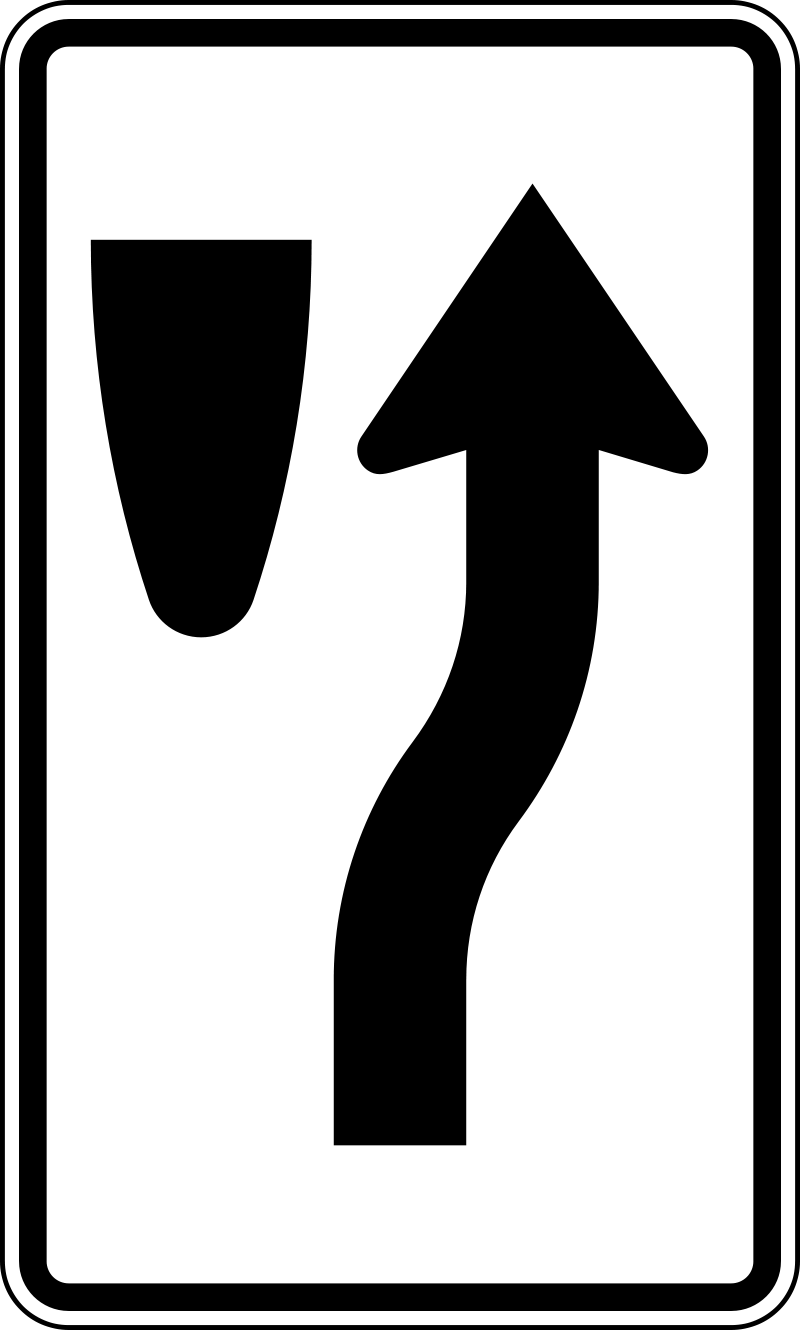
Drivers must pass to the right side of a traffic island, median barrier, or highway divider.
This sign tells drivers that:
A) there is a right turn ahead.
B) they must stay on the right side of the divider
C) a divided highway ends ahead.
26.
What should you do in case of a brake failure?
A) Pull off the road into an open space, if available.
B) Apply the parking brake slowly.
C) All of the above.
27.
When approaching any intersection or driveway, drivers should:
A) look both ways and be ready to stop.
B) pass other vehicles and then stop.
C) drive at the fastest speed just before entering the intersection.
28.
If you remain in the back blind spot of a large vehicle:
A) you increase the chance of a crash.
B) the large vehicle will take much longer to stop.
C) you can reduce fuel consumption.
29.
You can pass on the right:
A) when a vehicle ahead makes a right turn.
B) when a vehicle ahead makes a left turn.
C) when a vehicle that is approaching from the opposite direction is prepared to turn left.
30.
When you pass another vehicle, before you return to the right lane, you must:
A) look at your interior rear-view mirror.
B) signal.
C) All of the above.
ANSWER KEY Check answers after completing the test.
1 A
2 C
3 C
4 C
5 A
6 C
7 B
8 B
9 B
10 B
11 B
12 C
13 A
14 A
15 A
16 C
17 C
18 B
19 B
20 A
21 A
22 C
23 B
24 C
25 B
26 C
27 A
28 A
29 B
30 C