DriveQuiz drivequiz.com

DE DMV PERMİT PRACTİCE TEST 11

Delaware
Duration: 27 min
|
Questions: 30
Student Name:
Date:
Correct:      Incorrect:      Score:      
1.
Drivers should use their high beams at night:
A) unless oncoming traffic is approaching.
B) only if it becomes necessary.
C) when following other vehicles.
2.
The roadway becomes particularly slippery during wet or rainy conditions. Reduce your speed, increase following distance, and avoid abrupt braking or steering.
This road sign means:
A) Slow down, slippery when wet
B) Detour ahead
C) Road curves ahead
3.
Don't be afraid to sound a sharp blast on your horn when:
A) when a child is about to run into the street.
B) another vehicle is in danger of hitting you.
C) All of the above.
4.
When you make a left turn from a one-way road into a two-way road, you must:
A) enter the two-way road to the left of its center line.
B) make a U-turn into the two-way road.
C) enter the two-way road to the right of its center line.
5.
Regulation signs normally are ____ rectangles with ____ letters or symbols.
A) yellow; black
B) white; black
C) green; white
6.
When driving on a roadway with a single broken white line:
A) you may cross the broken white line to change lanes.
B) you may change lanes only if you are in the right lane.
C) you may not cross the broken white line.
7.
Drivers should adjust their rearview and side mirrors:
A) whenever they need to use them.
B) before they get into the car.
C) before they start driving.
8.
What should you do as you prepare to turn right at an intersection?
A) Honk your horn.
B) Yield to bicyclists coming from the opposite direction.
C) Signal your turn, check for bicyclists, and do not turn directly in front of a bicyclist.
9.
To reduce their chances of colliding with an animal, drivers should:
A) scan the sides of the road to watch for the reflection of vehicle headlights in the eyes of animals.
B) look well down the road and far off to each side.
C) All of the above.
10.
Yellow traffic signs:
A) guide drivers.
B) when combined with an octagonal shape, tell drivers they must come to a complete stop at the marked stop line.
C) warn drivers.
11.
If a tire blows out, drivers should:
A) apply the brake firmly and hold it.
B) hold the steering wheel tightly and use the brakes lightly.
C) pull over quickly.
12.
A vehicle is stopped at a crosswalk to permit a pedestrian to cross the roadway. The driver of the vehicle approaching from the rear should:
A) sound the horn.
B) overtake and pass the stopped vehicle.
C) not overtake and pass the stopped vehicle.
13.
When you prepare to make a left turn from a one-way road into a two-way road, you must:
A) enter the two-way road to the left of its center line.
B) approach the turn in the right lane or from the right side of a single lane.
C) approach the turn in the left lane or from the left side of a single lane.
14.
A side road enters the highway from the right or left. Watch for traffic turning onto or crossing your lane.
This road sign means:
A) A road joins from the right
B) All traffic must go straight ahead
C) All traffic must turn right
15.
When you back up:
A) always look through the rear window.
B) you should rely only on your rearview mirror.
C) do it as fast as possible.
16.
Which signs have black letters on a white background?
A) Warning signs (diamond)
B) Regulatory signs (vertical rectangle)
C) Guide signs (horizontal rectangle)
17.
Which of the following is a defensive driving skill/technique?
A) Maintain the correct speed.
B) Do not drive if you are very weary.
C) All of the above.
18.
Drivers must yield the right of way to an emergency vehicle by:
A) immediately coming to a complete stop, even if you are in an intersection.
B) moving into the right lane and driving slowly until the emergency vehicle has passed.
C) driving to the right-hand edge or curb of the roadway clear of any intersections and stopping until the emergency vehicle has passed.
19.
If you are passing another car, you should sound your horn when the car is:
A) going very slowly.
B) signaling a right turn.
C) turning into your lane.
20.
Before entering an intersection, drivers should look:
A) left, right, then left again.
B) right, left, then right again.
C) left.
21.
Slow down and give right-of-way to all oncoming vehicles, cyclists, and pedestrians. Stop completely if necessary before entering the intersection or merging.
The yield sign means:
A) Go. The light will soon be red.
B) If the way is clear, you may move forward slowly without stopping.
C) Stop if you can.
22.
Alerts drivers to an upcoming crosswalk where pedestrians frequently cross. Slow down and yield right-of-way to anyone in or about to enter the roadway.
This sign is a warning that you are approaching:
A) a railroad crossing.
B) a crosswalk.
C) a dead-end street.
23.
Bicyclists must:
A) ride in a bicycle lane, if available.
B) remain to the right when they prepare for a left turn.
C) remain near the left edge of the road.
24.
Always driving slower than other traffic:
A) is a good defensive driving technique.
B) is always safer than driving faster than other traffic.
C) can block traffic.
25.
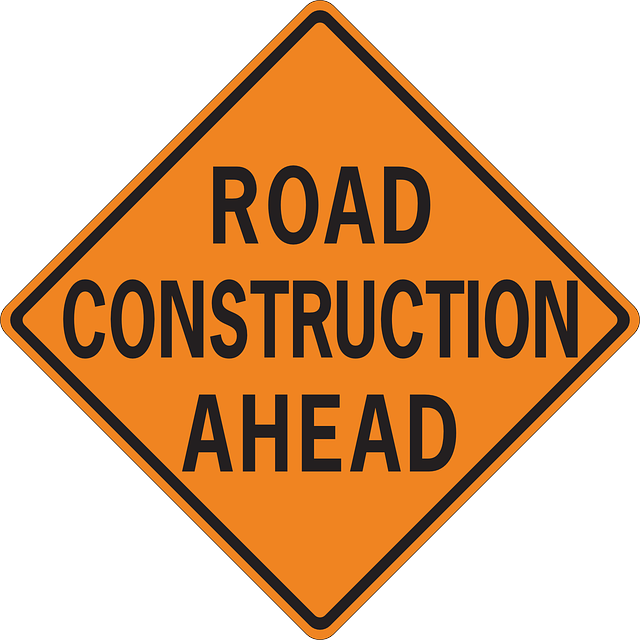
Notifies drivers of highway maintenance or construction ahead. Slow down, expect sudden stops or lane shifts, and remember traffic fines double in active work zones.
This road sign means:
A) There is a detour ahead
B) The highway ahead is being repaired
C) Crossroads ahead
26.
The bridge ahead has narrower lanes or shoulders than the preceding road. Use caution when meeting oncoming vehicles.
This sign warns drivers of:
A) a reduction of lanes.
B) a dip in the road. Drivers should be ready to stop if the dip is filled with water.
C) a bridge ahead, wide enough to accommodate two lanes of traffic, but with very little clearance.
27.
While inside the roundabout, you should:
A) remain in your lane until you are ready to exit.
B) change lanes before you check for vehicles behind you.
C) use your left turn signal if you are in position to exit now.
28.
The road curves gradually to the right ahead. Reduce speed before entering the curve.
This sign means:
A) The road will curve to the right.
B) Left turns are not allowed at the intersection.
C) Do not turn right.
29.
When they see a crossbuck sign, drivers:
A) must slow down and wait for the red lights to flash.
B) must always come to a complete stop.
C) are legally required to yield the right of way to trains.
30.
To avoid glare from headlights of an approaching car:
A) stay focused on the center line on the road.
B) don't look directly into the oncoming headlights, look toward the right edge of your lane.
C) flash your high beams.
ANSWER KEY Check answers after completing the test.
1 A
2 A
3 C
4 C
5 B
6 A
7 C
8 C
9 C
10 C
11 B
12 C
13 C
14 A
15 A
16 B
17 C
18 C
19 C
20 A
21 B
22 A
23 A
24 C
25 B
26 C
27 A
28 A
29 C
30 B