DriveQuiz drivequiz.com

DC DMV PERMİT PRACTİCE TEST 16

District of Columbia
Duration: 23 min
|
Questions: 25
Student Name:
Date:
Correct:      Incorrect:      Score:      
1.
A person walking with a white cane or guide dog is likely to be:
A) a deaf person.
B) a traffic enforcement officer.
C) a blind person.
2.
Warns of two consecutive curves in opposite directions (e.g., curves right then left). Slow down to maintain control.
This road sign means:
A) Road construction ahead
B) The road ahead curves right, then left
C) Steep grade ahead
3.
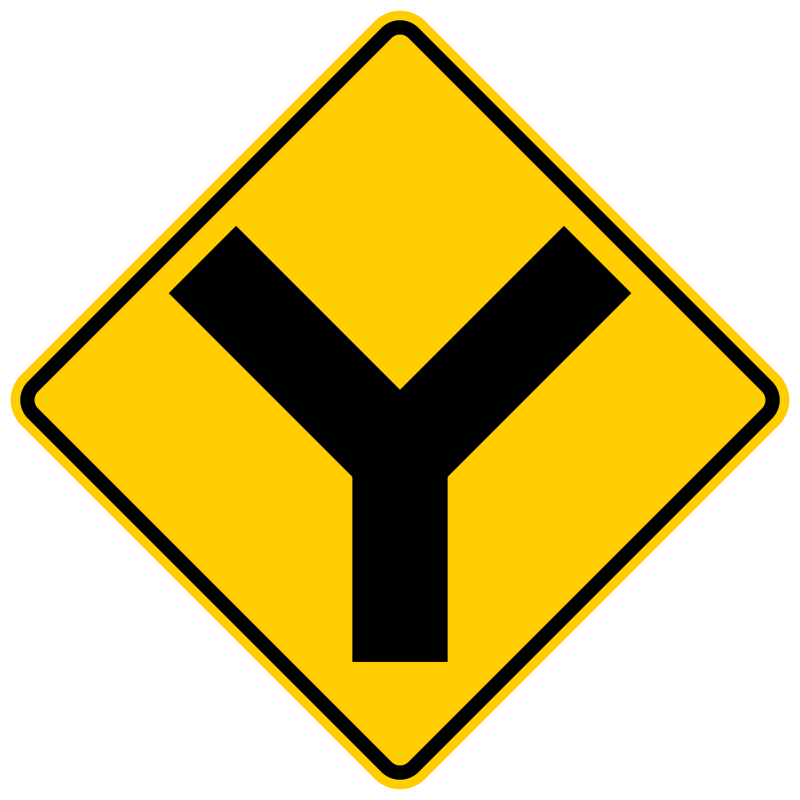
The road splits into a Y configuration ahead. Bear left or right depending on your destination and yield where marked.
This road sign means:
A) The road ends ahead
B) A four-way intersection is ahead
C) “Y” intersection ahead
D) A road joins from the right
4.
The yield sign is ___ and white, with ___ letters.
A) yellow; black
B) red; red
C) red; white
5.
There are two traffic lanes in your direction. You are driving in the left lane and many vehicles are passing you on the right, and the driver behind you wishes to drive faster. You should:
A) stay in your lane and maintain your current speed.
B) drive onto the left shoulder to let the other driver pass.
C) move over into the right lane when safe to do so.
6.
A driver who approaches an intersection:
A) must yield the right-of-way to traffic already in the intersection.
B) must drive straight through the intersection, even if another vehicle is already in the intersection.
C) has the right-of-way over traffic already in the intersection.
7.
If you remain in the back blind spot of a large vehicle:
A) you increase the chance of a crash.
B) the large vehicle will take much longer to stop.
C) you can reduce fuel consumption.
8.
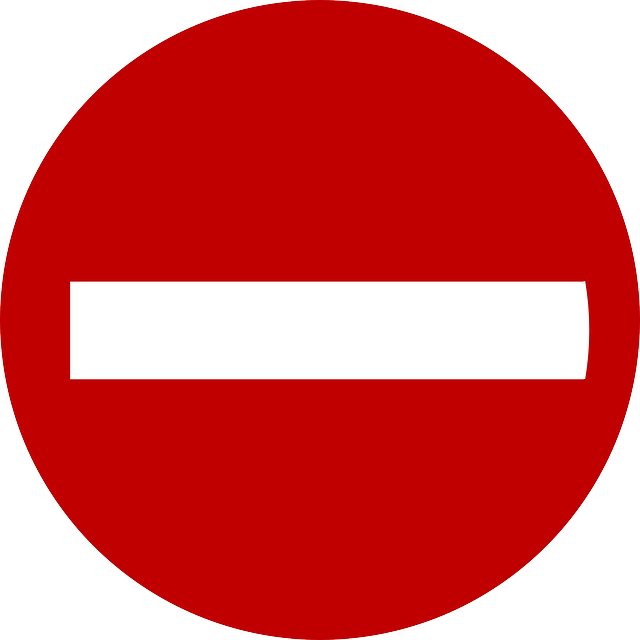
Indicates you have entered an exit ramp or one-way street in the incorrect direction. Stop immediately and safely turn around.
This road sign means:
A) No left turn
B) Lane ends
C) Do not enter
9.
At a stop sign there is no stop line, you must stop:
A) before you enter the intersection.
B) before you enter the crosswalk.
C) after you enter the crosswalk.
10.
When children are close, what should you do before you back out of a driveway?
A) Rely on your mirrors.
B) Get out of the car and check behind the car.
C) Look through your back window for children.
11.
A steady yellow light at an intersection means:
A) Proceed with caution through the intersection
B) Slow down and be prepared to stop
C) Immediately come to a complete stop
D) Yield to other vehicles
12.
Two motorcyclists are allowed to:
A) ride side-by-side in a single lane.
B) share the lane with another vehicle.
C) race on empty roads.
13.
Broken yellow lines:
A) separate lanes of traffic moving in opposite directions.
B) indicate you are in a no passing zone.
C) separate lanes of traffic moving in the same direction.
14.
Blind spots around a large vehicle are _________________ than the blind spots around a car.
A) larger and deeper
B) less dangerous
C) narrower and shorter
15.
Two solid yellow lines on the pavement mean:
A) passing is not allowed.
B) passing is allowed during daylight only.
C) passing is allowed for both drivers.
D) passing is allowed if you are at the top of a hill.
16.
You should never depend on your mirrors when you prepare to change lanes. Why?
A) Mirrors leave “blind spots” behind both sides of vehicles.
B) Mirrors need to be adjusted.
C) Mirrors are useless.
17.
To avoid crashes with vehicles in your blind spots, you should:
A) sound your horn right before turning or changing lanes.
B) adjust your rear-view mirrors every few minutes.
C) quickly turn your head to see if your blind spot is clear, before changing lanes.
D) None of the above.
18.
Yellow diamond warning that pedestrians may be crossing ahead. Exercise caution and yield.
This road sign means:
A) Pedestrian crossing
B) School zone
C) School crossing
19.
The shape of a route sign tells you:
A) the type of route you are on.
B) the speed limit on that route.
C) that the route you are on might be dangerous.
20.
To enter a gap in traffic while driving on a highway:
A) check behind, then watch the vehicle ahead.
B) speed up and let vehicles make way.
C) watch only the vehicles behind the gap.
21.
Which statement about taking medications and driving is true?
A) Cold medications can make a person drowsy.
B) Prescribed drugs are safe to take at any time.
C) Over the counter drugs do not affect driving ability.
22.
To avoid traction loss from hydroplaning, drivers should:
A) keep a constant speed.
B) apply the brakes as soon as the car starts to skid.
C) slow down.
23.
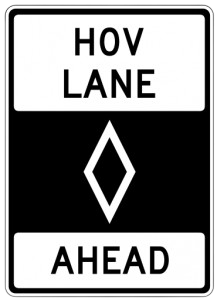
High-Occupancy Vehicle (HOV) diamond lane ahead. Only vehicles carrying the minimum required number of passengers (usually 2 or more) may use this lane.
This road sign indicates that:
A) a lane is reserved for certain purposes or certain vehicles.
B) buses and car pools may not travel in the restricted lane.
C) vehicles cannot go straight ahead. Cars must turn either to the right or left.
24.
Indicates an upcoming bicycle crossing or shared road zone. Always leave at least 3 feet of clearance when passing cyclists.
This sign means:
A) Bicycles should yield to vehicles ahead.
B) Warning: a bikeway crosses the roadway ahead.
C) The lane ahead is reserved for bicycles.
25.
When are you allowed to drink alcoholic beverages in a vehicle on a public highway?
A) As long as you don’t drive.
B) Only if you ride in the back seat.
C) Only if you ride in the back of a pick-up truck.
D) Never.
ANSWER KEY Check answers after completing the test.
1 C
2 B
3 C
4 B
5 C
6 A
7 A
8 C
9 B
10 B
11 B
12 A
13 A
14 A
15 A
16 A
17 C
18 A
19 A
20 A
21 A
22 C
23 A
24 B
25 D