DriveQuiz drivequiz.com

DC DMV PERMİT PRACTİCE TEST 12

District of Columbia
Duration: 23 min
|
Questions: 25
Student Name:
Date:
Correct:      Incorrect:      Score:      
1.
When approaching a railroad crossing that has no warning signals (such as electric flashing lights or gates) a driver should look, listen and slow down.
A) False
B) True
2.
Bicyclists must:
A) ride in a bicycle lane, if available.
B) remain to the right when they prepare for a left turn.
C) remain near the left edge of the road.
3.
A sharp curve is ahead with a recommended safe speed plate. Slow down before entering the curve to prevent vehicle rollover.
This road sign means:
A) Merge, then slow down to the safe speed indicated
B) The road ahead curves right; slow down to indicated speed
C) Winding road ahead; slow down to the indicated speed
D) Divided highway begins. Slow down to the safe speed indicated
4.
Large trucks:
A) have large blind spots.
B) can stop quicker than passenger vehicles.
C) do not need more room to maneuver.
D) All of the above.
5.
When approaching a curve, remember to:
A) accelerate slightly before entering the curve.
B) drive at the posted speed limit throughout the curve.
C) slow down before entering the curve.
D) drive at the posted speed limit as you enter the curve, then slow down gradually.
6.
Regulatory signs are:
A) white.
B) yellow.
C) green.
7.
A driver who's being passed on the right and the left by many vehicles while driving in the center lane of an highway should:
A) take the next exit.
B) move to the lane on their right.
C) move to the lane on their left.
8.
When a driver has their left arm and hand extended upward, the driver plans to:
A) go straight ahead.
B) turn right.
C) turn left.
D) come to a stop.
9.
Prohibits drivers from making a 180-degree turn to travel in the opposite direction at this intersection or stretch of road.
This road sign means:
A) No left turn
B) No U-turn
C) Detour ahead
10.
The road curves gradually to the right ahead. Reduce speed before entering the curve.
This road sign means:
A) Wrong Way
B) Merging Traffic
C) Curve ahead
11.
The best way to avoid loss of control in wet conditions is pump your brakes.
A) False
B) True
12.
Are bicyclists required to obey traffic laws and signs?
A) No, bicyclists are considered pedestrians when it comes to the rules of the road.
B) Yes.
C) Yes, but only if they are riding in a bicycle lane.
13.
All approaching traffic must stop completely. The first vehicle to reach the intersection and stop has right-of-way; if two vehicles arrive simultaneously, the vehicle on the right goes first.
A 4-way stop sign means:
A) The first vehicle to reach the intersection should move forward first.
B) Traffic from all four directions must stop.
C) There are four stop signs at the intersection.
D) All of the above.
14.
The effects of alcohol on driving include:
A) None of the above.
B) Improved coordination
C) Better reflexes
D) Improved judgement
15.
If you are continually being passed on the right, you should:
A) move into the right lane and allow other vehicles to pass you on the left.
B) move into the left lane and allow other vehicles to pass you on the right.
C) increase your speed immediately.
16.
Which of the following does NOT affect the distance that it takes to stop your vehicle?
A) Perception time.
B) Braking distance.
C) Reaction distance.
D) Steering ability.
17.
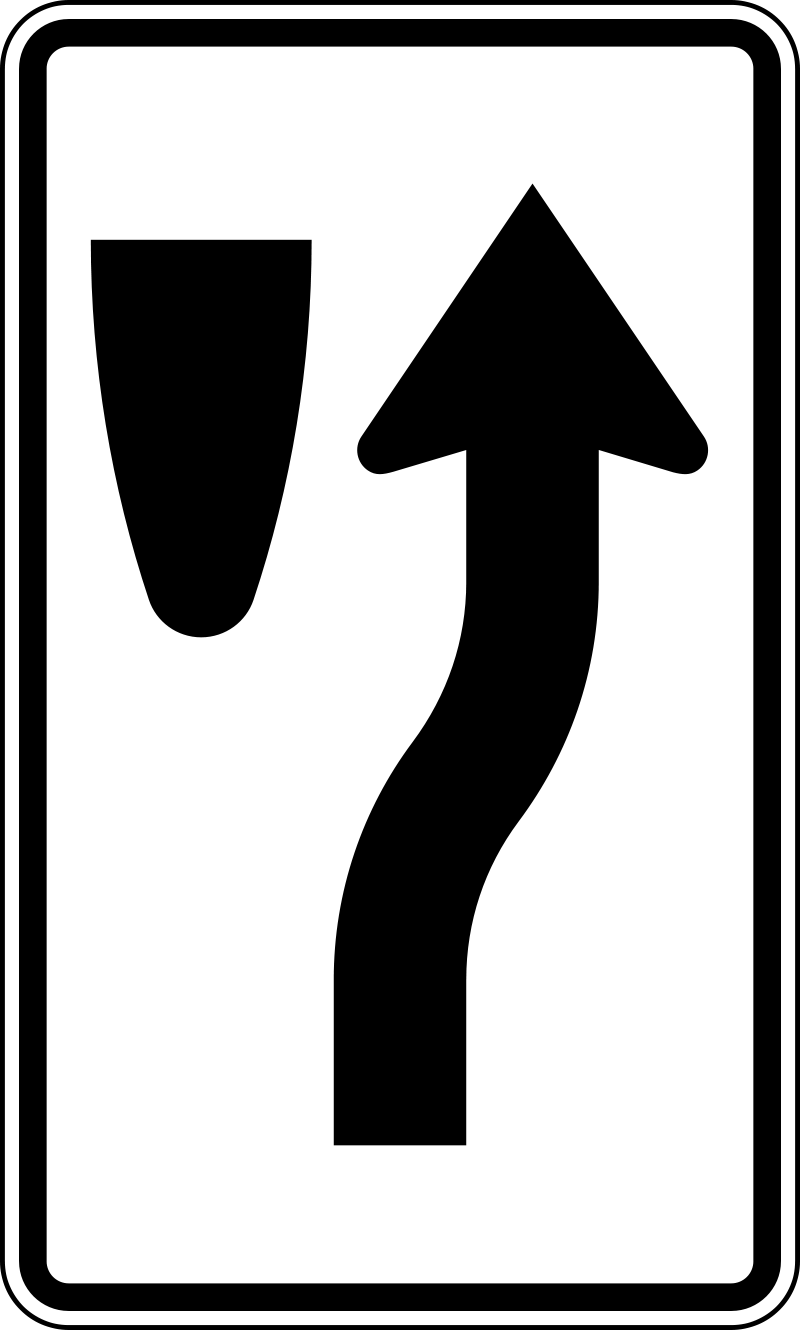
Drivers must pass to the right side of a traffic island, median barrier, or highway divider.
This sign tells drivers that:
A) there is a right turn ahead.
B) they must stay on the right side of the divider
C) a divided highway ends ahead.
18.
When you make a left turn from a two-way road into a four-lane highway, you must:
A) enter the left lane, to the right of the center line.
B) enter the right lane, to the left of the center line.
C) go straight through the intersection, and then make the turn.
19.
Blue service guide sign indicating that emergency medical and hospital facilities are located in the direction of the arrow.
What does this road sign indicate?
A) Hospital service
B) Area reserved for people with disabilities
C) Interstate highway
20.
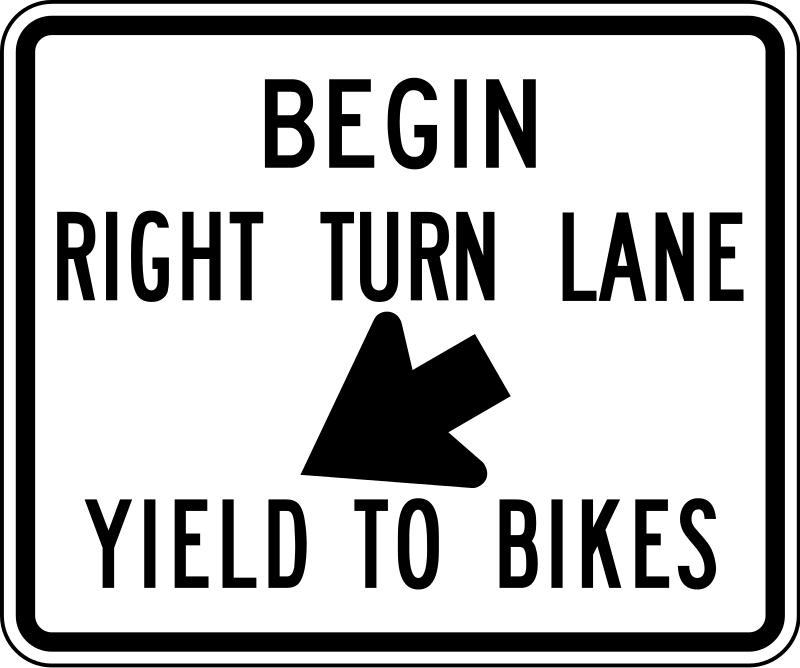
Drivers turning right must merge into the bike lane before turning, first checking mirrors and blind spots and yielding to all cyclists.
What does this road sign indicate?
A) Drivers have the right of way over bikes turning left.
B) Vehicles turning left must yield to bikes entering a right turn lane.
C) Motor vehicles entering an exclusive right-turn lane must weave across bicycle traffic in bicycle lanes.
21.
When getting ready to change lanes, you should:
A) check your rearview mirror.
B) quickly turn your head to check for other vehicles.
C) check your side view mirror.
D) All of the above.
22.
Warns of two consecutive curves in opposite directions (e.g., curves right then left). Slow down to maintain control.
When you see this sign you should:
A) increase your speed and try to pass other vehicles.
B) slow your speed and be prepared to stop.
C) slow your speed and do not pass other vehicles.
23.
Motorists are not required to yield to pedestrians when approaching or exiting a roundabout.
A) True
B) False
24.
Right turns are strictly prohibited at this intersection under all circumstances.
This road sign means:
A) Right turn is not permitted
B) Left turns are permitted
C) You may turn right after yielding the right-of-way to oncoming traffic
25.
Unlike passenger cars, trucks have blind spots:
A) on the right.
B) directly behind them.
C) on the front.
ANSWER KEY Check answers after completing the test.
1 B
2 A
3 B
4 A
5 C
6 A
7 B
8 B
9 B
10 C
11 A
12 B
13 D
14 A
15 A
16 D
17 B
18 A
19 A
20 C
21 D
22 C
23 B
24 A
25 B