DriveQuiz drivequiz.com

CT DMV PERMİT PRACTİCE TEST 8

Connecticut
Duration: 23 min
|
Questions: 25
Student Name:
Date:
Correct:      Incorrect:      Score:      
1.
Two drivers reach an uncontrolled intersection at the same time. Who has the right of way?
A) The driver on the left.
B) No one.
C) The driver on the right.
2.
When driving in work zones, drivers should:
A) tailgate the vehicle ahead while reducing their speed.
B) pass the vehicle ahead when safe.
C) keep a safe following distance.
3.
If it safe to do so, you can pass a vehicle ahead when:
A) you are on a hill or curve.
B) there is a broken line on your side of the road.
C) there is a solid line on your side of the road.
4.
A curb painted red means:
A) No parking or stopping
B) Parking is for disabled persons with a special placard or plate.
C) Reserved for passengers pick up or drop off
5.
When you prepare to make a left turn from a one-way road into a one-way road, you must:
A) move into the right lane, or to the left side of a single lane.
B) move into the right lane, or to the right side of a single lane.
C) move into the left lane, or to the left side of a single lane.
6.
Which sign has white letters on a red background?
A) Stop
B) School zone
C) Yield
7.
Indicates an upcoming bicycle crossing or shared road zone. Always leave at least 3 feet of clearance when passing cyclists.
This road sign means:
A) Watch for bicycles
B) Bicycle parking ahead
C) Bicycles are not allowed in this area
8.
When approaching any intersection or driveway, drivers should:
A) look both ways and be ready to stop.
B) pass other vehicles and then stop.
C) drive at the fastest speed just before entering the intersection.
9.
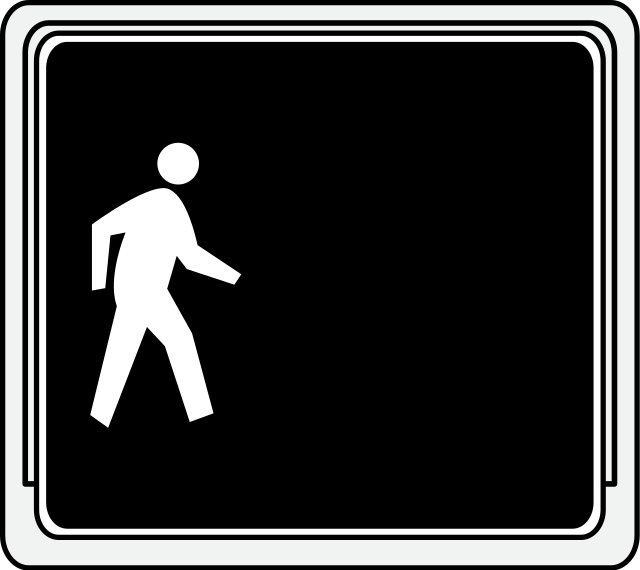
Illuminated white walking person indicates pedestrians have right-of-way to begin crossing the street in the designated crosswalk.
What does the pictured signal indicate?
A) A pedestrian may begin crossing the street.
B) Pedestrians may turn right.
C) A pedestrian may not not begin crossing the street.
10.
If one of your tires blows out while driving, you should:
A) apply the brakes firmly and steer toward the right edge of the road.
B) pump the brakes.
C) hold the steering wheel firmly, slow down, and steer smoothly.
11.
Before stopping your vehicle on the roadway, drivers should:
A) check their mirrors for traffic.
B) place their foot on the accelerator.
C) pump the brakes to check if they work properly.
12.
In the following situations, drivers should increase their following interval:
A) When following vehicles that are required to come to a stop at railroad crossings.
B) When it is hard to see ahead because of bad weather.
C) All of the above.
13.
To make a proper right turn:
A) swing to the left before turning right.
B) slow down and get into the lane nearest the centerline.
C) give the proper signal and get into the lane nearest the right curb.
14.
If you are 16 or 17 years old and are convicted of speeding 20 mph over the speed limit, your license will be suspended for:
A) 60 days.
B) 45 days.
C) 30 days.
15.
Regulatory signs are:
A) Suggestions
B) Warnings
C) Law
16.
When changing lanes:
A) slow down and check your left mirror.
B) look over your shoulder to make sure no one is in the blind spot.
C) change lane before checking the inside rearview mirror.
17.
If your car goes into water, you should:
A) wait for water to rush in and let it out in small breaths through your nose.
B) call the fire department immediately.
C) remove yourself before it starts to sink.
18.
A broken white line:
A) means passing or crossing is prohibited in that lane.
B) separates two lanes traveling in the same direction.
C) marks the right edge of the roadway.
19.
The roadway becomes particularly slippery during wet or rainy conditions. Reduce your speed, increase following distance, and avoid abrupt braking or steering.
This road sign means:
A) Winding road
B) Side road ahead
C) Slippery when wet
20.
Which statement about blind spots is true?
A) Before changing lanes, you should check mirrors and look over your shoulder toward the rear.
B) Large trucks have smaller blind spots than most passenger vehicles.
C) If traffic conditions permit you should cruise in blind spot of the vehicle ahead.
21.
What happens if two vehicles reach at the same time an intersection with four-way stop signs?
A) The driver on the right yields to the driver on the left.
B) The driver on the left yields to the driver on the right.
C) The first vehicle to reach the intersection must yield.
22.
A defensive driver:
A) never drives below the speed limit.
B) knows when it is safe to pass other vehicles.
C) considers what other drivers might do and is always prepared to act.
23.
Yellow diamond warning that pedestrians may be crossing ahead. Exercise caution and yield.
This road sign means:
A) Pedestrian crossing
B) School zone
C) School crossing
24.
The roadway becomes particularly slippery during wet or rainy conditions. Reduce your speed, increase following distance, and avoid abrupt braking or steering.
This road sign means:
A) Watch for vehicles entering from the side
B) When pavement is wet, reduce your speed
C) Winding road ahead
25.
Signs that indicate a No Passing Zone tell drivers that:
A) it is not safe to pass.
B) passing is only permitted in daylight hours.
C) not passing other vehicles is prohibited.
ANSWER KEY Check answers after completing the test.
1 C
2 C
3 B
4 A
5 C
6 A
7 A
8 A
9 A
10 C
11 A
12 C
13 C
14 A
15 C
16 B
17 C
18 B
19 C
20 A
21 B
22 C
23 A
24 B
25 A