←
Back to Test
Hide Answer Key
Print / Save as PDF
Print / PDF
drive
quiz
.com
CT DMV PERMİT PRACTİCE TEST 5
Connecticut
Duration: 23 min
|
Questions: 25
Student Name:
Date:
Correct:
Incorrect:
Score:
1.
Broken yellow lines:
A)
separate lanes of traffic moving in opposite directions.
B)
indicate you are in a no passing zone.
C)
separate lanes of traffic moving in the same direction.
2.
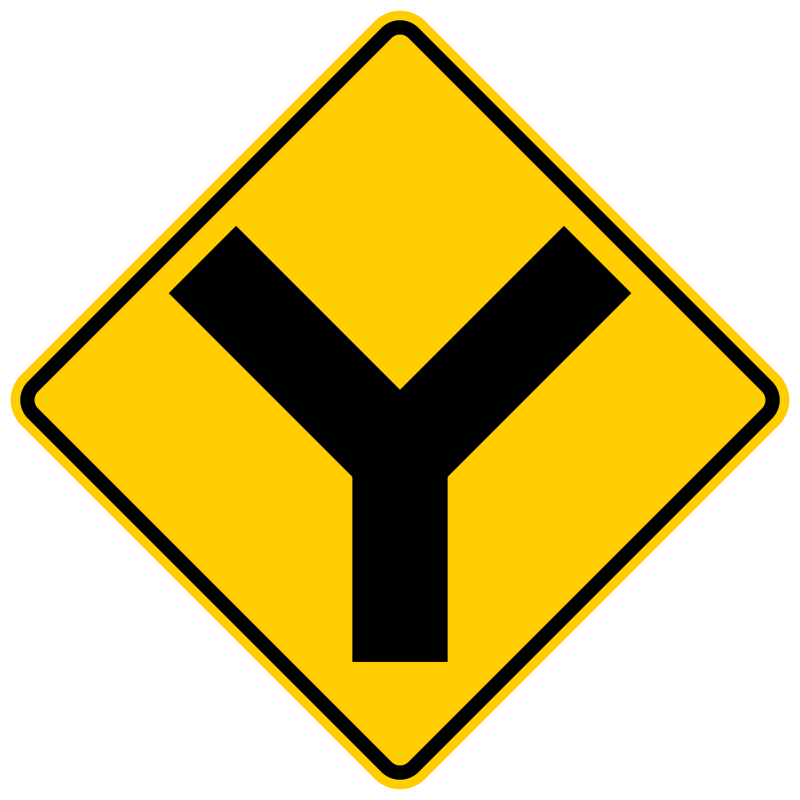
This road sign means:
A)
A road joins from the left
B)
You must bear either right or left
C)
A 3-way intersection is ahead
3.
If your vehicle has a mechanical problem, you should:
A)
signal and pull into the slow lane.
B)
stop in your lane and put on your emergency flashers.
C)
turn on your hazard lights and pull off the road.
4.
Are drivers allowed to exceed the speed limit to pass other vehicles?
A)
Yes, but only by 10 MPH or less.
B)
No.
C)
Yes, but only if they drive with caution.
5.
16 and 17-year-old licensed drivers may not use a cell phone or mobile electronic device while driving. Violating this law will result in:
A)
a 30 day suspension.
B)
a 3 month suspension.
C)
a $50 fine.
6.
This road sign tells drivers that:
A)
they must change lane immediately.
B)
they must turn either to the right or left.
C)
the one-way street or roadway ahead ends.
D)
None of the above.
7.
If you hear a thumping sound while driving, you should:
A)
hook your shoe under the gas pedal and see if you can free it.
B)
get off the road and check your tires.
C)
try your emergency lights.
8.
Fatigue increases the risk of:
A)
falling asleep while driving.
B)
hitting a roadblock.
C)
missing an exit.
9.
Blind spots around a large vehicle are _________________ than the blind spots around a car.
A)
larger and deeper
B)
less dangerous
C)
narrower and shorter
10.
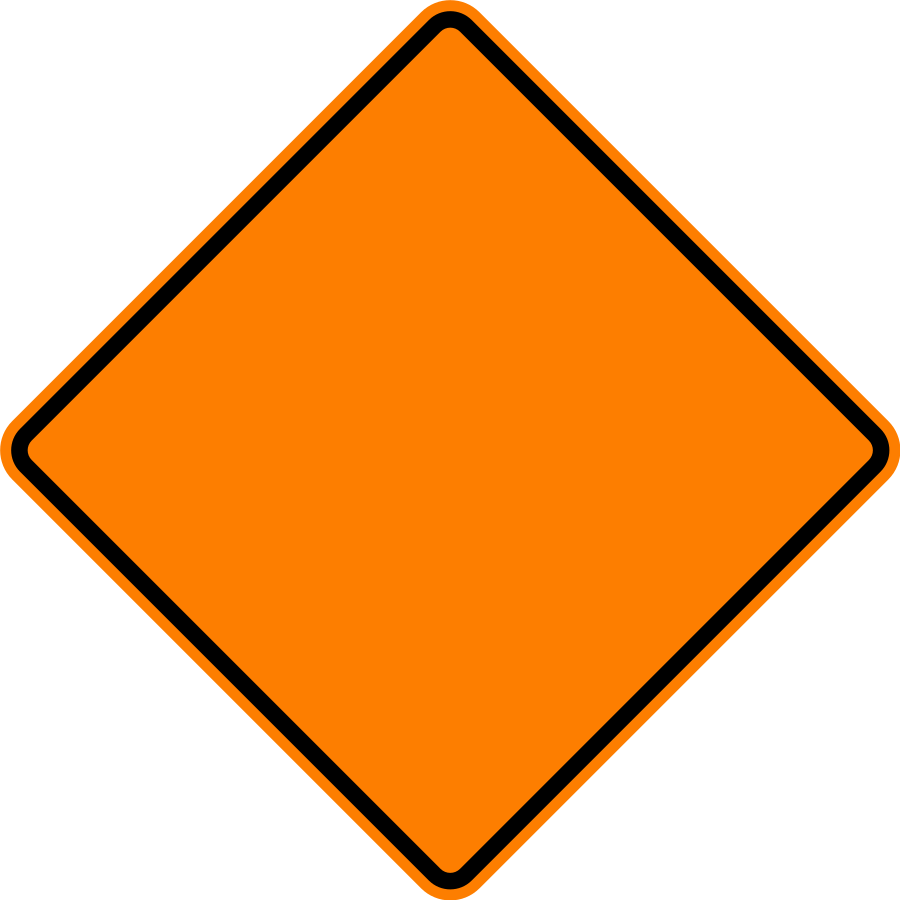
Signs with orange backgrounds mean:
A)
railroad crossing.
B)
side road ahead.
C)
road construction site.
11.
You must come to a full stop at a yield sign:
A)
Always.
B)
Never.
C)
If traffic conditions require it.
12.
What is the first thing you should do if your wheels move off the pavement?
A)
Pull the steering wheel back.
B)
Pull over to the right and sound your horn to warn the other drivers.
C)
Ease your foot off the gas pedal and brake gently.
13.
Service signs are ____ with ____ letters and symbols.
A)
blue; white
B)
white; black
C)
green; white
14.
This road sign means:
A)
No left turn
B)
No right turn
C)
No U-turns
15.
When passing another car, you have enough room to return to the driving lane when:
A)
you cannot see the vehicle directly to your right.
B)
you are at least 50 feet in front of the vehicle.
C)
you can see both headlights of the car you passed in your rearview mirror.
16.
This road sign means:
A)
You must travel at the speed indicated
B)
The maximum speed limit under ideal conditions
C)
None of the above
17.
When approaching a highway-rail intersection, the first sign drivers see is usually:
A)
an RXR round sign on a yellow background.
B)
a stop sign.
C)
a yield sign.
18.
If you are about to be hit from behind, you should NOT:
A)
be ready to apply your brakes.
B)
put your head against the head restraint.
C)
let go of the steering wheel.
19.
Passenger restrictions apply for _______ to license holders who have received their driver's license.
A)
3 months
B)
12 months
C)
6 months
20.
After you've held your driving license for 6 months, which one of the following passengers cannot be in the vehicle when you are driving?
A)
Your younger brother.
B)
Your parent(s).
C)
Your 18 year old friend.
21.
When changing lanes, drivers should never:
A)
check to see if other drivers are moving into the same lane.
B)
change lanes abruptly.
C)
glance over their shoulder to check for blind spots.
22.
When driving at night, drivers should:
A)
always use their high beams.
B)
increase their following distance.
C)
look directly into the oncoming headlights of approaching vehicles.
23.
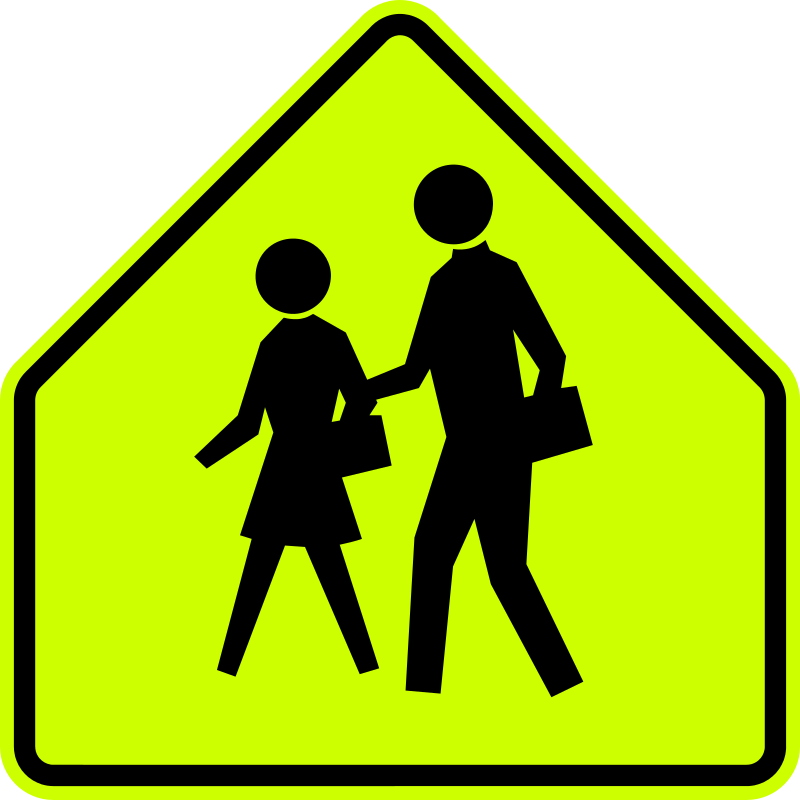
When you see this sign, you should:
A)
be prepared to stop if children are in the crosswalk.
B)
slow down, proceed with caution and watch for blind people.
C)
always stop at the crosswalk.
24.
If a tire blows out, drivers should:
A)
apply the brake firmly and hold it.
B)
hold the steering wheel tightly and use the brakes lightly.
C)
pull over quickly.
25.
A driver distraction is anything that:
A)
causes aggressive behavior while driving.
B)
causes excessive concentration while driving.
C)
takes the attention away from driving.
ANSWER KEY
Check answers after completing the test.
1
A
2
B
3
C
4
B
5
A
6
B
7
B
8
A
9
A
10
C
11
C
12
C
13
A
14
B
15
C
16
B
17
A
18
C
19
B
20
C
21
B
22
B
23
A
24
B
25
C