A)increase their speed and keep well to the right.
B)slow down and keep well to the right.
C)slow down and keep well to the left.
2.
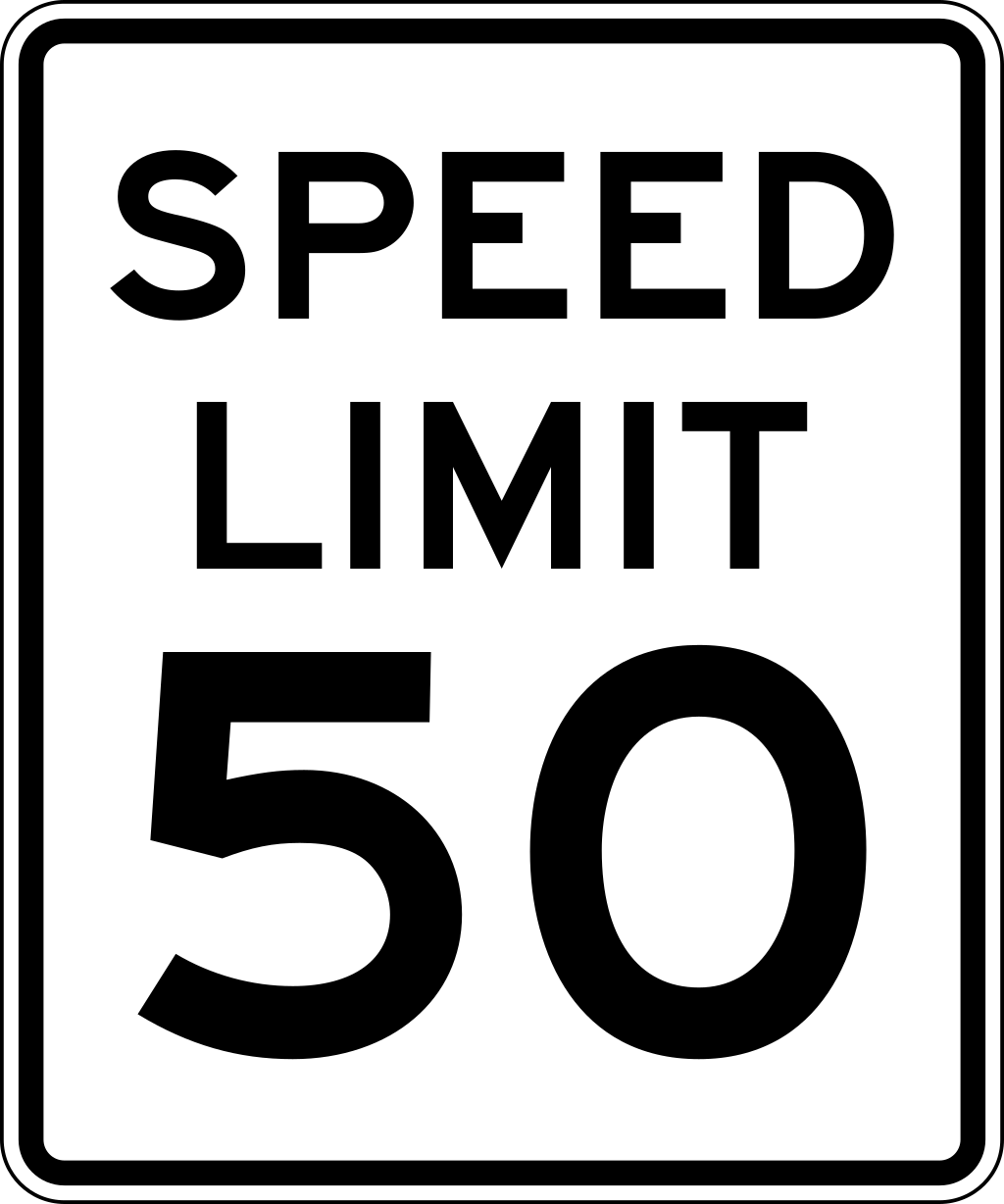
This sign indicates the _______________ vehicles can safely travel in this area.
A)suggested speed
B)maximum speed
C)minimum speed
3.
If you drink alcohol socially, what helps insure safe driving?
A)Stop drinking one hour before driving.
B)Drink coffee before driving.
C)Take a cold shower before driving.
D)Ride home with a friend who has not been drinking.
4.
Blind spots around a large vehicle are _________________ than the blind spots around a car.
A)larger and deeper
B)less dangerous
C)narrower and shorter
5.
A broken yellow line alongside a solid yellow line means:
A)Passing is permitted on the side of the broken yellow line
B)Passing is not permitted in either direction
C)Passing on the right is permitted in either direction
6.
What should drivers do when they see this road sign?
A)come to a complete stop and wait for a train to cross.
B)slow down, look for a train, and be prepared to stop.
C)look for a human flagger.
7.
Which signs have black letters on a yellow or orange background?
A)Warning signs (diamond)
B)Regulatory signs (vertical rectangle)
C)Railroad advance warning signs (round)
8.
When driving on slick roads, drivers should:
A)accelerate quickly.
B)take turns more slowly.
C)use alternate routes.
D)drive as they would on dry roads.
9.
Drivers are required to stop:
A)when a traffic officer orders them to stop.
B)where there is a red light.
C)at an intersection with a stop sign.
D)All of the above.
10.
Double solid yellow lines mean:
A)the lane to the right may pass.
B)passing is not permitted in either direction.
C)the lane to the left may pass.
D)passing is permitted in either direction.
11.
This sign means:
A)U-turns are not allowed.
B)Parking is not allowed.
C)No parking on pavement.
12.
Smoking while driving:
A)does not affect driving abilities.
B)is not distracting.
C)helps increase driver alertness.
D)is distracting.
13.
If another vehicle is approaching you head-on in your lane, you should _______, sound your horn and brake.
A)steer right
B)None of the other answers is correct.
C)steer left
D)stay in the center of your lane
14.
Never make a U-turn from:
A)the lane you’re in.
B)the right lane.
C)the left part of the lane nearest to the centerline of the roadway.
15.
Your BAC depends on:
A)how fit you are.
B)the type of beverage you drink.
C)the amount of alcohol you drink.
16.
On what three conditions does your blood alcohol content (BAC) depend?
A)Your weight. How much alcohol you drink. How much time passes between drinks.
B)Your weight. The type of beverage you drink. How fit you are.
C)Your height. How much alcohol you drink. The type of beverage you drink.
17.
To enter a freeway:
A)signal, yield, and enter at the same speed that traffic is moving.
B)drive slowly so you can check traffic.
C)signal and enter the freeway. You have the right-of-way.
D)make a complete stop before entering the freeway.
18.
This road sign means:
A)No left turn
B)No right turn
C)No U-turns
19.
What do flashing red lights on a school bus indicate?
A)The bus is stopped to load or discharge passengers.
B)Traffic that approaches from either direction may proceed.
C)The bus is about to stop.
20.
When a ‘Road Closed’ sign is displayed, drivers must:
A)make a U-turn.
B)look for a detour or another route.
C)come to a complete stop and wait for the lights to turn green.
21.
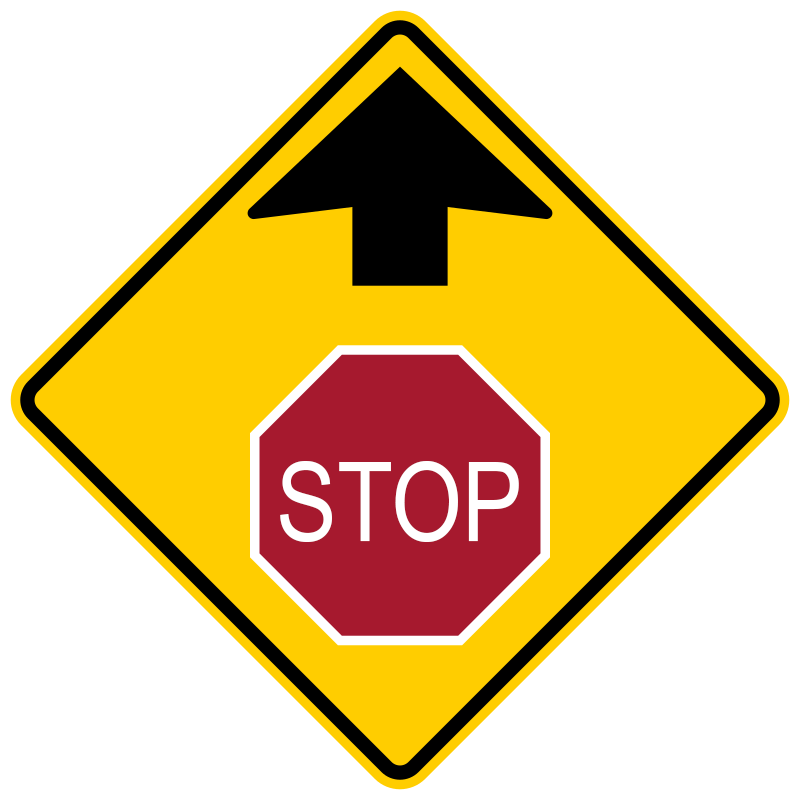
This road sign means:
A)Railroad Warning
B)Stop Sign Ahead
C)Lane ends
D)Stop if necessary
22.
If your car breaks down on the highway, you should:
A)use your four-way flashers to warn other drivers.
B)sound your horn to warn passing vehicles.
C)flash your headlights at oncoming traffic.
D)stop in the right lane.
23.
Aggressive drivers:
A)run stop signs.
B)are high risk drivers.
C)tailgate other vehicles and make improper lane changes.
D)All of the above.
24.
When a stop is required at an intersection with no stop line or crosswalk:
A)Drivers should stop only at a place where the driver can see at least 100 feet on either side.
B)Drivers are required to slow down to make sure crossing traffic is clear.
C)Drivers are not required to stop.
D)Drivers should stop at the point nearest the intersecting roadway where the driver has a view of approaching traffic on the intersecting roadway before actually entering the roadway.
25.
The effects of alcohol on driving include:
A)None of the above.
B)Improved coordination
C)Better reflexes
D)Improved judgement
ANSWER KEYCheck answers after completing the test.