DriveQuiz drivequiz.com

CA DMV PERMİT PRACTİCE TEST 6

California
Duration: 33 min
|
Questions: 36
Student Name:
Date:
Correct:      Incorrect:      Score:      
1.
As you drive on the freeway, make sure:
A) your directional signal goes off before you change lanes.
B) to signal all lane changes.
C) you cut off vehicles behind you when you change lanes.
2.
In areas with no pedestrian crosswalks or signals, pedestrians:
A) should yield the right-of-way to vehicles before crossing.
B) have the right-of-way over motor vehicles, but not over bicycles.
C) should leave the curb as soon as possible to avoid being hit.
3.
What is the meaning of blue traffic signs?
A) A blue background indicates a regulatory sign.
B) They give directional information.
C) Blue indicates road user services.
4.
Yellow lines separate:
A) traffic moving in opposite directions on a two-way road.
B) traffic lanes on one-way streets.
C) all carpool lanes from regular traffic lanes.
5.
Drivers may need more space in front of their vehicle:
A) when following motorcycles.
B) when carrying a heavy load or pulling a trailer.
C) All of the above.
6.
You are reaching an intersection, and trees block your view to the side for the last 100 feet before crossing. The intersection is considered:
A) “open”
B) “blind”
C) “blocked”
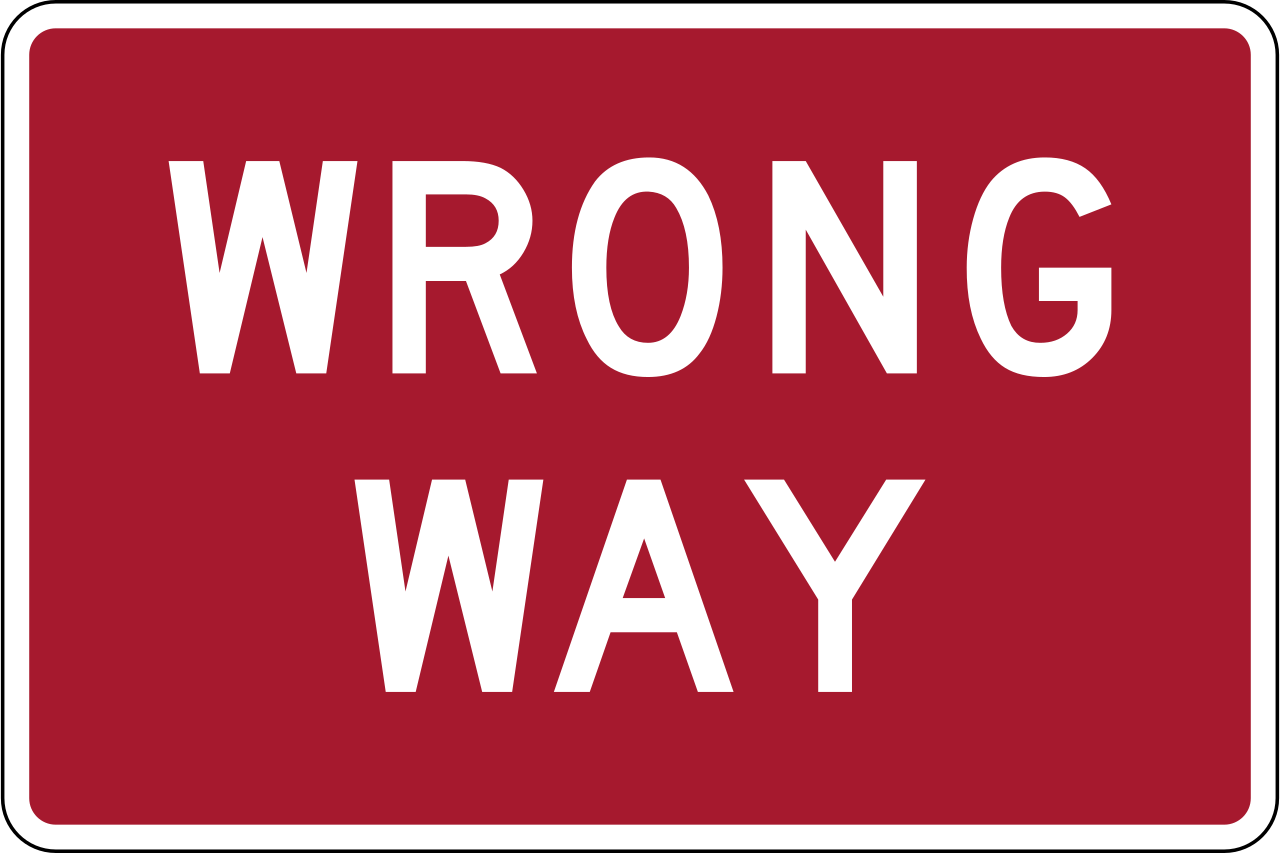
7.
You are driving against the legal flow of traffic on a one-way street or freeway ramp. Immediately pull over, stop safely, and turn around when clear.
When drivers see this road sign:
A) they must come to a complete stop and call the police.
B) they must not drive past this sign.
C) they must turn around immediately.
8.
Roads are the most slippery:
A) the first rain after a dry spell.
B) after it has been raining for an hour or more.
C) for the first 2 hours of a rain storm.
9.
When sharing the road with a light rail vehicle:
A) remember they are loud and move slowly like freight trains.
B) always pass a light rail vehicle slowly on the right.
C) never turn in front of an approaching light rail vehicle.
10.
A flashing red light at an intersection means:
A) Stop before entering.
B) Slow down before entering.
C) Stop and wait for the green light.
11.
While driving, you should NOT:
A) follow the vehicle ahead very closely.
B) allow space between your vehicle and the vehicle ahead.
C) scan the surroundings.
12.
Alcohol:
A) makes you less aware of what is happening to your driving abilities.
B) makes it easier to make correct decisions.
C) improves your reaction time.
13.
Prohibits drivers from making a 180-degree turn to travel in the opposite direction at this intersection or stretch of road.
The picture shows a _________ sign.
A) no U-turn
B) no left turn
C) sharp turn
14.
If a passenger under 16 years of age is not wearing his/her seat belt, who may be cited?
A) The driver
B) The passenger
C) The driver and all passenger
15.
Does a vehicle prepared to enter a traffic circle or rotary have right-of-way over vehicles in the circle?
A) Yes, but only if they are entering the rotary from the right lane.
B) No. Vehicles already in the circle have the right-of-way.
C) Only if the light is green.
D) Yes.
16.
On freezing, wet days, which of the following roadways is most likely to be slippery?
A) Roadways on bridges and overpasses.
B) Roadways near the top of hills.
C) Country roads.
17.
A signalized intersection is ahead. Prepare to stop if the light turns yellow or red.
This sign means:
A) No traffic signal ahead
B) Traffic signal ahead
C) Open intersection ahead
18.
A vehicle suddenly “cuts” in front of you creating a hazard. Which of these actions should you take first?
A) Honk and step on the brake firmly.
B) Swerve into the lane next to you.
C) Take your foot off the gas pedal.
19.
You are stopped at an intersection. The traffic light just turned green. Should you go immediately?
A) Yes, or you could be given a ticket for causing gridlock.
B) No, because you must first wait 5 seconds before proceeding.
C) Yes, but yield to any vehicle or person still in the intersection.
20.
Warning signs normally are:
A) rectangles.
B) triangles.
C) diamond-shaped.
21.
What should you do if you see smoke come from under the hood?
A) Call the fire department and then pull off the road and park your vehicle.
B) Pull off the road and park your vehicle. Turn off the ignition, get away from the car and call the fire department.
C) Try to fight the fire yourself.
22.
The median divider ends ahead, and you are returning to a two-way, two-lane undivided roadway. Watch for oncoming traffic on your left.
This sign means:
A) Reversible lane ahead.
B) The divided highway ends ahead.
C) Drivers are coming to a point where another traffic lane joins the one they are on.
23.
You are getting ready to make a right turn. You should:
A) signal and turn immediately.
B) stop before entering the right lane and let all other traffic go first.
C) slow down or stop, if necessary, and then make the turn.
24.
Treat the flashing red signal exactly like a STOP sign: come to a complete stop, yield to cross traffic and pedestrians, then proceed when safe.
A flashing red light:
A) is used at dangerous intersections.
B) means the same thing as a stop sign.
C) All of the above.
25.
You are driving on a one-way street. You may turn left onto another one-way street only if:
A) traffic on the street moves to the right.
B) a sign permits the turn.
C) traffic on the street moves to the left.
26.
When you change lanes or merge into another lane, you:
A) have the right-of-way.
B) should first stop and check for cross traffic.
C) need at least a 4-second traffic gap.
27.
If there is a deep puddle in the road ahead, drivers should:
A) steer their vehicle around the water, if possible.
B) shift into neutral as they drive through the water.
C) maintain their speed and make it through the water.
28.
What should you do if your headlights suddenly go out?
A) Brake immediately and activate your emergency lights.
B) Use your emergency lights, parking lights or directional signals.
C) Ease your foot off the gas pedal and brake gently.
29.
If you drive slower than the flow of traffic, you will most likely:
A) improve traffic flow.
B) help create a safe driving environment.
C) interfere with traffic and receive a ticket.
30.
A large vehicle is backing up to unload goods. You should:
A) enter one of the blind spots and wait.
B) try to pass close behind.
C) be patient and wait until the large vehicle has completed its backup maneuver.
31.
A pedestrian is in the middle of the street when your signal light changes to green. You should:
A) proceed if the pedestrian is not in your lane.
B) wait until the pedestrian has crossed in front of you before proceeding.
C) proceed if you have the right-of-way.
32.
You should stop before crossing railroad tracks:
A) if your vehicle has three or more axles.
B) any time a train may be approaching, whether or not you can see it.
C) even when the railroad tracks are out-of-service.
33.
Proceed with caution. You do not need to stop unless pedestrians or hazards are present in the intersection.
What does a flashing yellow light mean?
A) The same thing as a stop sign.
B) Drivers may move forward with caution.
C) All of the above.
34.
When driving at night on a dimly lit street, you should:
A) keep instument lights bright to be more visible to other drivers.
B) turn on your high beam headlights to better see the vehicles directly ahead of you.
C) drive slowly enough so you can stop within the area lighted by your headlights.
35.
When coming to a curve or the top of a hill, you should:
A) try and pass the vehicle ahead of you before entering the curve.
B) increase your speed.
C) not drive on the left side of the road.
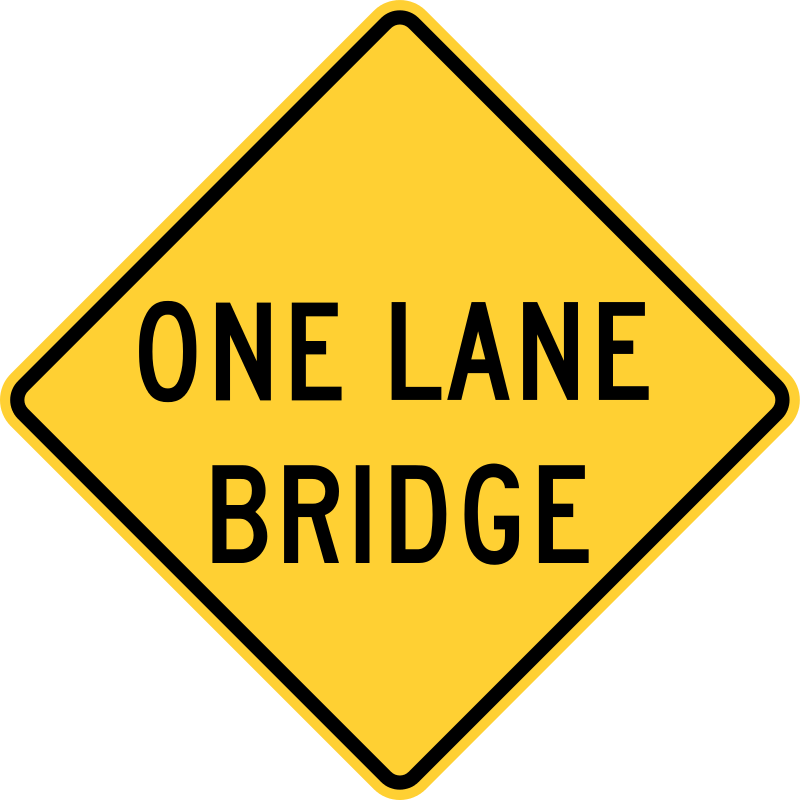
36.
The bridge width allows only one vehicle to cross at a time. The vehicle reaching the bridge first has right-of-way; opposing traffic must wait.
What should drivers do when they see this sign?
A) Make sure the bridge is clear of oncoming traffic before they cross.
B) Look to the left and right for other traffic.
C) Allow others to merge smoothly.
ANSWER KEY Check answers after completing the test.
1 B
2 A
3 C
4 A
5 C
6 B
7 C
8 A
9 C
10 A
11 A
12 A
13 A
14 A
15 B
16 A
17 B
18 C
19 C
20 C
21 B
22 B
23 C
24 C
25 C
26 C
27 A
28 B
29 C
30 C
31 B
32 B
33 B
34 C
35 C
36 A