DriveQuiz drivequiz.com

CA DMV PERMİT PRACTİCE TEST 2

California
Duration: 33 min
|
Questions: 36
Student Name:
Date:
Correct:      Incorrect:      Score:      
1.
Your BAC depends on:
A) how much alcohol you drink.
B) how much time passes between drinks.
C) All of the above.
2.
Warns drivers that two separate lanes moving in the same direction are merging into one. Drivers in the right lane must adjust speed and merge smoothly with existing traffic.
This sign indicates:
A) Winding road
B) Merging traffic
C) Divided highway ends
3.
On a freeway, drivers should look farther ahead than they normally would on a city street:
A) because it takes 500 feet to stop a vehicle on a freeway.
B) in order to spot potential hazards and dangers ahead.
C) because there are multiple lanes.
4.
If your car goes into water, you should:
A) wait for water to rush in and let it out in small breaths through your nose.
B) call the fire department immediately.
C) remove yourself before it starts to sink.
5.
Who is most at risk?
A) Drivers who are fatigued.
B) Drivers who are driving on long, boring roads.
C) All of the above.
6.
A driver cuts off another vehicle, or threatens another motorist or a pedestrian. These are examples of:
A) excessive driving
B) road rage
C) defensive driving
7.
Slower-moving vehicles must stay in the right-hand lane to allow faster traffic to pass safely on multi-lane highways.
This regulatory road sign indicates that:
A) Vehicles must slow down and stay in the right lane.
B) The right hand lane is reserved for buses and car-pool vehicles.
C) Slower vehicles traveling on multiple lane highways must stay in the right hand lane.
8.
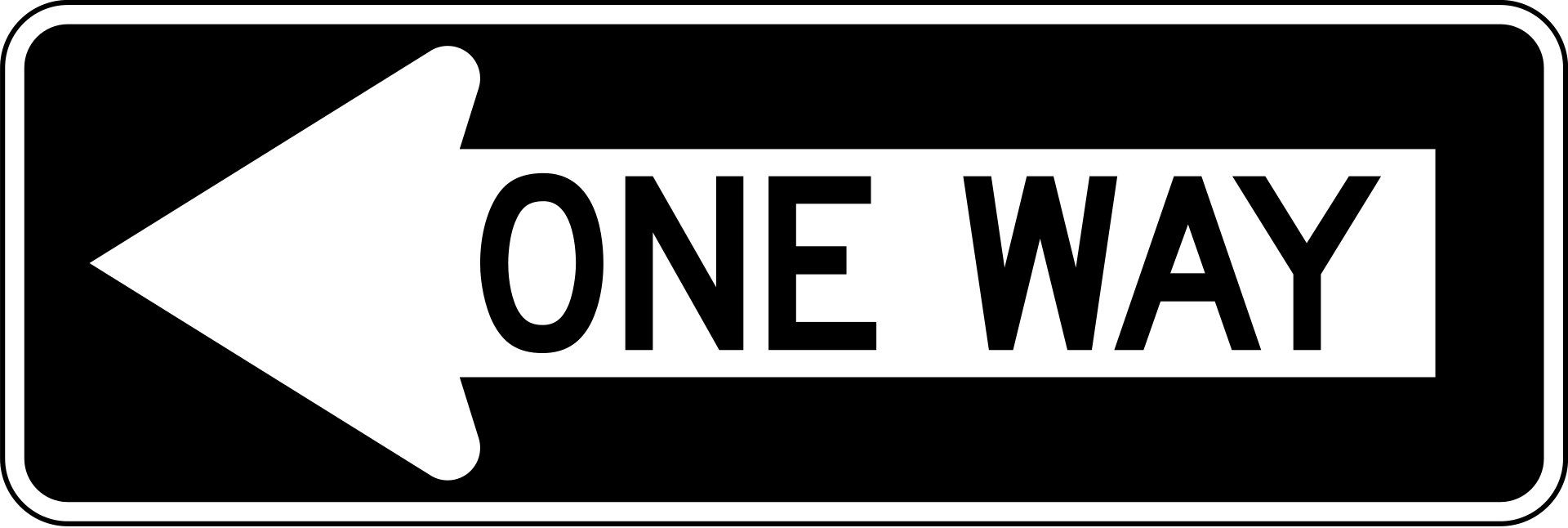
Traffic flows only in the direction indicated by the arrow. Never drive in the opposing direction.
The ‘One Way’ sign means that:
A) only vehicles turning left may travel in the direction of the arrow.
B) there is only one road that turns left at the intersection.
C) drivers may travel only in the direction of the arrow.
9.
Driving slowly in front of traffic in the far left (last) lane on any freeway:
A) cannot result in a traffic citation.
B) saves lives by causing others to slow down, too.
C) can frustrate other drivers and make them angry.
10.
You are approaching an intersection. The traffic signal light is flashing red. What should you do?
A) Cautiously continue driving through the intersection.
B) Stop before entering. Wait for the green light before proceeding.
C) Stop before entering, then proceed when safe.
11.
Warns of two consecutive curves in opposite directions (e.g., curves right then left). Slow down to maintain control.
This sign warns drivers that:
A) the highway ahead is divided into two one-way roadways. Drivers should keep to the right.
B) there is a winding road ahead.
C) there is a double curve ahead.
12.
Tailgating:
A) cannot result in a traffic citation.
B) helps reduce traffic congestion.
C) is a defensive driving tecnique.
D) can frustrate other drivers and make them angry.
13.
At a stop sign there is no stop line or crosswalk. You must stop:
A) before you enter the intersection.
B) at the next crosswalk.
C) after you enter the intersection, if you have a clear view of traffic on the intersecting roadway.
14.
You want to pass a bicyclist riding on the right edge of your lane. You:
A) must not squeeze past the bicyclist.
B) may not pass the bicyclist for any reason.
C) must honk your horn before passing the bicyclist.
15.
Parking is never permitted:
A) in a crosshatched (diagonal) pattern space.
B) in a bicycle lane, unless otherwise posted.
C) twenty feet from a railroad track.
16.
The roadway ahead is narrowing or a lane is ending. Merge smoothly into the continuing lane.
This sign means:
A) the right lane will end ahead.
B) the highway will be divided ahead.
C) less space between lanes ahead.
17.
You may not park your vehicle:
A) On the side of the freeway in an emergency.
B) Within 100 feet of an elementary school.
C) Next to a red painted curb.
18.
ABS is the acronym for:
A) Anti-Braking System
B) Average-Beam System
C) Anti-Locking Brake System
19.
You should not pass another vehicle:
A) on a multi-lane one-way street.
B) where someone is likely to enter or cross the road.
C) when a broken, yellow line is on the left side of your lane.
20.
Which shape is a railroad advance warning sign?
A) Crossbuck
B) Round
C) Pentagon
21.
What is the main reason night driving is more difficult than daytime driving?
A) The use of headlight is required by law.
B) Reduced visibility.
C) Driving within the range.
22.
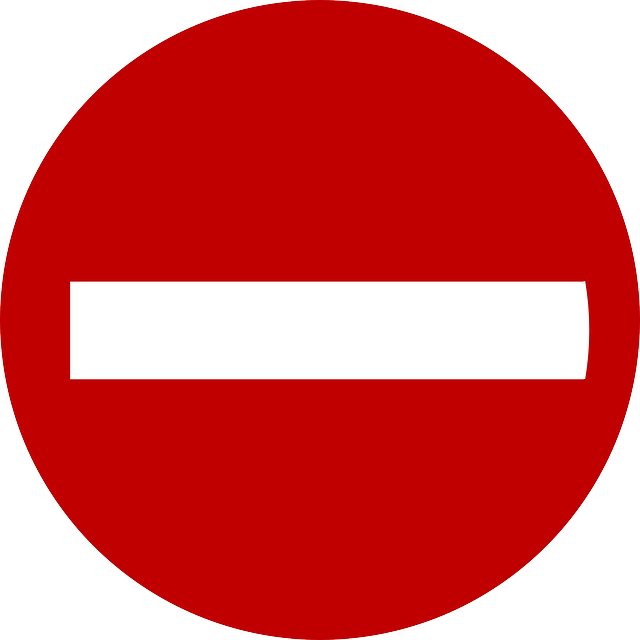
Indicates you have entered an exit ramp or one-way street in the incorrect direction. Stop immediately and safely turn around.
This sign means:
A) U-turns not allowed.
B) Stop sign ahead.
C) Do not enter a road or off ramp where the sign is posted.
23.
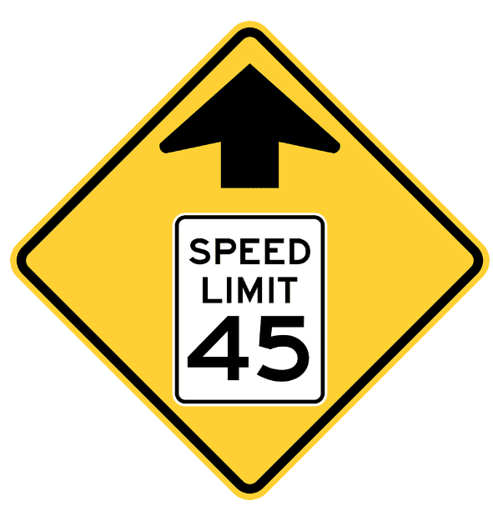
Recommended safe maximum driving speed in ideal conditions for an upcoming curve, ramp, or hazardous stretch of road.
This warning sign:
A) provides advance notice to upcoming speed limit change.
B) shows the current speed limit that all vehicles traveling in the direction of the arrow must not exceed.
C) indicates the suggested highest safe speed.
24.
You see a vehicle approaching from the rear. When you check your mirror again to change lanes, you no longer see the vehicle. You should:
A) turn your signal on and change lanes slowly.
B) look over your shoulder to be sure the vehicle isn’t in your blind spot.
C) check your outside mirror to see if the vehicle is in your blind spot.
25.
You are involved in a minor collision at an intersection. There are no injuries and very little vehicle damage. You should:
A) Leave your vehicle in the traffic lane until law enforcement arrives.
B) Move your vehicle out of the traffic lane, if possible.
C) Not move your vehicle for any reasons.
26.
If you are leaving a parking lot, you:
A) must turn either left or right only when it is safe.
B) have the right-of-way.
C) must yield to traffic before re-entering the road.
27.
If you have a green light, but traffic is blocking the intersection, you should:
A) enter the intersection and wait until traffic clears.
B) merge into another lane and try to go around the traffic.
C) stay out of the intersection until traffic clears.
28.
When parking your vehicle on any hill:
A) your front wheels should be parallel to the road if there is no curb.
B) use your parking brake and leave the vehicle in gear or “park”.
C) one of your rear wheels should touch the curb.
29.
Regulatory signs are:
A) Suggestions
B) Warnings
C) Law
30.
Your BAC depends on:
A) how fit you are.
B) the type of beverage you drink.
C) the amount of alcohol you drink.
31.
U-turns in business districts are:
A) legal whenever oncoming vehicles are not a hazard.
B) legal only at intersections, unless a sign prohibits them.
C) always illegal.
32.
What should you do as you prepare to turn right at an intersection?
A) Honk your horn.
B) Yield to bicyclists coming from the opposite direction.
C) Signal your turn, check for bicyclists, and do not turn directly in front of a bicyclist.
33.
What is the maximum speed limit on two-lane undivided highways, unless otherwise posted?
A) 45 MPH
B) 65 MPH
C) 55 MPH
34.
When parking next to a curb, you should use your turn signals:
A) when pulling next to or away from the curb.
B) when pulling next to, but not away from the curb.
C) only when pulling away from the curb.
35.
When the road is slippery, you should:
A) brake suddenly carefully.
B) pump your brakes.
C) press your brakes in slow, steady strokes.
36.
A vehicle that enters a road from a driveway:
A) has the right-of-way.
B) must yield to traffic approaching from the right, while it has the right-of-way over vehicles approaching from the left.
C) must stop and yield the right-of-way to traffic on the roadway and to pedestrians.
ANSWER KEY Check answers after completing the test.
1 C
2 B
3 B
4 C
5 C
6 B
7 C
8 C
9 C
10 C
11 C
12 D
13 A
14 A
15 A
16 A
17 C
18 C
19 B
20 B
21 B
22 C
23 A
24 B
25 B
26 C
27 C
28 C
29 C
30 C
31 B
32 C
33 C
34 A
35 C
36 C