←
Back to Test
Hide Answer Key
Print / Save as PDF
Print / PDF
drive
quiz
.com
AL DMV PERMİT PRACTİCE TEST 7
Alabama
Duration: 36 min
|
Questions: 40
Student Name:
Date:
Correct:
Incorrect:
Score:
1.
An octagonal sign means that drivers must:
A)
respect the posted speed limit.
B)
come to a complete stop at the marked stop line.
C)
be aware possible hazards ahead.
2.
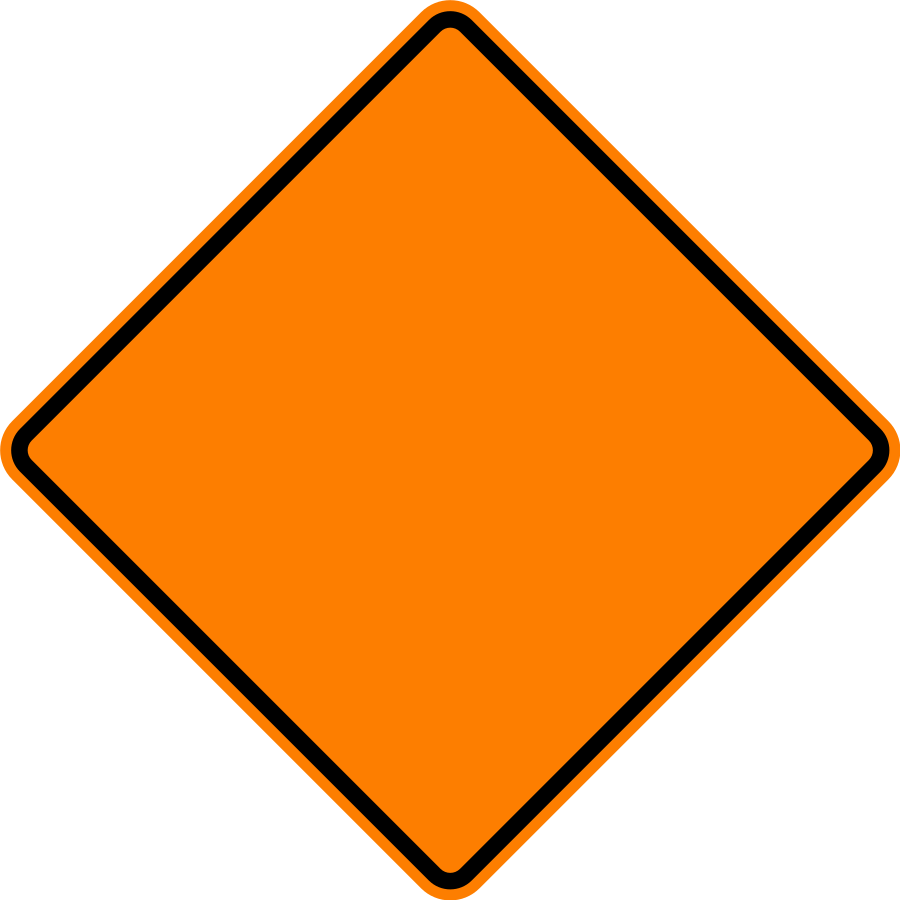
Signs with orange backgrounds mean:
A)
railroad crossing.
B)
side road ahead.
C)
road construction site.
3.
This sign warns that:
A)
traffic must merge left.
B)
the bridge ahead is wide enough for only one vehicle at a time.
C)
traffic must merge right.
4.
If your vehicle has a mechanical problem, you should:
A)
signal and pull into the slow lane.
B)
stop in your lane and put on your emergency flashers.
C)
turn on your hazard lights and pull off the road.
5.
To reduce road rage, you should:
A)
always signal your intention when changing lanes.
B)
use your horn frequently to warn other drivers.
C)
talk on your cell phone while driving.
6.
At intersections with a yield sign, you must:
A)
yield to the vehicles on your left only.
B)
yield the right-of-way to cross traffic close enough to cause conflict.
C)
slow down and proceed.
7.
This road sign means:
A)
School zone ahead
B)
Keep right
C)
Two-way Traffic
8.
This road sign means:
A)
Wrong Way
B)
Merging Traffic
C)
Curve ahead
9.
Drivers should change lanes:
A)
often.
B)
as quickly as possible.
C)
gradually and carefully.
10.
This road sign means:
A)
No left turn
B)
No right turn
C)
No U-turns
11.
When approaching a construction site, drivers should:
A)
accelerate to get out of the way quickly.
B)
slow down and adjust their driving manner.
C)
honk their horn to alert construction workers of their presence.
12.
If your front wheels start to skid, the first thing you should do is:
A)
Take your foot off the gas pedal and shift to neutral.
B)
Immediately turn in the direction you want to go.
C)
Speed up, pump your brakes and steer in the direction the vehicle is trying to go.
13.
Regulatory signs are:
A)
Suggestions
B)
Warnings
C)
Law
14.
This sign warns drivers of:
A)
low clearance.
B)
a narrow bridge ahead.
C)
a low place in the road.
15.
What is the first thing you should do if your wheels move off the pavement?
A)
Pull the steering wheel back.
B)
Pull over to the right and sound your horn to warn the other drivers.
C)
Ease your foot off the gas pedal and brake gently.
16.
When entering an expressway from the entrance ramp, you should:
A)
go down to the bottom of the ramp and stop until it is safe to enter the expressway.
B)
cross over to the traffic lane as soon as possible.
C)
use the acceleration lane to blend into the traffic.
17.
If the vehicle you are driving starts to skid, you should:
A)
brake lightly.
B)
turn off the ignition.
C)
stay off the brakes.
18.
Drivers should check their rearview mirrors:
A)
often to see how traffic is moving behind them.
B)
only when slowing down.
C)
to see if a truck is in their blind spot.
19.
This sign indicates:
A)
a side road.
B)
a cross road.
C)
a church zone ahead.
20.
Just like alcohol and other drugs, drowsiness can:
A)
help you to be a better driver.
B)
make you feel better.
C)
impair your judgment.
21.
When driving at night with no other vehicles ahead, a driver should use:
A)
high beam lights.
B)
low-beam lights.
C)
parking lights.
22.
Motorcycles:
A)
must share a traffic lane with another vehicle.
B)
are easier to see than cars.
C)
are entitled to use a complete traffic lane.
23.
To avoid traction loss from hydroplaning, drivers should:
A)
keep a constant speed.
B)
apply the brakes as soon as the car starts to skid.
C)
slow down.
24.
If a vehicle suddenly cuts in front of you creating a hazard, which of these actions should you take first?
A)
Sound your horn and step on the brake firmly.
B)
Swerve into the lane next to you.
C)
Take your foot off the gas pedal.
25.
Green and white signs:
A)
give information about directions and distances.
B)
are mainly used at intersections and driveways.
C)
warn drivers of unexpected road conditions.
26.
Gauging the speed of a motorcycle may be difficult because:
A)
motorcycles take up less of your field of vision.
B)
motorcycles often slow down by downshifting.
C)
many motorcyclists do not activate the brake light.
27.
Drivers may legally block an intersection:
A)
under no circumstances.
B)
only during rush hour traffic.
C)
only after entering the intersection on a green light.
28.
The amount of alcohol in the blood is measured by:
A)
blood alcohol concentration (BAC).
B)
Number of Drinks (NOC).
C)
Amount of Alcohol Drunk (AAD).
29.
To see vehicles in your blind spots, you must look:
A)
in your outside rearview mirror.
B)
over your shoulders.
C)
in your side mirrors.
30.
When driving in a construction zone you should:
A)
slightly increase your speed.
B)
come to a complete stop and check road conditions.
C)
expect the unexpected.
31.
When passing another car, you have enough room to return to the driving lane when:
A)
you cannot see the vehicle directly to your right.
B)
you are at least 50 feet in front of the vehicle.
C)
you can see both headlights of the car you passed in your rearview mirror.
32.
__________ are blue with white letters and symbols.
A)
Warning signs
B)
Service signs
C)
Destination signs (guide signs)
33.
A red traffic sign means?
A)
Do not enter.
B)
Stop.
C)
All of the above.
34.
This road sign is:
A)
a speed reduction sign.
B)
a warning sign.
C)
a regulatory sign.
35.
From top to bottom, traffic lights are:
A)
green, red and yellow.
B)
green, yellow and red.
C)
red, yellow and green.
36.
This road sign means:
A)
Yield
B)
Look both ways before crossing the intersection
C)
Crossroads ahead
37.
This sign means:
A)
U-turns are not allowed.
B)
Parking is not allowed.
C)
No parking on pavement.
38.
You want to turn left at an intersection ahead. A car reaches the intersection from the opposite direction and moves straight ahead. You:
A)
can turn left. You have the right of way.
B)
must wait for the car to go through before you turn.
C)
may not enter the intersection to prepare for your left turn if the light is green.
39.
The only effective way to reduce your blood alcohol content (BAC) is:
A)
drinking coffee.
B)
fresh air.
C)
not to drink over a period of time.
40.
When approaching someone using a white cane or guide dog, drivers should:
A)
slow down and be prepared to stop.
B)
proceed normally.
C)
come to a complete stop and invite them to take the right-of-way.
ANSWER KEY
Check answers after completing the test.
1
B
2
C
3
A
4
C
5
A
6
B
7
C
8
C
9
C
10
B
11
B
12
A
13
C
14
B
15
C
16
C
17
C
18
A
19
B
20
C
21
A
22
C
23
C
24
C
25
A
26
A
27
A
28
A
29
B
30
C
31
C
32
B
33
C
34
C
35
C
36
A
37
B
38
B
39
C
40
A