DriveQuiz drivequiz.com

AL DMV PERMİT PRACTİCE TEST 3

Alabama
Duration: 36 min
|
Questions: 40
Student Name:
Date:
Correct:      Incorrect:      Score:      
1.
When driving on gravel roads:
A) your tires do not have as much traction.
B) you should use cruise control to increase traction.
C) you should keep your eyes moving.
2.
If your wheels drop off the pavement edge, you should:
A) stop.
B) turn back onto the roadway immediately.
C) turn gradually back onto the roadway when safe.
3.
Warns drivers that two separate lanes moving in the same direction are merging into one. Drivers in the right lane must adjust speed and merge smoothly with existing traffic.
When you see a 'merging traffic' sign on the freeway, you should:
A) slow down to allow traffic to enter.
B) move to another lane to let traffic enter, if safe.
C) speed up to avoid congesting traffic.
4.
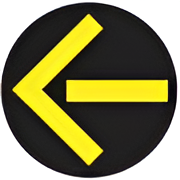
Unprotected left turns are allowed. You may turn left after yielding to oncoming traffic and pedestrians crossing the street.
What does a yellow arrow signal mean?
A) The same as the yellow light, but applies only to movement in the direction of the arrow.
B) The same as a green light.
C) Vehicles moving in all directions must stop if they can. The light will soon be red.
5.
Collisions can happen more often when:
A) one lane of traffic is traveling faster than the others.
B) one vehicle is traveling faster than the flow of traffic.
C) all vehicles are traveling at the posted speed limit.
6.
At a red traffic light with a green arrow, you may proceed in the direction of the arrow:
A) after making a complete stop first.
B) if you wait until the light changes.
C) if you are in the proper lane and the roadway is clear.
7.
When turning left at an intersection:
A) you should never yield to oncoming traffic and pedestrians.
B) oncoming traffic and pedestrians should yield to you.
C) you should always yield to oncoming traffic and pedestrians.
8.
If you are blinded by headlights on an approaching vehicle, you should:
A) avoid looking directly at the bright lights.
B) glance toward the side of the road, then look quickly ahead to determine the other vehicle’s position.
C) All of the above.
9.
When is it safe to pass another vehicle?
A) Whenever signs and/or markings permit passing other vehicles.
B) When you are entering a curve and there are no oncoming vehicles.
C) When you are driving through an intersection and there are no oncoming vehicles.
10.
If you've had a few beers, the effects of alcohol will be reduced only by:
A) waiting several hours.
B) taking a cold shower.
C) getting a cup of coffee.
11.
The extra space in front of a large truck is needed for:
A) other drivers when merging onto a freeway.
B) the truck driver to stop the vehicle.
C) other drivers when they want to pass the truck.
12.
Warns of an extremely sharp 180-degree curve ahead. Decelerate significantly before entering the turn.
This sign means:
A) Hairpin corner ahead.
B) Warning: U-turn ahead.
C) Sharp right turn ahead.
13.
You are stopped at a stop sign and you are going to go straight through the intersection. A car on the cross road has stopped at a stop sign on your right and is going to go straight. Who has the right-of-way?
A) Whoever enters the intersection first.
B) You.
C) The car on your right.
14.
The roadway becomes particularly slippery during wet or rainy conditions. Reduce your speed, increase following distance, and avoid abrupt braking or steering.
This sign indicates:
A) Warning: drunk drivers.
B) Winding road. Drive with caution.
C) The road may be slippery when wet. Drive slowly.
15.
Large trucks:
A) have high-tech air brakes which allow them to stop quickly.
B) take longer to stop than passenger vehicles.
C) are more maneuverable than passenger vehicles.
16.
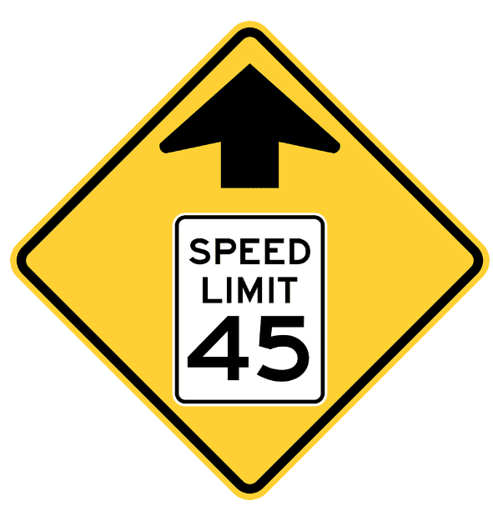
Recommended safe maximum driving speed in ideal conditions for an upcoming curve, ramp, or hazardous stretch of road.
This warning sign:
A) provides advance notice to upcoming speed limit change.
B) shows the current speed limit that all vehicles traveling in the direction of the arrow must not exceed.
C) indicates the suggested highest safe speed.
17.
To drive defensively, you must:
A) anticipate errors by other drivers.
B) assume that a driver who approaches a STOP sign on a side road is actually going to stop.
C) not check behind you through your mirrors.
18.
After parking, are you allowed to open a door on the road side of your vehicle?
A) Yes, always.
B) Yes, but only if it does not interfere with bicyclists and other traffic.
C) No, never.
19.
Right turns are strictly prohibited at this intersection under all circumstances.
This road sign means:
A) No left turn
B) No right turn
C) No U-turns
20.
To reduce their chances of colliding with an animal, drivers should:
A) scan the sides of the road to watch for the reflection of vehicle headlights in the eyes of animals.
B) look well down the road and far off to each side.
C) All of the above.
21.
When driving in work zones, drivers should:
A) tailgate the vehicle ahead while reducing their speed.
B) pass the vehicle ahead when safe.
C) keep a safe following distance.
22.
Alerts drivers to an upcoming crosswalk where pedestrians frequently cross. Slow down and yield right-of-way to anyone in or about to enter the roadway.
The picture shows:
A) a railroad advance warning sign.
B) a speeding fines doubled sign.
C) a reversible road sign.
23.
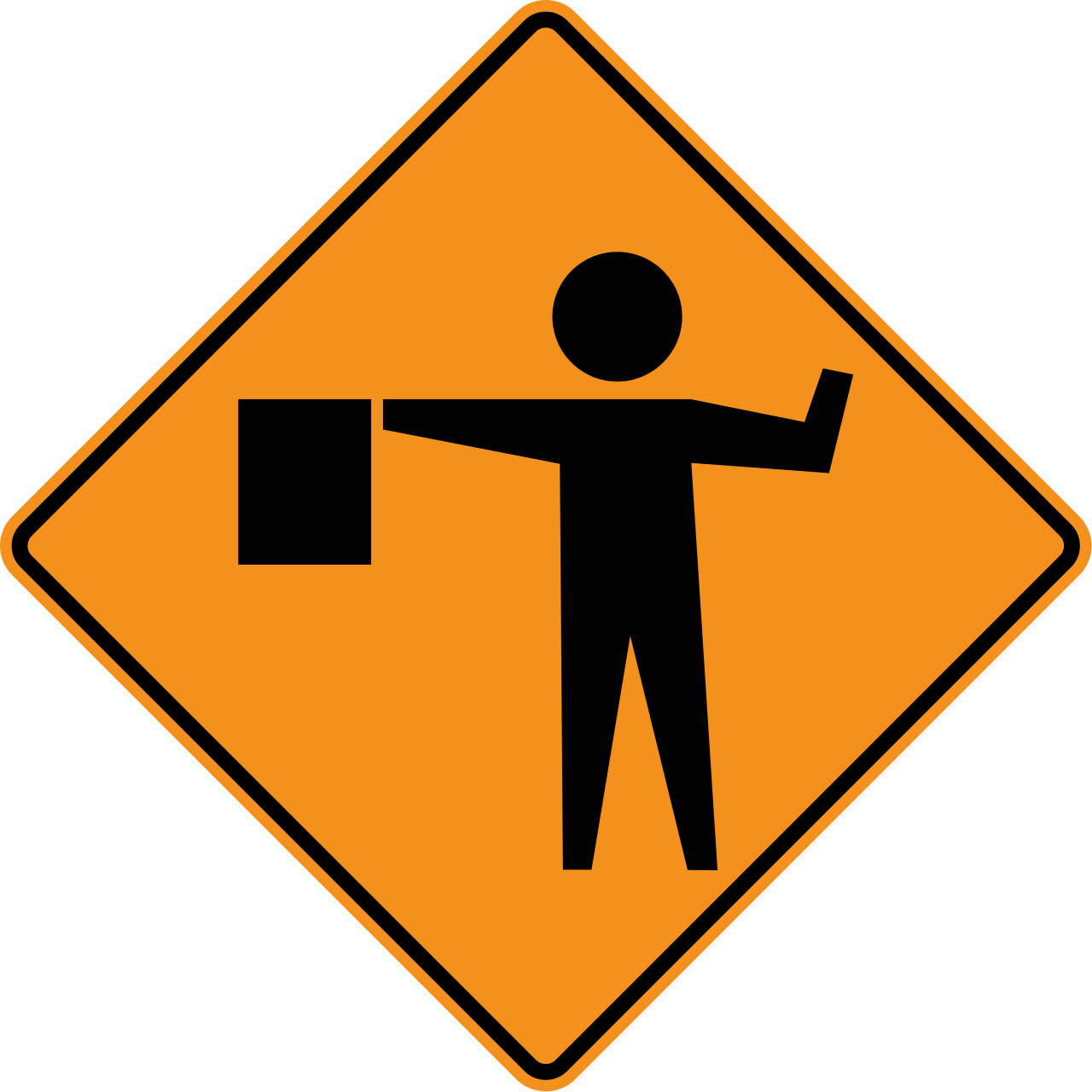
A human traffic control flagger is stationed ahead in a construction or utility work zone. Follow their hand and paddle signals strictly.
This road sign means:
A) Right lane closed
B) Do not block intersection
C) Flagger ahead
24.
Another road crosses the highway ahead. Look left and right for crossing or entering vehicles.
This road sign means:
A) Warning, crossroad ahead
B) All traffic must turn
C) Yield sign ahead
25.
Which statement about blind spots is true?
A) Before changing lanes, you should check mirrors and look over your shoulder toward the rear.
B) Large trucks have smaller blind spots than most passenger vehicles.
C) If traffic conditions permit you should cruise in blind spot of the vehicle ahead.
26.
A broken white line:
A) means passing or crossing is prohibited in that lane.
B) separates two lanes traveling in the same direction.
C) marks the right edge of the roadway.
27.
When is the pavement most slippery?
A) If it's been raining several hours.
B) When it has just begun to rain.
C) When it's been raining from at least one hour.
28.
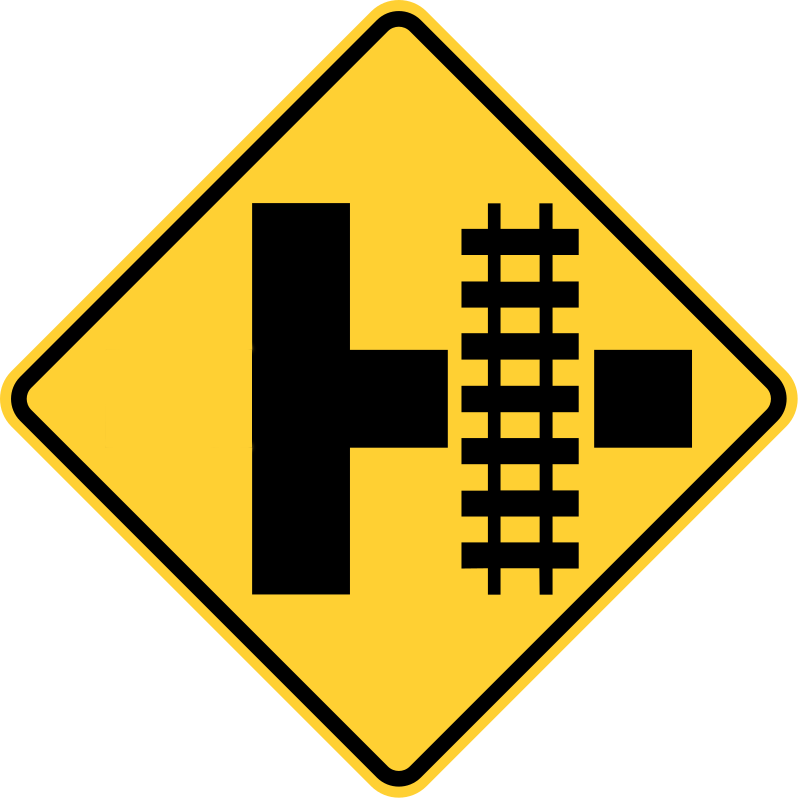
Four-way intersection ahead. Be prepared to yield right-of-way according to traffic control devices.
What does this sign indicate?
A) Parallel railroad crossing (side road)
B) Low ground clearance railroad crossing
C) Parallel railroad crossing (crossroad)
29.
You are driving and you are feeling drowsy. You should:
A) avoid drinking coffee.
B) turn on the radio to keep you awake.
C) find a safe place to stop for a break.
30.
A sharp curve is ahead with a recommended safe speed plate. Slow down before entering the curve to prevent vehicle rollover.
This sign means:
A) If you are driving at 40 MPH or less you must stay in the right-hand lane
B) Curve ahead, drive at 40 MPH ot more around the curve ahead
C) Curve ahead, the recommended speed is 40 MPH or less
31.
When approaching someone using a white cane or guide dog, drivers should:
A) carefully drive around them.
B) stop until the person is well away from the roadway or path of travel.
C) honk their horn as they proceed past them.
32.
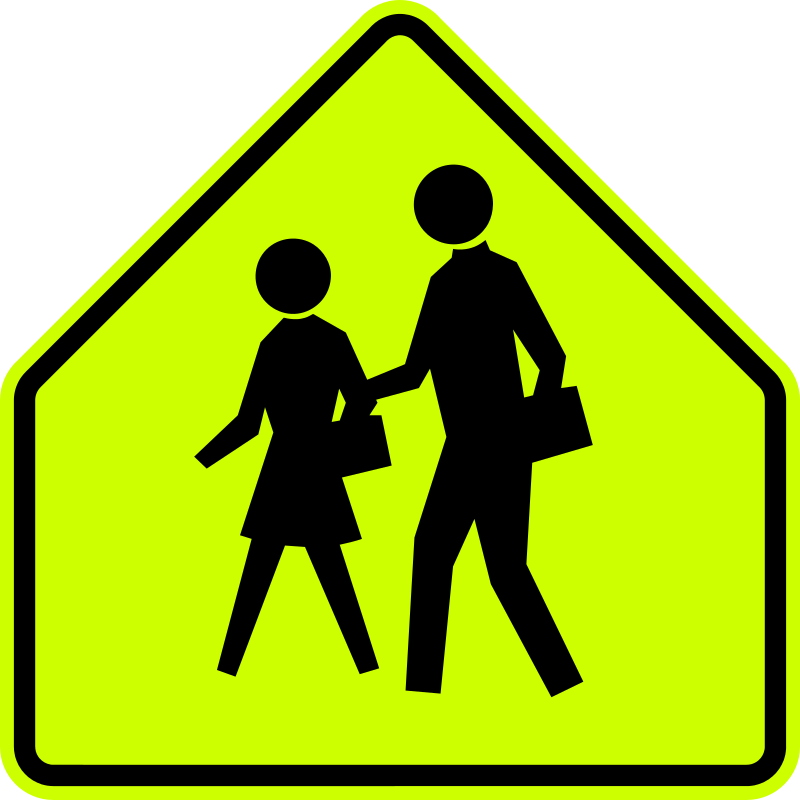
Five-sided pentagon sign indicating an upcoming school area. Watch for children crossing, school buses, and observe posted reduced school speed limits.
This road sign means:
A) School crossing
B) Playground ahead
C) Pedestrian crossing
33.
For protection, motorcyclists are required to:
A) keep their headlights and taillights on at all times.
B) signal turns, lane changes and stops.
C) wear approved helmets.
34.
When following motorcycles, drivers should:
A) reduce the minimum following distance.
B) try to pass them as they have different braking capabilities than other motor vehicles.
C) keep more space in front of their vehicle.
35.
A side road enters the highway from the right or left. Watch for traffic turning onto or crossing your lane.
This road sign means:
A) A road joins from the right
B) All traffic must go straight ahead
C) All traffic must turn right
36.
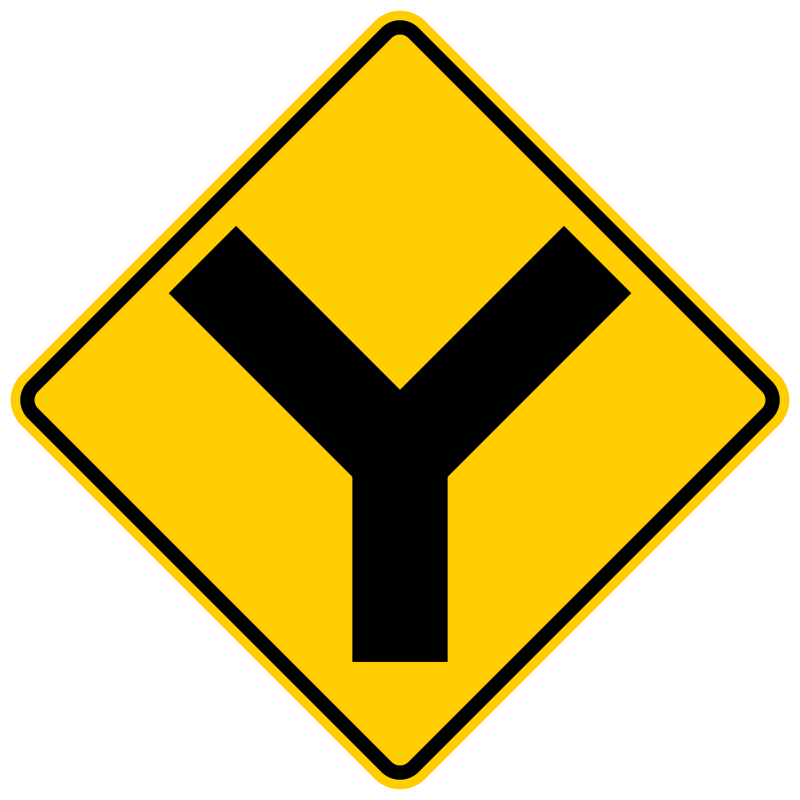
The road splits into a Y configuration ahead. Bear left or right depending on your destination and yield where marked.
This road sign means:
A) A road joins from the left
B) You must bear either right or left
C) A 3-way intersection is ahead
37.
A solid yellow line on your side of the center line means:
A) Stop
B) Pass with caution
C) Do not pass
38.
Slower-moving vehicles must stay in the right-hand lane to allow faster traffic to pass safely on multi-lane highways.
This regulatory road sign indicates that:
A) Vehicles must slow down and stay in the right lane.
B) The right hand lane is reserved for buses and car-pool vehicles.
C) Slower vehicles traveling on multiple lane highways must stay in the right hand lane.
39.
What should you do when an aggressive driver confronts you?
A) Avoid eye contact with the aggressive driver.
B) Make eye contact.
C) Challenge the aggressive driver with increased speed.
40.
Slow down and give right-of-way to all oncoming vehicles, cyclists, and pedestrians. Stop completely if necessary before entering the intersection or merging.
The yield sign means:
A) Drive with caution in wet weather.
B) You must come to a complete stop.
C) Slow down and give vehicles crossing your path the right-of-way.
ANSWER KEY Check answers after completing the test.
1 A
2 C
3 B
4 A
5 B
6 C
7 C
8 C
9 A
10 A
11 B
12 A
13 C
14 C
15 B
16 A
17 A
18 B
19 B
20 C
21 C
22 A
23 C
24 A
25 A
26 B
27 B
28 A
29 C
30 C
31 B
32 A
33 C
34 C
35 A
36 B
37 C
38 C
39 A
40 C