DriveQuiz drivequiz.com

AK DMV PERMİT PRACTİCE TEST 10

Alaska
Duration: 18 min
|
Questions: 20
Student Name:
Date:
Correct:      Incorrect:      Score:      
1.
All approaching traffic must stop completely. The first vehicle to reach the intersection and stop has right-of-way; if two vehicles arrive simultaneously, the vehicle on the right goes first.
A four-way stop sign means:
A) traffic from all four directions must stop.
B) if two vehicles reach the intersection at the same time, the driver on the left yields to the driver on the right.
C) All of the above.
2.
___________ normally are white rectangles with black letters or symbols.
A) Warning signs
B) Destination signs (guide signs)
C) Regulation signs (regulatory signs)
3.
Which of the following must you obey over the others?
A) A flashing red light.
B) A stop sign.
C) A steady red light.
D) A police officer.
4.
Drivers approaching a stopped school bus with flashing amber lights should always:
A) blow their horn and pass slowly.
B) None of the other answers is correct.
C) speed up and pass quickly.
D) slow down and prepare to stop.
5.
If you see a “lane closed ahead” sign you should:
A) make a U-turn. You are on the wrong side of the road.
B) merge into the correct lane when it is safe.
C) speed to the end of the closed lane and try to get into the other lane.
6.
The roadway becomes particularly slippery during wet or rainy conditions. Reduce your speed, increase following distance, and avoid abrupt braking or steering.
When they see this sign, drivers:
A) should be prepared to make sharp turns at a high speed.
B) need to be prepared to turn right and then left quickly.
C) should not speed up or brake quickly.
7.
At intersections marked with stop lines, drivers must:
A) come to a complete stop.
B) slow down and enter the intersection.
C) signal other vehicles to stop.
8.
Reflective orange triangle displayed on vehicles traveling at 25 MPH or slower (such as farm tractors or construction machinery). Approach with caution and pass safely.
The sign in the picture:
A) is a Construction and Maintenance Traffic Control sign.
B) is found at most intersections and indicates that drivers must yield to other vehicles.
C) is displayed on the rear of slow moving vehicles.
9.
You are entering a roadway from a private road, and you need to turn left. You have to yield to:
A) vehicles from the right.
B) vehicles from the left.
C) vehicles from both directions.
10.
Regulation signs normally are:
A) white triangles.
B) green rectangles.
C) white rectangles.
11.
When driving in less than ideal conditions you should adjust your speed to:
A) existing road conditions.
B) other traffic.
C) weather conditions.
D) All of the above.
12.
A vehicle is stopped at a crosswalk to permit a pedestrian to cross the roadway. The driver of the vehicle approaching from the rear should:
A) sound the horn.
B) overtake and pass the stopped vehicle.
C) not overtake and pass the stopped vehicle.
13.
You are stopped at a stop sign and you are going to go straight through the intersection. A car on the cross road has stopped at a stop sign on your right and is going to go straight. Who has the right-of-way?
A) Whoever enters the intersection first.
B) You.
C) The car on your right.
14.
Standard rectangular shape used for general regulatory instructions and speed limits.
Vertical rectangles tell drivers:
A) the law.
B) what is not allowed.
C) the direction they should travel.
15.
To drive defensively, you must:
A) anticipate errors by other drivers.
B) assume that a driver who approaches a STOP sign on a side road is actually going to stop.
C) not check behind you through your mirrors.
16.
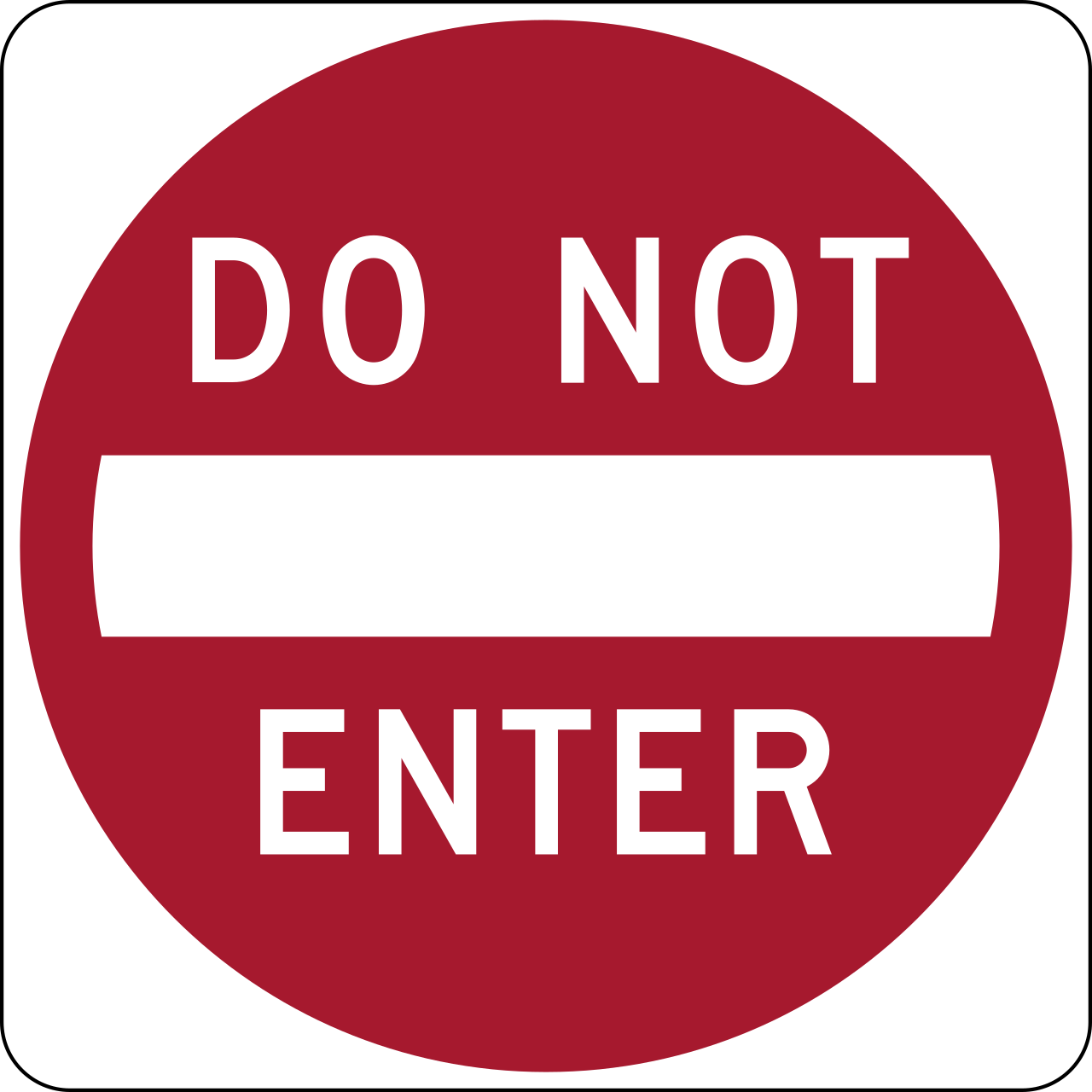
Marks a roadway or ramp where vehicular traffic is strictly forbidden to enter from your direction (such as freeway off-ramps or one-way streets).
This sign indicates:
A) that you must not drive past this sign.
B) that you must yield the right-of-way.
C) the entrance to a construction site.
D) the entrance to a dead-end street.
17.
Aggressive driving includes:
A) quick lane changes without a signal.
B) chasing or challenging other drivers.
C) All of the above.
18.
An inattentive driver:
A) carries on an eye-contact conversation with a passenger while driving.
B) gazes at objects off the roadway while driving.
C) daydreams.
D) All of the above.
19.
Blind spots are:
A) Dangerous intersection where the maximum speed limit is 15 MPH or less.
B) At night, the darkest areas of a road, where emergency flashers should be used.
C) Areas to the side or rear of a vehicle that the driver cannot see with use of mirrors.
20.
Where must a pedestrian walk when there are no sidewalks?
A) On the side of the road, in the same direction of traffic.
B) In the middle of the road, facing oncoming traffic.
C) On the side of the road, facing the traffic.
ANSWER KEY Check answers after completing the test.
1 C
2 C
3 D
4 D
5 B
6 C
7 A
8 C
9 C
10 C
11 D
12 C
13 C
14 A
15 A
16 A
17 C
18 D
19 C
20 C