DriveQuiz drivequiz.com

AK DMV PERMİT PRACTİCE TEST 1

Alaska
Duration: 18 min
|
Questions: 20
Student Name:
Date:
Correct:      Incorrect:      Score:      
1.
When parking uphill on a road with a curb, turn the front wheels:
A) towards the curb.
B) parallel to the curb.
C) straight ahead.
D) away from the curb.
2.
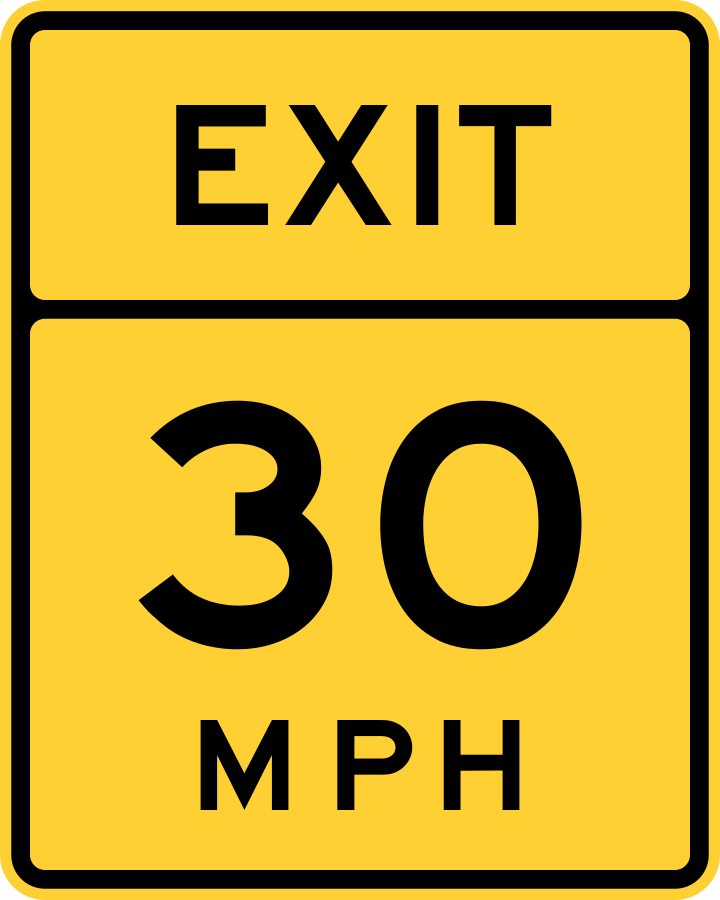
Recommends a safe speed of 30 MPH for negotiating the freeway exit ramp deceleration lane.
The sign in the picture:
A) shows the highest speed drivers can travel at the exit of the intersection.
B) is used to advise motorists of the appropriate ramp speed at the highway exit point.
C) indicates the minimum ramp speed at the highway exit point.
3.
A flashing yellow traffic signal means:
A) Stop. Yield to all cross traffic before crossing in the intersection
B) Go straight ahead.
C) No left turn.
D) Slow down and proceed with caution.
4.
Most signs used in street work areas are:
A) round.
B) diamond shaped.
C) rectangle shaped.
5.
The roadway becomes particularly slippery during wet or rainy conditions. Reduce your speed, increase following distance, and avoid abrupt braking or steering.
This sign means:
A) The road will curve to the right, then to the left.
B) Road slippery when wet. Drive slowly.
C) Winding road ahead. Drive with caution.
6.
Another road crosses the highway ahead. Look left and right for crossing or entering vehicles.
This sign indicates:
A) a side road.
B) a cross road.
C) a church zone ahead.
7.
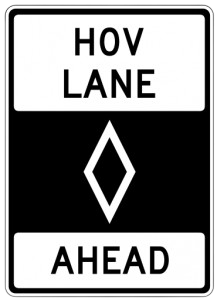
High-Occupancy Vehicle (HOV) diamond lane ahead. Only vehicles carrying the minimum required number of passengers (usually 2 or more) may use this lane.
This road sign indicates that:
A) a lane is reserved for certain purposes or certain vehicles.
B) buses and car pools may not travel in the restricted lane.
C) vehicles cannot go straight ahead. Cars must turn either to the right or left.
8.
Which of the following is NOT true?
A) High speed causes tire wear.
B) Drivers are required to drive at the maximum speed limits.
C) Driving at the same speed for a long time and distance causes monotony and road hypnosis.
D) High speed results in poor gasoline mileage.
9.
Drivers should always look carefully for motorcycles before changing lanes because:
A) motorcycles are not permitted to share traffic lanes.
B) motorcycles are smaller and harder to see.
C) motorcycles always have the right-of-way at intersections.
D) All of the above.
10.
If you are driving slowly and traffic is backing up behind you, you should:
A) not let the tailgaters pass you.
B) pull over to the right side of the road when safe, and let traffic pass.
C) flash your brake lights.
D) speed up suddenly.
11.
From top to bottom, traffic lights are:
A) green, red and yellow.
B) green, yellow and red.
C) red, yellow and green.
12.
Warns of an extremely sharp 180-degree curve ahead. Decelerate significantly before entering the turn.
This sign means:
A) Hairpin corner ahead.
B) Warning: U-turn ahead.
C) Sharp right turn ahead.
13.
The yield sign is ___ and white, with ___ letters.
A) yellow; black
B) red; red
C) red; white
14.
Designated school crosswalk location. You must yield to all schoolchildren and pedestrians in the crossing.
When they approach this sign, drivers must:
A) slow down and watch for children crossing the road.
B) obey signals from crossing guards.
C) stop if necessary.
D) All of the above.
15.
What is the purpose of minimum speed limits?
A) To keep a smooth traffic flow.
B) To halt the traffic flow.
C) To allow emergency vehicles with red flashing lights to safely pass other vehicles.
16.
To avoid being struck from behind, you should:
A) drive faster than the flow of traffic to create a gap between you and the vehicle behind you.
B) pump your brakes often.
C) drive slower than the rest of the traffic to create a space cushion around you.
D) keep pace with the traffic.
17.
Traffic lights are normally ____________ from the top to bottom or left to right.
A) red, green and yellow
B) green, yellow and red
C) red, yellow and green
18.
When two cars arrive at an intersection with no signs or signals at the same time, which car has the right-of-way?
A) The car that is traveling faster.
B) The car approaching from the right.
C) The car approaching from the left.
D) The car in which the driver sounds the horn.
19.
The speed limit in school zones is:
A) 25 MPH
B) only enforced when kids are leaving school.
C) 20 MPH
D) 35 MPH
20.
When the road is slippery, you should:
A) brake suddenly carefully.
B) pump your brakes.
C) press your brakes in slow, steady strokes.
ANSWER KEY Check answers after completing the test.
1 D
2 B
3 D
4 B
5 B
6 B
7 A
8 B
9 B
10 B
11 C
12 A
13 B
14 D
15 A
16 D
17 C
18 B
19 C
20 C